Category: Reflections

  • “Ruh Roh, Raggy!” Scooby Snacks and the Polarising Effects of Meat-Free Dog Food

    “Ruh Roh, Raggy!” Scooby Snacks and the Polarising Effects of Meat-Free Dog Food

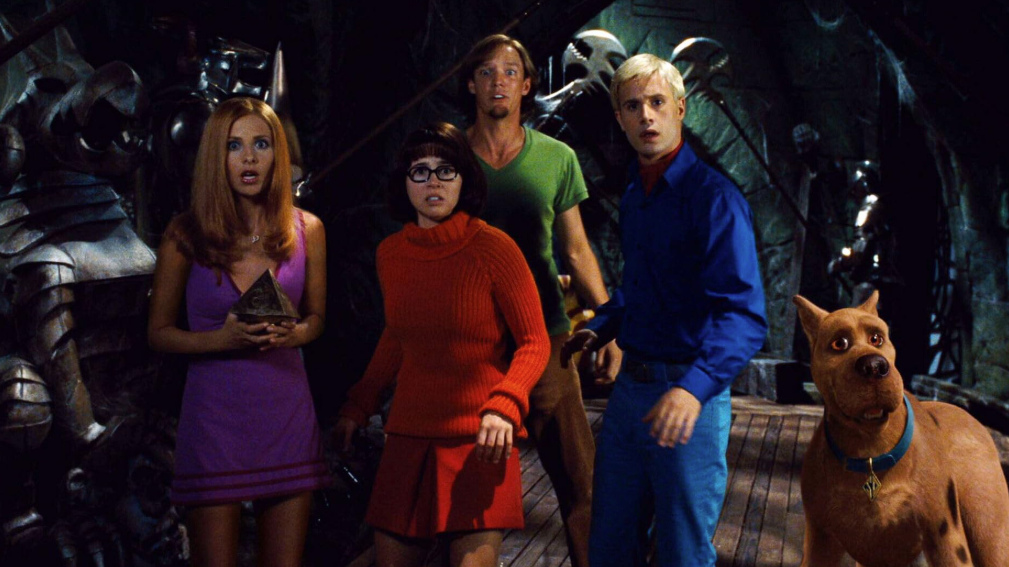
    Thanks to Scooby-Doo, I am greatly looking forward to my current students’ graduations. Although their taught sessions are now behind them, their enthusiasm has led them to carry on with screenings regardless, picking their own films for us to watch together and bicker about afterwards. I have begun to tease them relentlessly for the fact that, of all the features we have watched together, the only productions that have earned their rousing applause have been those in the double-billing of live-action and Golden Raspberry-nominated Scooby-Doo (2002) and Scooby-Doo 2: Monsters Unleashed (2004). As well as being a textbook example of Gen-Z’s irony-infused love of camp culture, their spirited ovation has given me ample ammunition if, or should I say when, I desire to embarrass them in front of their loved ones at the end of their degree. When they chose Yorgos Lanthimos’ The Lobster (2015) they may have spent a good hour debating its conclusion, but little has rivalled the sight of Rowan Atkinson being revealed to be a robot piloted by a Great Dane pup.

    The amount of content in the Scooby-Doo empire is frankly bewildering. There have been, to date, fourteen animated TV series and forty-four films. For my students, the live-action films were monuments to the baffling wave of hyper-stylized cartoon adaptations that preceded their births. As a millennial, mine was a generation raised on a continual stream of Scooby-Doo, Where Are You! (1969-1970) re-runs and the cavalcade of Scrappy-Doo-focused series that followed in the 80s. Those before me, Gen X, were the first kids for whom the Hanna-Barbera franchise was seared into their cultural wallpaper. Is it possible, I wonder, to track the changing attitudes of generations through the antics of a scat-singing mystery-solving dog?

    Image: Scooby-Doo, Warner Bros. Pictures, 2002.

    I say this only half-jokingly. Folklorist Mark Norman has recently published an excellent book, Zoinks! The Spooky Folklore Behind Scooby Doo (2024), that explores how the series’ family-friendly approach to its frightful escapades can be traced through changing representations of teenage identity and monstrosity.  “There can be no doubt that, from its very first episode,” Norman writes, “Scooby-Doo has placed at least one paw very firmly into the Gothic camp” (2024: 20). First developed as a direct response to the organisation Action for Children’s Television’s (ACT) complaints that Saturday-morning cartoons had seemingly become too violent, Scooby-Doo exists at a fascinating intersection between horror tropes and children’s parable (Trammell, 2019). The gang of Mystery Inc. serve to rationalise the frightening world of the occult and unknown into reassuring explanations. Just as in the real world, peep beneath the masks of its ghouls and ghosts, and you will most frequently find the exploitative skullduggery of elderly businessmen and landowners. It is usually, after all, “Old Man Jenkins all along.”

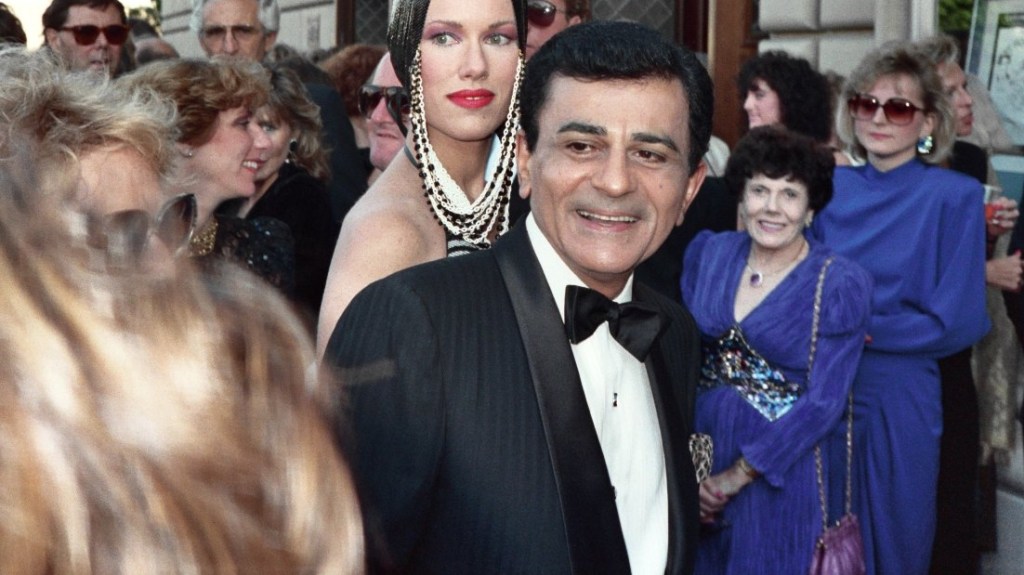
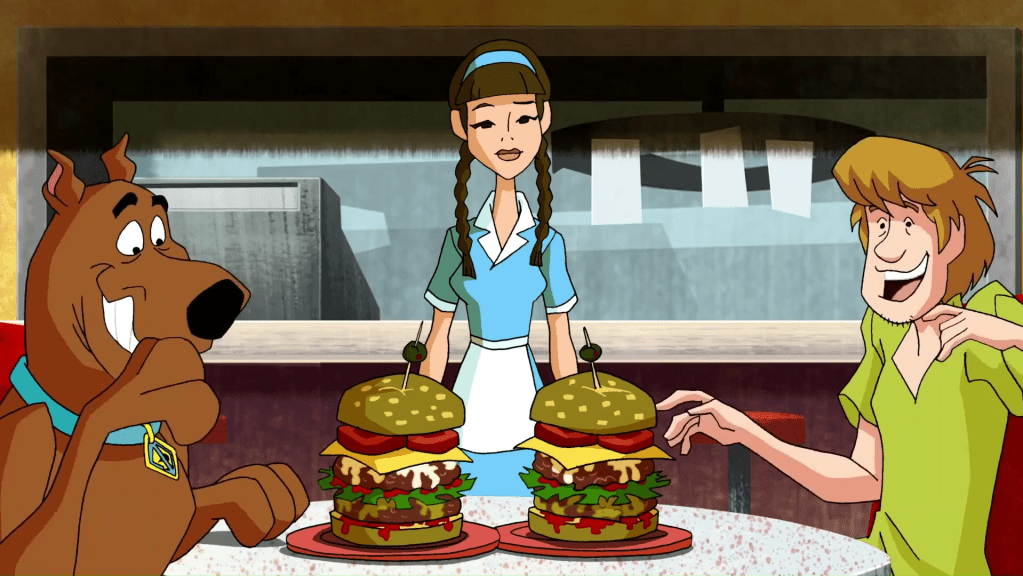
    Watching the live-action adaptation with my students, possibly to keep my brain cells in some form of motion, I was taken by its depiction of the vast quantities of junk food that Shaggy and Scooby inevitably consume. I was aware that Casey Kasem, Shaggy’s first and decades-long voice actor, was a vocal vegan advocate and prominent supporter of several animal-rights and environmental causes. Kasem was a notable figure in American popular culture, but he would often argue that his campaigning for social issues was of far greater importance than his achievements in the entertainment industry. “The basic thing is to hopefully stop people from killing anything,” he stated, “and to create a non-violent diet for themselves, because a non-violent world has roots in a non-violent diet” (qtd. in Rushe 2014).

    Image: Casey Kasem by Alan Light, Wikimedia Commons, 1989.

    Scooby-Doo’s cast of characters have been used to promote an endless array of products over the decades, but Kasem quit his role when asked to perform as Shaggy in a Burger King commercial in 1995. In 2002, the same year that the live-action film was released, Kasem would return to the role after producers agreed that Shaggy could be represented on-screen as a vegetarian (Corliss 2014). Since then, the hippie gourmand has often been shown to trade in his trademark stack of towering ham sandwiches, enormous pepperoni pizzas, and triple-patty burgers for vegetarian and vegan equivalents. When Matthew Lillard took over the role, he would voice Shaggy commenting on his preference for tofu, and be seen, in-person, happily grilling up eggplant rather than beef for his burgers. Perhaps most prominently, in a Scooby-Doo and Guess Who? (2019-2021) episode featuring Sia, the glutton is shown hanging out with the singer-songwriter as they gorge themselves on vegan subs and dairy-free cotton-candy shakes.

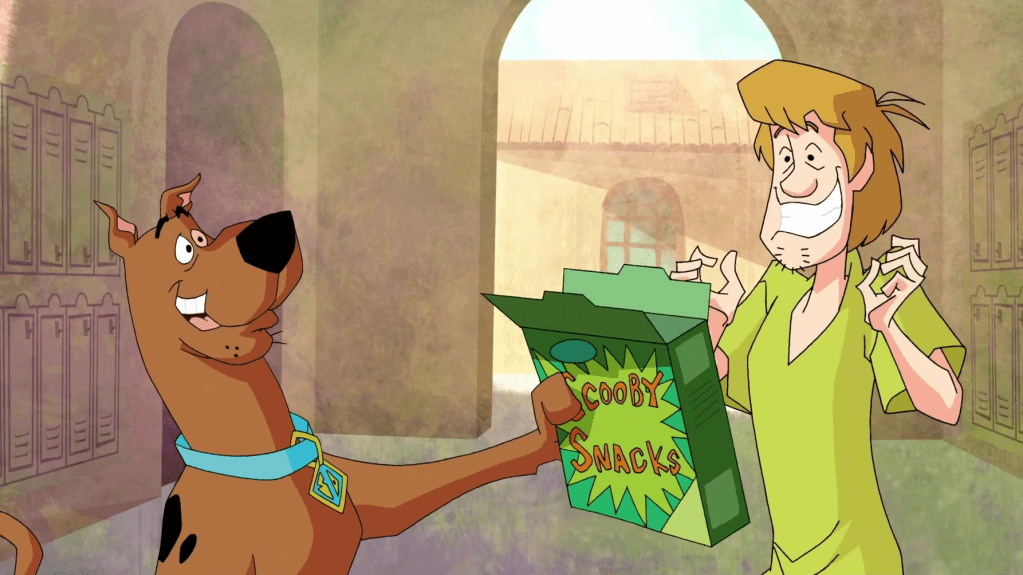
    Following Kasem’s death in 2014, Shaggy has often reverted to his rampant omnivorism, seen rolling sardines in pancakes in Scooby-Doo! Mystery Incorporated (2010-2013) and wolfing down “his body weight” in beef jerky in Be Cool, Scooby-Doo! (2015-2016). If anything, the cartoon character seems to possess a flexitarian diet. However, watching the 2002 film, I couldn’t help noticing that it was not only Shaggy who, for a time, refrained from eating meat, but also the canine Scooby himself. When the pooch’s beloved Scooby Snacks are introduced, we are informed matter-of-factly that they are “100% vegetarian.” As with his human companion, the Great Dane’s diet was shown in the immediate period following Kasem’s intervention as excluding any representation of animal products.

    Image: Scooby-Doo! Mystery Incorporated, Warner Bros. Animation, 2010-2013.

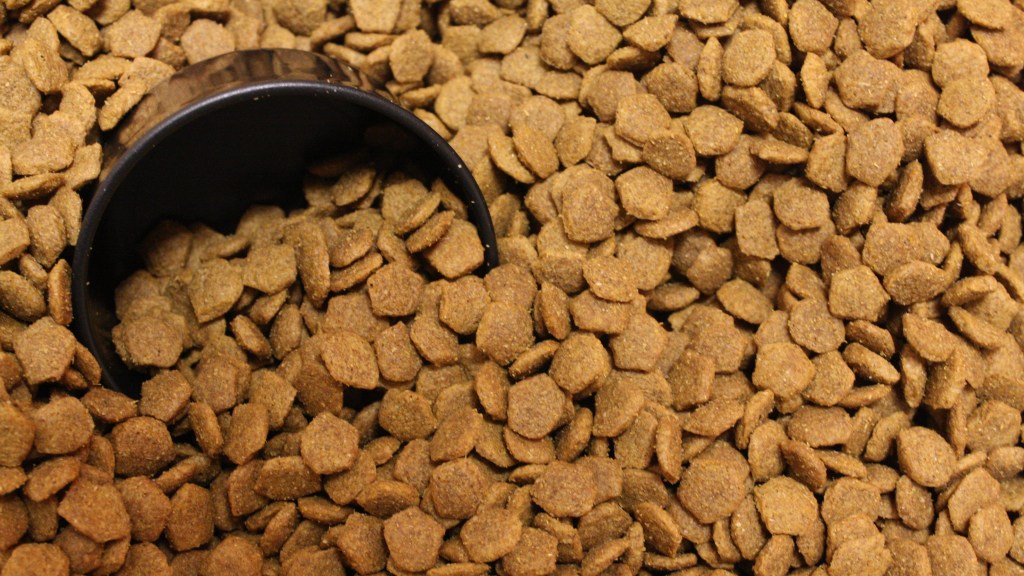
    While Scooby-Doo’s brief dalliance with vegetarianism appears to have been fairly short-lived, it strikes parallels with a number of hotly debated issues that seem to be currently sweeping through our news and social media: namely, the ethics of canine dietary requirements. As Sylvia Albrizi et al. note in their paper, ‘Dogs that Ate Plants’ (2021) this is not a new affair. Humans have been feeding domesticated dogs meals based on foods such as cereals for much of our combined histories (ibid. 75). Meat-free dog foods have been commercially available in the UK since 1980, with the release of ‘Happidog,’ now known as ‘V-dog,’ made primarily from wheat and soya/pea proteins (‘History of Vegan Dog Food,’ 2024).

    However, rather than acting as a marginal fad, plant-based options have become an increasingly dominant presence in the dog food industry. Globally, a report last year estimated the current market size of the sector as being worth a whopping $6.5 billion and growing (Mordor Intelligence 2025). It should go without saying that these rising numbers have proven fairly controversial. Numerous op-eds have opined that such popularity indicates that owners “are losing the plot about what animals actually are” and prioritising their own ethical concerns over their pets’ immediate welfare (Strimpel 2022). “Now even DOGS are being told to go vegan!” exclaimed The Daily Mail when a study announced that plant-based nutrients could provide adequate alternatives to meat-based diets (Leatham 2025). When, earlier this year, naturalist Chris Packham announced that he had begun feeding his poodles, Sid and Nancy, vegan pet food, he was met with a torrent of public admonishment. “That’s very cruel denying them their preferred choice of food,” replied Nigel Owens, noted rugby referee and MBE, “dogs are not vegetarians” (@Nigelrefowens 2026).

    Image: Chris Packham by Garry Knight, 2018.

    The argument that meat-based dog foods are inherently less natural and processed is, in my opinion, fairly misguided. Writing in her exposé of the industry, Zaria Gorvett argued that “Big Pet Food is a multi-billion-dollar industry which invests heavily in research into ‘palatants’ – ingredients that make our pets want to eat their products” (2021). Numerous chemicals and additives such as cadaverine, heptanal, and sodium acid pyrophosphate are frequently used to intensify flavour and stop the foods discolouring. “While in human food, their levels are sometimes closely monitored as a way of ensuring the freshness and safety of meat,” she writes, “they’re often actively added to cat and dog food, either as offal extracts or lab-made additives” (ibid.).

    Like our own culinary histories, the food we have chosen to give our animal companions can be measured by the evolving roles they have played in our lives, as well as our own shifting methods of production and consumption. There are few sectors that prop up lower-welfare livestock farming as self-evidently as that of pet food manufacturing. The rendering industry’s waste-reduction practices are often rolled out as one of the primary justifications for the more egregious conditions associated with mass-scale animal slaughter. Instead of being dumped in landfills or burned, the immense waste can instead be recycled into “meat and bone meal, hydrolyzed feather meal, blood meal, and various types of animal fats and greases” for consumption by pets (Meeker & Meisinger 2015: 835).

    Image: Dog Food by Anne Hornyak, Wikimedia Commons, 2011.

    Beyond the obvious welfare issues regarding the animals slaughtered, the FDA has frequently issued warning letters and recall notices to such plants due to the presence of unsafe chemicals and bacteria in rendered offal. Such cases have included the detection of pentobarbital, a drug used to euthanise animals (Bonnin 2019), and Highly Pathogenic Avian Influenza, otherwise known as bird flu (FDA 2025). Salmonella outbreaks, in particular, can frequently be traced back to rendering facilities, triggered by poor preventative measures and negligent sanitation standards (Carney 2024).

    In Food Pets Die For (1997), journalist and animal welfare advocate Ann N. Martin published one of the most notable attempts to address the scandals surrounding the commercial pet food industry. “I quickly learned that this is a multi-billion-dollar industry that operates with virtually no government regulations and in many ways self-regulated,” she would write in an updated edition (2002: viii). While a degree of oversight was introduced following crises such as the BSE outbreak, these issues remain ever-present.  “When you are dealing with a billion-dollar industry that wants to continue in the same mode, using the same dubious ingredients and condoning inhumane research on animals, change will only come in small increments,” she would argue (2002: viii-ix).

    Image: Rendering Plant by Julian E Beckton, Openverse, 2012.

    What about health and nutrition? Was Shaggy negligent in apparently supporting Scooby’s attempt to go meat free? Well, the growing wealth of academic evidence has begun to challenge assumptions about plant-based alternatives often propagated by meat industry representatives. Two years ago, the British Veterinary Association ended its opposition to canine vegan diets. As well as recognising a number of contemporary studies that observed equivalent health standards between dogs that were fed nutritionally-sound vegan diets compared to those who ate meat, they noted several instances where benefits were present, “such as improvements in skin and gastrointestinal conditions” (BVA 2024: 2). Similarly, the American Kennel Club’s advice compares the omnivorous needs of both dogs and humans, noting that both can safely subsist on vegan or vegetarian diets if the proper nutrients are present (AKC Staff 2021).

    Reflecting the very same reasons that so many of our own species abstains from carnivorism, the most overwhelming evidence supporting plant-based dog food is environmental in nature. A study last year suggested that an alarming “25–30% of the environmental impacts of animal production have been attributed to companion animal diets” (Nicholles & Knight 2025). Another suggested that transitioning all pet dogs to vegan diets could “save greenhouse gas emissions equivalent to 1.5 times the UK’s annual output, while providing enough food energy to feed 450 million people, equivalent to the EU population” (Sustainable Pet Food Foundation 2025).

    Image: Bulldog by Kabo, Unsplash, 2020.

    The decision to feed dogs a vegan or vegetarian diet is undoubtedly going to remain a contentious one. However, just as we choose to domesticate animals based on our own questionable sense of authority, we also have a responsibility to understand the impact of this choice upon both their well-being, as well as the well-being of our planet. As Jelena Šuran, veterinary scientist and pharmacologist, summarises, “evidence of the benefits of adding plant ingredients to canine diets is increasing as studies become larger and better designed (2024: 52-53).

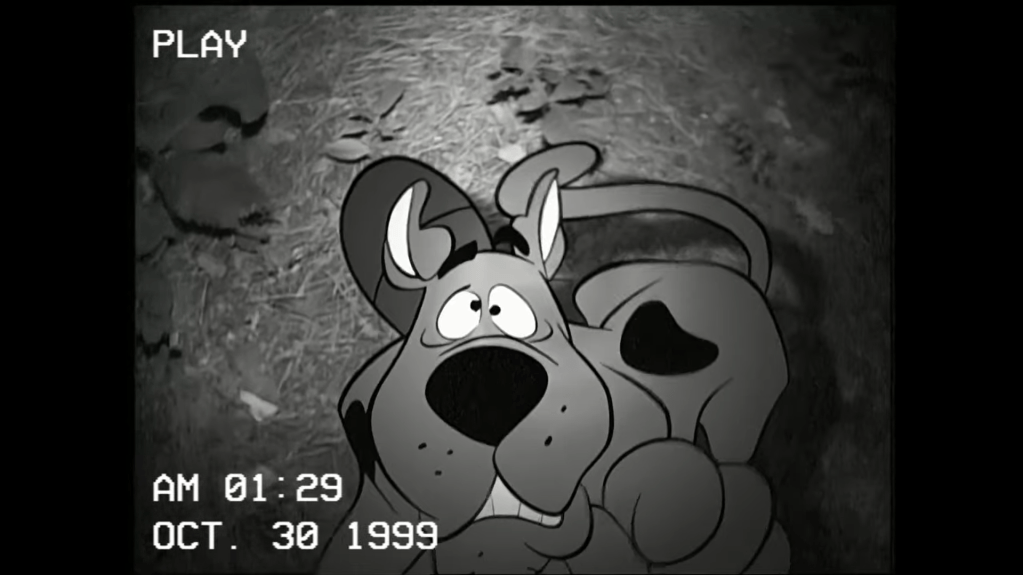
    Scooby-Doo might not seem a particularly apt vehicle for the exploration of such polarising debates, but, as evidenced by Kasem’s activism, the gang’s more-than half-century of adventures suggests otherwise. From their Annie-award-winning parody of The Blair Witch Project (1999), a mountain of viral creepypastas, and endless online debates regarding their racial and sexual identities, the franchise has, as my students’ enjoyment testified, rooted itself in countless urban legends and subversive folk tales. My brief look at the dietary questions surrounding Scooby Snacks might just as easily have focused upon edibles and drug cultures. As Lillard’s Shaggy says when introducing himself to Mary Jane, a young woman munching on the biscuits, “like, that is my favourite name.” 

    Image: The Scooby-Doo Project, Cartoon Network, 1999.

    Scooby-Doo is a franchise that gets a frankly ridiculous amount of mileage from the bottomless appetites of its two most cowardly protagonists. Thrust into paranormal dilemmas, Scooby and Shaggy’s death-defying desire to consume every foodstuff imaginable is a necessary element in their constant battle against their spooky adversaries. Their time as vegans, driven by Kasem’s activism, may have been short-lived, but it was pronounced enough to make me wonder how their dietary choices will be approached in the upcoming Netflix series, currently going by the insipid working title of Scooby-Doo: Origins. Still, if Scooby and Shaggy can, even briefly, overcome their hunger and fear, go plant-powered, and stand up to ghastly apparitions, there may yet be hope for us all.

    Head Image: Scooby-Doo! Mystery Incorporated, Warner Bros. Animation, 2010-2013.

    AKC Staff. 2021. ‘Can Dogs Adapt to a Vegan Diet?’ American Kennel Club, September 1: https://www.akc.org/expert-advice/nutrition/dogs-can-adapt-to-a-vegan-diet/.
    Albizuri, Silvia et al. 2021. ‘Dogs that Ate Plants: Changes in the Canine Diet During the Late Bronze Age and the First Iron Age in the Northeast Iberian Peninsula,’ Journal of World Prehistory 34: 75-119.
    Be Cool, Scooby-Doo! 2015 – 2018. Exec Prod. Sam Register, TV Series, US: Warner Bros. Animation.

    The Blair Witch Project. 1999. D. Daniel Myrick & Eduardo Sánchez, Film, US: Artisan Entertainment.

    Bonnin, Evelyn. 2019. ‘WARNING LETTER: JBS Souderton, Inc. dba MOPAC,’ U.S. Food & Drug Administration: https://www.fda.gov/inspections-compliance-enforcement-and-criminal-investigations/warning-letters/jbs-souderton-inc-dba-mopac-574386-04232019.

    British Veterinary Association. 2024. ‘BVA policy position on diet choices for cats and dogs,’ British Veterinary Association: https://www.bva.co.uk/take-action/our-policies/diet-choices-for-cats-and-dogs/.
    Carney, Isaac K. 2024. ‘WARNING LETTER: Mid America Pet Food LLC,’ U.S. Food & Drug Administration: https://www.fda.gov/inspections-compliance-enforcement-and-criminal-investigations/warning-letters/mid-america-pet-food-llc-681516-11222024.
    Corliss, Richard. 2014. ‘Casey Kasem; The Voice of America,’ Time, June 15: https://time.com/2878606/casey-kasem-the-voice-of-america/.

    Food and Drug Administration. 2025. ‘Voluntary Recall of Wild Coast Raw Boneless Free Range Chicken Formula Raw Pet Food Because of Possible Bird Flu Health Risk,’  U.S. Food & Drug Administration: https://www.fda.gov/safety/recalls-market-withdrawals-safety-alerts/voluntary-recall-wild-coast-raw-boneless-free-range-chicken-formula-raw-pet-food-because-possible.

    Gorvett, Zaria. 2021. ‘The hidden reason processed pet foods are so addictive,’ BBC, May 20: https://www.bbc.co.uk/future/article/20210519-the-hidden-reason-processed-pet-foods-are-so-addictive.

    ‘History of Vegan Dog Food.’ 2024. Sustainable Pet Food Association, January 26: https://sustainablepetfoodassociation.co.uk/history-of-vegan-dog-food.

    Leatham, Xantha. 2025. ‘Now even DOGS are being told to go vegan!’ Daily Mail, September 3: https://www.dailymail.com/sciencetech/article-15060639/DOGS-vegan-Plant-foods-nutrients-meat.html.

    Martin, Ann N. 2002. Food Pets Die For: Shocking Facts About Pet Foods, Troutdale: NewSage Press.

    Meeker, D L. & Meisinger, J L. 2015. ‘Rendered ingredients significantly influence sustainability, quality, and safety of pet food,’ Journal of Animal Science 93. 3: 835-847.

    Mordor Intelligence. 2025. Vegan Dog Food Market Size and Share Analysis – Growth Trends and Forecasts (2025–2030). Mordor Intelligence. Available at: https://www.mordorintelligence.com/industry-reports/vegan-dog-food-market.

    Nicholles, B. & Knight, A. 2025. ‘The environmental sustainability of meat-based versus vegan pet food,’ Frontiers in Sustainable Food Systems 9.

    @Nigelrefowens. 2026. ‘That’s very cruel denying them their preferred choice of food,’ X, January 8: https://x.com/Nigelrefowens/status/2009395846429987210.

    Norman, Mark. 2024. Zoinks! The Spooky Folklore Behind Scooby Doo. Luton: Chinbeard Books.

    Rushe, Dominic. 2014. ‘Casey Kasem, voice of Shaggy in Scooby Doo, dies on Father’s Day at 82,’ The Guardian, June 15: https://www.theguardian.com/world/2014/jun/15/casey-kasem-voice-shaggy-scooby-doo-dies.

    Scooby-Doo. 2002. D. Raja Gosnell, Film, US: Warner Bros. Pictures.

    Scooby-Doo 2: Monsters Unleashed. 2004. D. Raja Gosnell, Film, US: Warner Bros. Pictures.

    Scooby-Doo and Guess Who? 2019 – 2021. Exec Prod. Sam Register, TV Series, US: Warner Bros. Animation.

    Scooby-Doo! Mystery Incorporated. 2010 – 2013. Exec Prod. Sam Register, TV Series, US: Cartoon Network.

    The Scooby-Doo Project.1999. D. Chris Kelly, Larry Morris & Steve Patrick, Animated Special, US: Cartoon Network.

    Scooby-Doo, Where Are You! 1969 – 1970. Exec Prod. William Hanna & Joseph Barber, TV Series, US: Hanna-Barbera Productions.

    Strimpel, Zoe. 2022. ‘Vegan dog food is emblematic of our unhealthy canine obsession,’ The Telegraph, May 15: https://www.telegraph.co.uk/news/2022/05/15/vegan-dog-food-emblematic-unhealthy-canine-obsession/.

    Šuran, Jelena. 2024. ‘Plant ingredients in dog food – what does recent research say?’ Pets International, February: 52-53.

    Sustainable Pet Food Foundation. 2025. ‘Plant-Powered Pups: New Study Shows Dramatic Environmental Gains From Plant-Based Dog Food in the UK,’ Press Release Hub, September 25: https://pressreleasehub.pa.media/article/plant-powered-pups-new-study-shows-dramatic-environmental-gains-from-plant-based-dog-food-in-the-uk-55527.html.

    Trammell, Kendall. 2019. ‘“Scooby-Doo” wasn’t just another cartoon. It was a Reaction to the political turmoil at the time,’ CNN, September 13: https://edition.cnn.com/2019/09/13/entertainment/scooby-doo-50th-anniversary-history-trnd.

  • Renouncing the Hunt in Predator: Badlands (2025)

    Renouncing the Hunt in Predator: Badlands (2025)

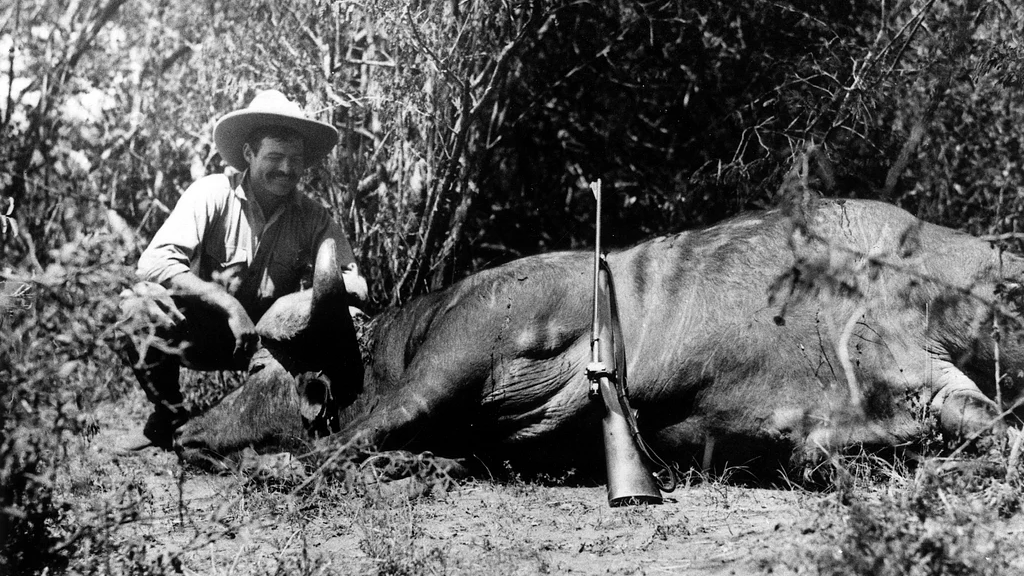
    The business of trophy hunting is booming. The wildlife hunting tourism market is projected to be on the cusp of crossing over one billion dollars in value across the next few years (Coherent Market Insights 2025). This growth has been largely attributed to a rising interest in the display of wild animal body parts to signal status, personal achievement, and mastery over nature. Many of us will have the same picture in mind when we imagine the blood sport in practice. Khaki-covered figures in a ‘grip-and-grin’ posture, rifle in hand while sat on the carcass of big game. The trophies themselves, hides, tusks, horns, and antlers, are, for their owners, reflective of the practical skills required to attain them, but they are also monuments of the cultural and financial privileges through which the sector operates.

    These are not the acts of subsistence hunting or indigenous ritualism that are practiced by countless communities around the world. This is a global business that exists to commodify the lives of rare and exotic animals. There is little dignity, in my opinion, to be found in a banker from Montana jetting off to Tanzania to shoot big game. Many women, of course, are self-identified trophy hunters, but it is not a coincidence that the industry is couched in grotesque machismo and predominantly propped up by men. What better method of reaffirming masculinity than to demonstrate the stoicism required to kill without sentiment? Ernest Hemingway, for example, whose life and work were variously elevated and diminished by a startling level of brutal clarity, expressed no compunction at the prospect of taking such lives when done with seemingly sufficient skill. When wounding a bull and condemning it to a long death while hunting in Africa, he would write that “I felt a son of a bitch to have hit him and not killed him. I did not mind killing anything, any animal, if I killed it cleanly, they all had to die and my interference with the nightly and the seasonal killing that went on all the time was very minute and I had no guilty feeling at all” (1936: 185).

    Image: Ernest Hemingway on Safari in Africa, U.S. National Archives and Records Administration, 1933.

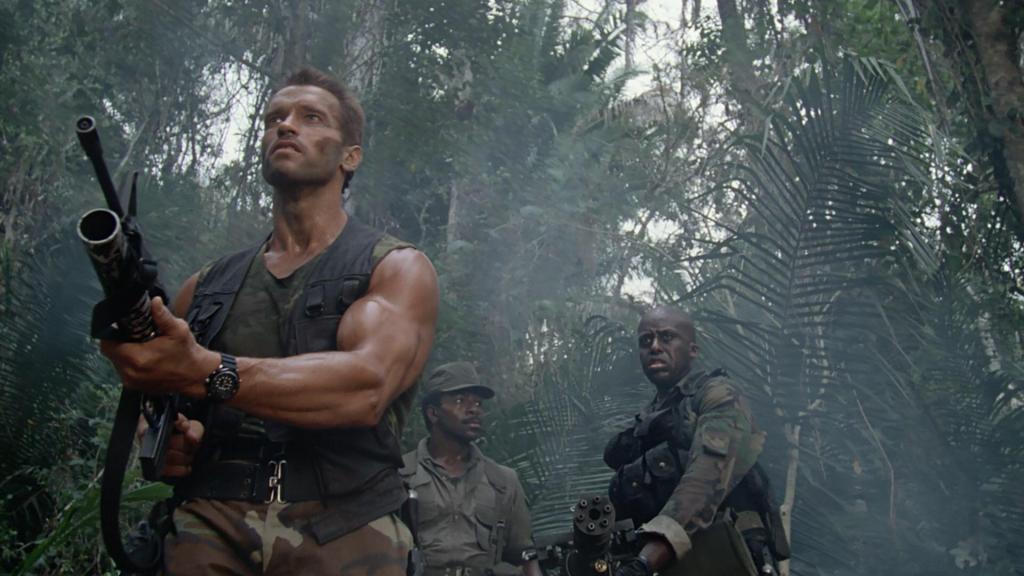
    Since its first instalment in 1987, the Predator franchise has made an indelible mark on the sci-fi and action genres by mythologising trophy hunting as a testosterone-fuelled thrill-ride driven by such acts of lethal prowess. When a ferocious alien arrives on Earth to test the mettle of humanity, Arnold Schwarzenegger is a suitably muscle-bound ambassador for us to deploy in kind. The film acts, alongside many features in the action star’s decades-long oeuvre, as a textbook example of vainglorious action at its most bombastically appealing. The film’s cacophonic barrage of machine guns, flexing biceps, and hyperinflated machismo is delivered in such a straight-faced manner that it’s difficult not to get swept up in its absurd spectacle. This is the film, after all, that features Jesse Ventura offering his buddies chewing tobacco with the cavalier statement that “this stuff will make you a god damned sexual Tyrannosaurus, just like me.” Less lovingly remembered, but no less notable, is the shockingly normalised homophobic expletive that Ventura utters beforehand. In both instances, audiences are in no doubt of the red-blooded virility and violence through which all-American manhood might be derived.

    Collecting the skulls of its victims for display within its spacecraft, the predator acts as an appropriate means for the sci-fi genre to speculate upon the skills and temperament required to be a trophy-hunting glory hound. Directed by John McTiernan, who would follow up on its success with Die Hard (1988), Predator’s high-octane adrenaline was potent enough to sustain thirty-five years of diminishing returns. For all their bravado, Predator 2 (1990), Predators (2010), and The Predator (2018) unfortunately proved themselves to be relatively toothless productions. The less said about Alien vs. Predator (2004) and Aliens vs. Predator: Requiem (2007), the better.

    Image: Predator, 20th Century Fox, 1987.

    Thankfully, the franchise is currently experiencing something of a resurgence due to several projects that have been collectively helmed by Dan Trachtenberg, of 10 Cloverfield Lane (2016) fame. Prey (2022) acted as a noteworthy addition to the series by reframing it’s archetypal ‘wild hunt’ from the perspective of a young Comanche woman, Naru, in the Northern Great Plains of 1719. Played by Amber Midthunder, Naru’s battle against the eponymous alien allows her to demonstrate her strength, resilience, and ability to protect her tribe from the dangers of the wilderness. The animated follow-up, Predator: Killer of Killers (2025), offers similar variance to the franchise, structured through a series of historical vignettes that draws its protagonists from Viking, samurai, and US naval history.

    In defiance of Hollywood’s consistent reluctance to release their intellectual properties from the vice-like grip of nostalgic repetition, the Predator franchise acts as an apt reminder that it is only with the inclusion of new blood and fresh perspectives that popular culture remains timely and resonant. Prey may not be a radical departure from studio convention, but it nevertheless holds the honour of being the first feature film to possess a full dub in the Comanche language. The Predator franchise’s science-fictional explorations of bravery and endurance, violence and reward, demonstrate the richness of hunting mythologies that can be traced throughout all human history. As Brian Boyd argues in On the Origins of Stories (2009), our species’ impulse to shape our social structures through the creation of narratives and myths is evolutionarily tied to the cognitive and biological standards that hundreds of millennia spent as hunter-gatherers instilled within us (167).

    Image: Prey, 20th Century Studios, 2022.

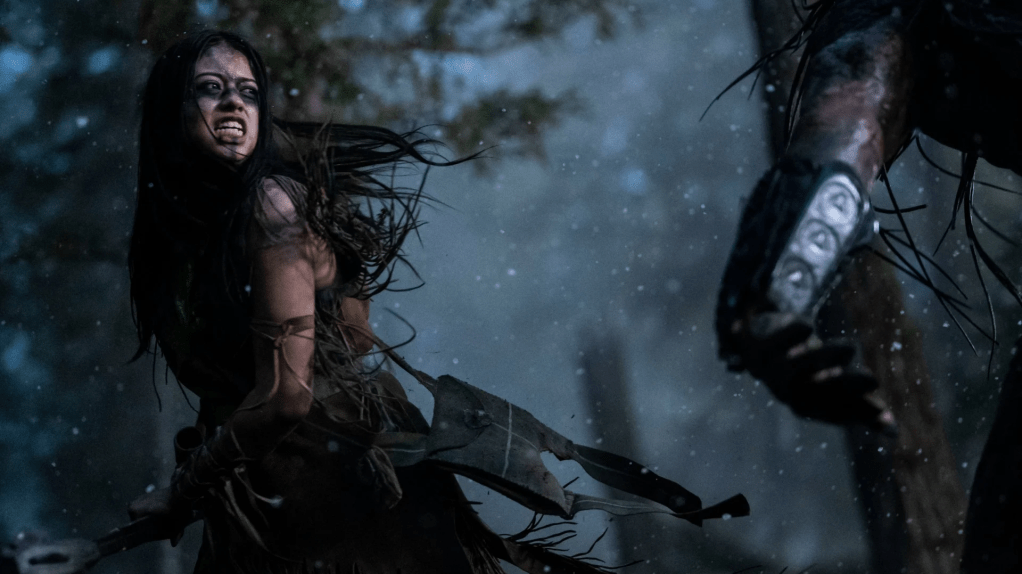
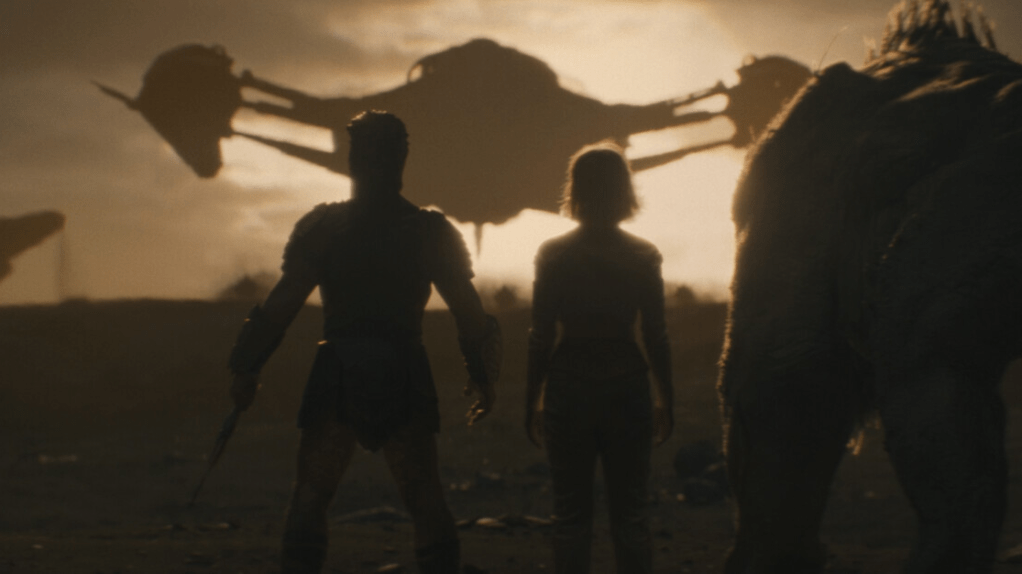
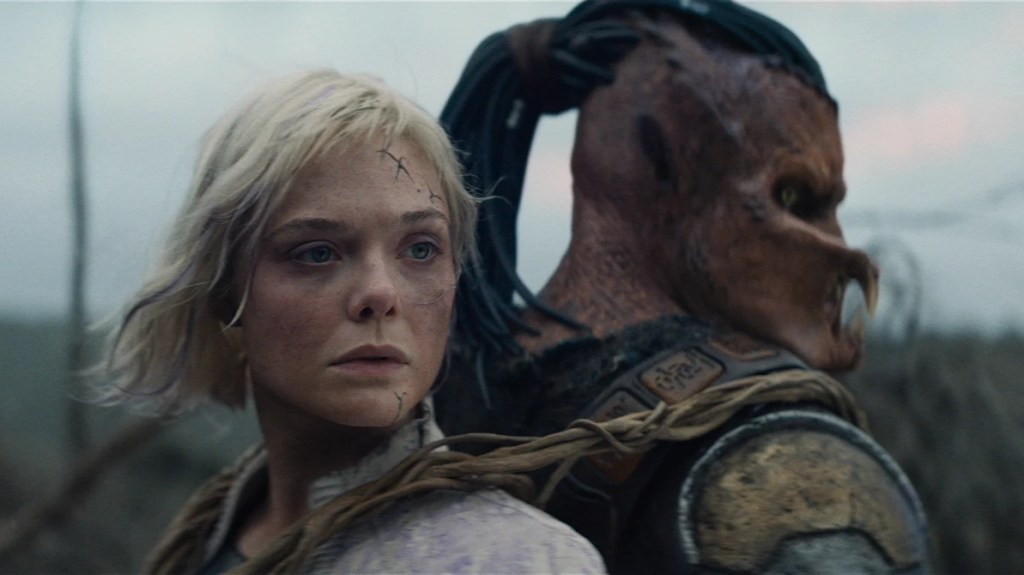
    As the third of Trachtenberg’s entries in the series, Predator: Badlands (2025) had its work cut out to avoid the same sense of inertia that had restricted so many of the series’ previous efforts. Its primary contribution is, therefore, a comparatively sizeable one. The film reframes its action-oriented mythos of trophy hunting through the perspective of Dek, Dimitrius Schuster-Koloamatangi, a member of the alien race that has long acted as the franchise’s antagonists. Borrowing the name of the species, Yautja, from the series’ expanded universe, Badlands ensures all the creatures’ characteristic features are present and accounted for. Schuster-Koloamatangi’s performance, impressively tracked and transformed by mo-cap, renders Dek as a being of cold-blooded lethality, determined to hunt the most dangerous beasts the universe has to offer.

    Anatomically, Dek’s monstrous appearance is similarly familiar to fans of the franchise. His unblinking yellow eyes betray no sense of sentiment, his battle-cries are hollered out through a yawning mouth of sharp teeth and mandibles, and even his blood appears toxic in nature, spattering upon the wilderness in streaks of luminescent green. Due to his towering presence on-screen, Schuster-Koloamatangi found himself repeatedly addressing rumours that he was 7’3”: “I’ve had this question a lot,” he would state through laughter, “everyone is always severely disappointed when they see me because I’m only six foot two” (qtd. in LRM 2025). Dek might not inhabit the role of villain usually adopted by his species, but he nevertheless fulfils the Predator series’ expectations of alien power-fantasy admirably.

    Image: Predator: Badlands, 20th Century Studios, 2025.

    Despite his formidable appearance, Dek is portrayed as an ignoble runt within his species. While he appears sufficiently intimidating to his human audience, compared to his kin, his diminutive size and comparable weakness place him in danger of being culled for the good of the clan’s honour. The film opens with Dek’s father, Njohrr, killing the Yautja’s more physically imposing brother, Kwei, for refusing to do the job himself. For the patriarch, his children’s loyalty to one another is a sign of their emotional frailty, and must be met with fatal recompense. Driven by a desperate need to overcome his perceived inadequacies, Dek embarks on a quest to hunt the Kalisk, a legendary apex predator feared even by Njohrr. “Father calls me the weakest,” Dek says determinedly, “so I must kill the strongest.”

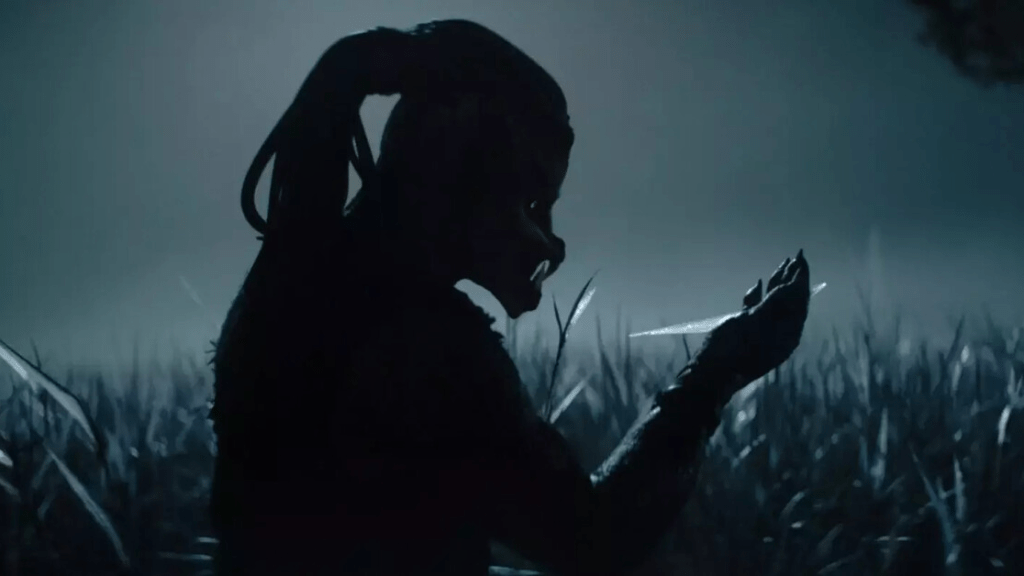
    The film’s first half follows Dek as he tracks the fearsome Kalisk and learns to survive the dangers of its native planet, Genna. Carnivorous vines, poisonous barbs, and fields of razor-like grass, as well as alien variations of bison, vultures, grubs, and snakes all act as hostile antagonists. At first, the Kalisk’s habitat seems to align very closely with the Yautja’s designation of a so-called ‘death planet.’ This is a landscape where every element of its flora and fauna have evolved to compete in a deadly struggle for survival, the perfect arena to test Dek’s cunning and combative abilities, while evidencing his clan’s mantra that ‘Yautja are prey to none. Friend to none. Predator to all.’

    Image: Predator: Badlands, 20th Century Studios, 2025.

    Badlands’ most significant turning point occurs in the middle of its second act, when, finally in combat with the Kalisk, Dek is captured by a Weyland-Yutani expedition who are similarly hunting the creature while exploiting the planet’s natural resources. Weyland-Yutani is, of course, the interstellar conglomerate first introduced in Alien (1979), subsequently crossed-over frequently with the Predator series by their joint-owners, 20th Century Fox, now owned and rebranded by Disney. With speculative stories of corporate hegemony and aggressive resource extraction, life appears to imitates art.

    Exposed to the pillaging practices of Weyland-Yutani, Dek’s story becomes a quest of ecological redemption. Revisiting Kwei’s ship and ruminating on the sacrifice that his brother paid to spare his life, the Yautja realises that strength and bravery are not measured by unthinking brutality, but by a resilience of character that is uncowed by an overwhelming adversary. Mounting an attack on the company’s compound, Dek employs the knowledge of Genna’s ecology that he had previously utilised to conquer it. Various local animals are recruited as allies, while the planet’s dangerous vegetation is crafted into an assortment of darts and explosives. Badlands reframes the carnage and excitement of its hunt through the spectacle of anti-corporate vigilantism and eco-activism. Rather than killing the Kalisk, Dek’s sense of self-worth is pivoted by his desire to liberate the creature and reunite it with its young.

    Image: Predator: Badlands, 20th Century Studios, 2025.

    The film’s coda sees Dek return to his father, who is disgusted when he discovers that the trophy his son has claimed is the head of a Weyland-Yutani android, rather than that of the Kalisk. “I’ve completed my hunt,” says the younger Yautja defiantly, casting the burned-out metal skull at his feet. Njohrr’s contempt sparks one final trial by combat, this time between parent and offspring. Dek’s righteous fury and skill carries him to victory, proving that he is not as weak as his father suspected. The boon that he had once desperately craved, Njohrr’s acceptance of him, is met by Dek’s indifferent rejection that “I have my own clan,” as he watches the Kalisk’s child casually behead him. Violence and spectacle might remain Badlands’ operating principle, but it is notable for exultating in its protagonist’s refusal to slay his questing beast.

    Dek’s rejection of his patriarch’s trophy-hunting demands aligns him with a time-honoured history of myths, legends, and folktales that extol the virtue of similar protagonists who transgress dominant expectations of the treatment of animals. Whether it is Siddhartha saving a hunted swan, Androcles caring for a wounded lion, Francis of Assisi taming the Wolf of Gubbio, or King Śibi offering sanctuary to a dove, centuries of fables collectively attempt to reassess humanity’s dismissal of other species’ rights to ethical consideration. As Imelda Martin Junquera and Francisco Molina Moreno summarise in ‘Mythology and Ecocriticism: A Natural Encounter’ (2018), ‘just as certain myths have legitimised the subjugation and exploitation of nature by humankind, others reflect a will to attain a harmonious relationship with the natural environment (6).

    Image: Predator: Badlands, 20th Century Studios, 2025.

    Badlands’repositioning of its audience’s perspective into that of its seemingly antagonistic aliens is its most important facet. It’s a shift that places the film firmly within science fiction’s tradition of posthuman concerns, challenging a host of anthropocentric biases. Helen Kopnina (2020) is one of many anthropologists to argue that such questions are of the utmost importance to contemporary culture, claiming that they have the potential to expose what she calls ‘the central tenets that define humanism,’ by ‘condemning speciesism, human chauvinism, and human supremacy’ (2).

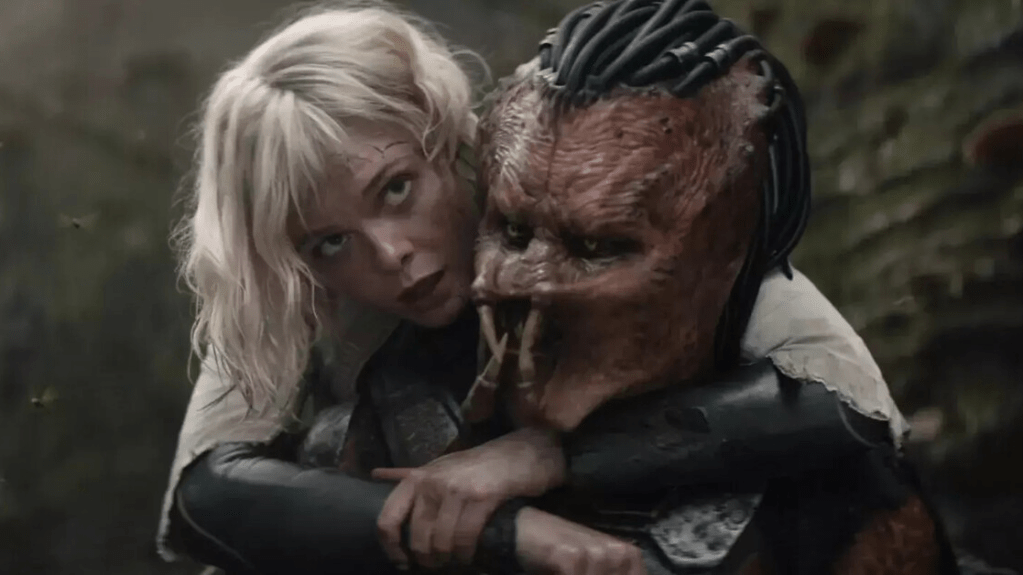
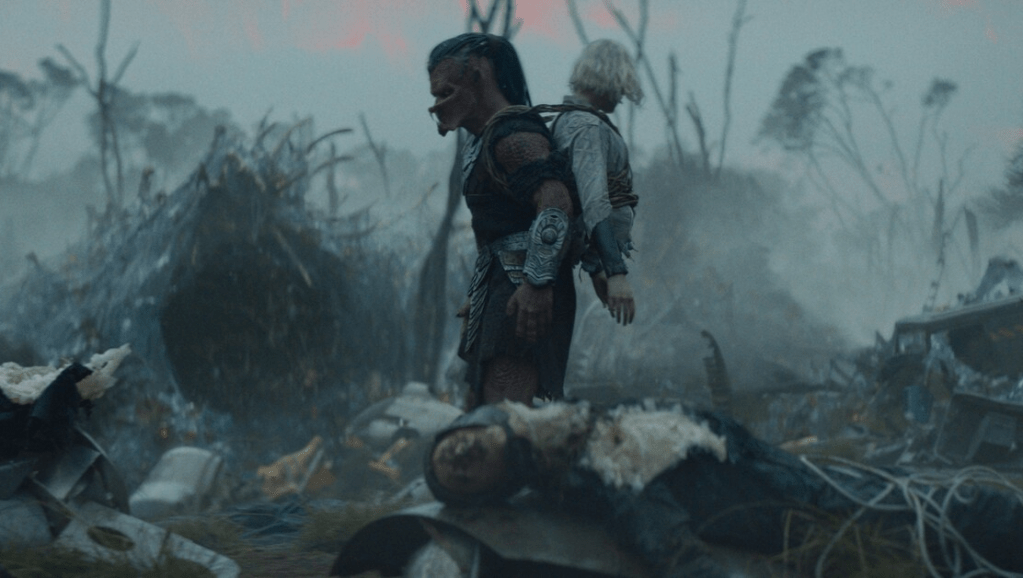
    Beyond upending its myth of the hunt, Badlands’ does this most directly by featuring absolutely no human characters whatsoever throughout the entirety of its running time. Alongside Dek and his clan of Yautja, the Weyland-Yutani expedition is entirely made up of the synthetic lifeforms that have played a prominent role in the Alien franchise. Receiving top-billing is Elle Fanning as Thia, an android who serves as Dek’s companion throughout his adventure. The Yautja’s respect for her is, following their initial meeting, comparable to the meagre courtesy he extends to the other lifeforms he encounters on Genna. He ignores her name and refers to her instead as “tool” when learning that she is synthetic, carrying her severed torso around like a backpack so that she may aid him on his hunt. Thia’s attempts to unite with her surviving twin ‘sister,’ Tessa, has a similarly tragic trajectory to Dek’s own ambitions for familial acceptance. Both characters are born from oppressive systems of power, corporate and tribal, that deny them the communal belonging that they crave.

    Image: Predator: Badlands, 20th Century Studios, 2025.

    It is Thia who first challenges Dek’s inherited belief that strength within a hunting community is best cultivated through individualism and self-reliance, informing him that “the alpha isn’t the wolf who kills the most, the alpha is actually the one who best protects the pack.” Dek’s dismissal of Thia’s call for communal cooperation, “I will be the alpha that kills the most,” is weathered away by Badlands’ conclusion. It is his relationship to the synthetic and the other creatures of Genna that eventually allows him to free the Kalisk, reject his father, and develop a new understanding of his social value.

    Interestingly, Dek’s shift in perspective reflects the recognition of several endemic flaws that Craig Stanford associates with hunting practices that can be traced back to our species’ pre-history. In The Hunting Apes: Meat Eating and the Origins of Human Behaviour (1999) Stanford argues that much of humanity’s inability to maintain social solidarity and empathy has been modelled and worsened by practices of ‘meat acquisition rather than meat sharing’ that have physiologically and culturally been engrained within us (11). Dek’s own character arc similarly teaches us that survival of the fittest relies as much on social cooperation as it does the prioritising of self-sufficiency.

    Image: Predator: Badlands, 20th Century Studios, 2025.

    Similarly, Badlands’ reliance on an entirely posthuman cast signals several ethical concerns regarding disparate approaches to hunting practices. Humanity remains notable through its lack of physical presence upon the surface of Genna. Weyland-Yutani has no desire to risk human lives during its resource extraction if synthetic lifeforms can be reproduced and disposed of remorselessly. In contrast, the Yautja’s own hunting ideologies, as brutal as they might seem, possess a modicum of honour based on the stakes and consequences risked if their efforts meet with failure. Their bravery and skills are tested within a variety of dangerous environments that they have neither industrialised or dominated. The ritualistic nature of Dek’s hunt demands he triumph over an opponent that is provided with advantage. Anyone with familiarity of the Predator franchise will know that the Yautja will not needlessly kill a creature that does not pose an immediate threat.

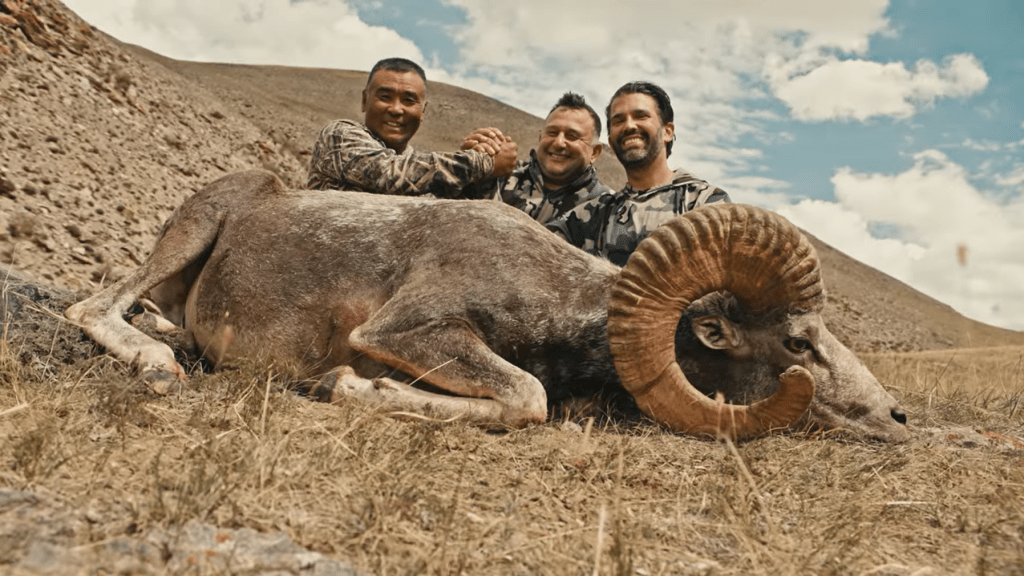
    It is difficult, therefore, to relate the Yautja’s hard-fought successes to the trophy hunting industries of our contemporary cultures. Little personal merit accompanies, for example, the act of Donald Trump Jr. spending over $17,000 of American tax-payers’ money to hunt argali and ibex sheep in Mongolia (White and Honl-Stuenkel 2020). It is nigh on impossible to find nobility in his taking of such lives when one considers the fact that he did not possess a licence to do so, and was only provided one retroactively (ibid.). This sense of entitlement and privilege exists in dichotomy to the hunting practices of communities that, for centuries, have accounted for far greater care and deference for our natural world. As Calvin Martin observed in Keepers of the Game (1978), the hunting practices of the Ojibwa people stand in stark contrast “to the exalted position” that humanity places itself within much of “Judeo-Christian tradition” (74).

    Image: Donald Trump Jr and companions in Mongolia, Field Ethos, 2022.

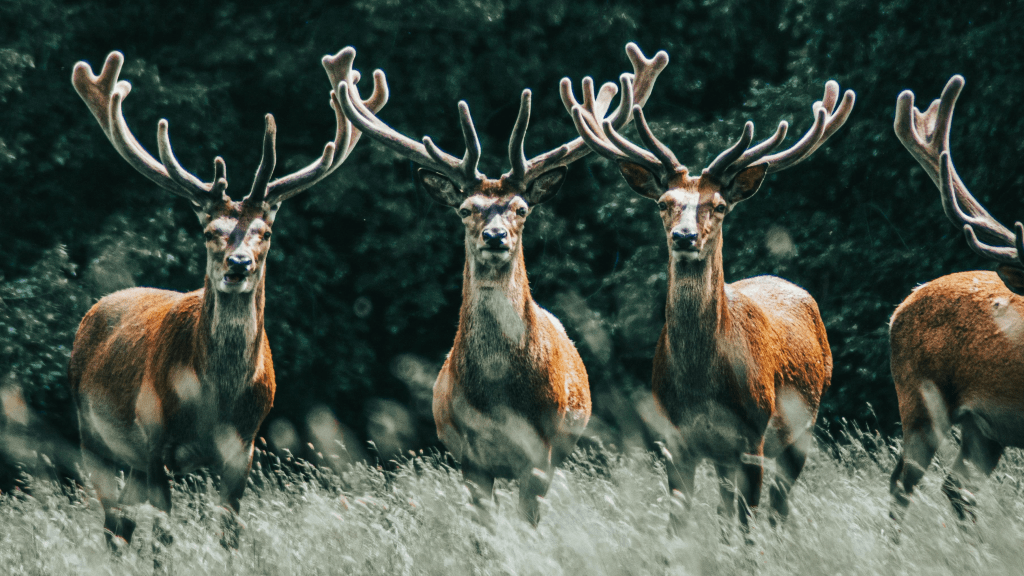
    Trump Jr. has repeated all of the usual arguments that are trotted out when questioned on his recreational interest in killing living creatures. When British gun manufacturer John Rigby & Company interviewed him during a deer-stalking trip in Oxfordshire, he obliged by rolling through them one by one. Rather than being a practice embedded in everyday rural existence, it is, for him, a holiday: “a great escape from some of the nonsense of the world” (qtd. in Brodie 2025). He is keen to describe shooting a roebuck with a broken leg as “the right thing to do,” a seeming act of mercy that helps the herd’s well-being (ibid.).

    His hunting partner, Rigby’s managing director Marc Newton, adds that heritage and a sense of historical connectiveness is also of apparent importance. “I can imagine our ancestors doing much the same thing,” Newton says, reaffirming the masculine power-dynamics of the culture by describing his own expedition with Trump Jr. as “three blokes out there spending time with one another” (ibid.). The most frequent defence of trophy hunting seeks to position the blood sport as an act of conservation and wilderness management. As Trump Jr. himself states, “we’ve hunted in the most pristine landscape today and it’s key that we conserve that for the future” (ibid.). His statement that “I’ve not been an angel but hunting has kept me out of a lot more trouble I’d have found myself in without it” speaks volumes to his beliefs concerning the psychological merits of firearm use and a recreational outlet for violence (ibid.).

    Image: A Herd of Deer, Lewis Ashton, Pexels, 2021.

    Even if one wishes to overcome the sizable ethical concern presented when justifying the pleasure and enjoyment found in the killing of a living creature, an over-whelming number of environmental scientists and organisations argue that corporatising conservation efforts and tying ecological management to tourism revenue and financially-motivated practices is entirely counter-productive. The repeated refrain that such trophy hunters are “killing them to save them,” is, in the minds of environmental law scholars such as Myanna Dellinger, entirely fallacious. “Doubt about the true conservation value, if any, of trophy hunting is still raised as a reason to continue the practice,” she writes, “this is turning the situation and applicable law on its head: when in doubt, we must – under the precautionary principle of law and for reasons of common sense – err on the side of saving the species” (2019: 59).

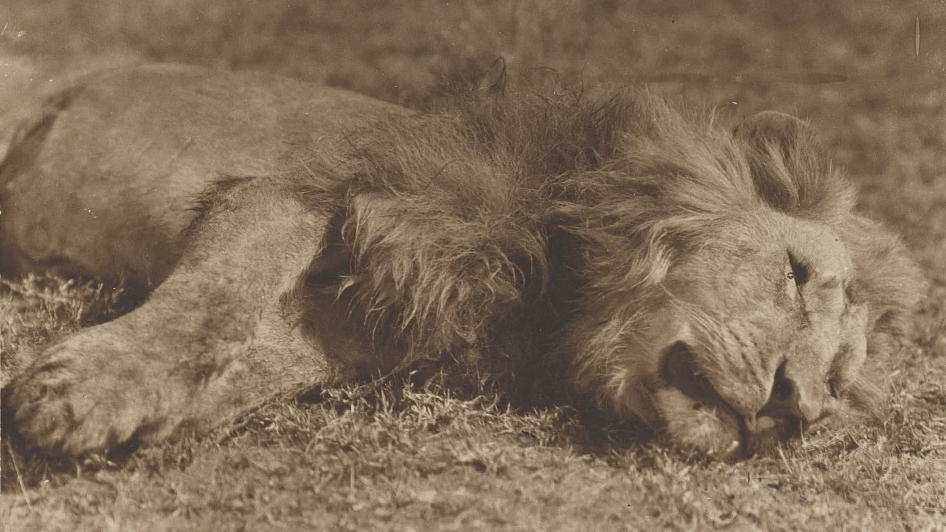
    Scandals continue to abound of the population decline of rare, high-value game, corruption in hunting governance, regulatory loopholes, and rampant illegal poaching due to a spiralling global marketplace for their remains. A report on trophy hunting from last year tallied that “in 2023 alone hunters took home over 25,000 bodies and body parts from 100 threatened species and an estimated 100,000 trophies were taken from all wild species” (Warner 2025). The killing of Cecil the lion in 2015, where the creature was illegally lured from a nature reserve, shot with a compound bow, and left critically injured for over ten hours before being killed, beheaded, and skinned, caused justified international outrage against the Minnesotan dentist who had reportedly paid $50,000 for the privilege (Kassam & Glenza 2015). Even so, in the decade that has followed, at least 10,000 more lions have been killed by similar acts of trophy hunting (Warner 2025).

    Image: Lion Shot by Kermit Roosevelt, Picryl: 1919.

    Here in the UK, the Animals (Low Welfare Activities Abroad) Act 2023 has been introduced to regulate the use of captive animals for entertainment tourism, but it is notable that the more expansive Animals Abroad Bill was blocked by prominent Conservative members Jacob Rees-Mogg and Mark Spencer (Dalton 2022). This Bill, which would have introduced measures to outlaw the import of hunting trophies, furs, and foie gras had been promised in the party’s 2019 manifesto, and was curtailed by the ministers for being, in their words, ‘un-Conservative’ (ibid.).

    The current Labour government has promised to introduce such legislation, but recent news reports that the U.S. Secretary of the Interior Doug Burgum has reached out to the UK’s Environment Secretary, Emma Reynolds, suggest direct attempts to hamper such efforts. Burgum reportedly expressed “concern about any bill that would crack down on trophy imports, arguing that trophy hunting benefits wildlife conservation and communities around the world” (Block 2026). It remains to be seen whether pressure from the US administration will restrict the UK’s animal welfare reform in the same manner that its wider policy has taken a sledgehammer to broader acts of international cooperation and global stability.

    Image: Jacob Rees-Mogg and Mark Spencer, Justin Tallis via Getty Images: 2022.

    Summarising increasing frustration with several European nations’ resistance to the ban of such imports, former president of Botswana, Ian Khama would state “with the decline of wildlife worldwide, and many species approaching extinction, all caused by man, how can there be justification in trophy hunting? How can any government say they are fighting poaching whilst allowing trophy hunting at the same time?” (qtd. in Millar 2024: 52). Kharma’s call for clarity and action is all the more remarkable considering the fact that 86% of the UK’s population reportedly supports the ban, rising to 92% of Conservative party voters, despite their ministerial attempts to block it (Millar 2024: 39).

    It might seem strange to attach such politically-charged and contentious debates to a film that derives its pleasures so obviously from pulse-pounding action. As Cary Wolfe notes of animal studies more generally in What is Posthumanism? (2010), “just because we direct our attention to the study of nonhuman animals, and even if we do so with the aim of exposing how they have been misunderstood and exploited, that does not mean that we are not continuing to be humanist – and therefore, by definition, anthropocentric” (2010: 99). The ideologically circumscribed Walt Disney Company is certainly ill-equipped in its capacity to disrupt such perspectives of the world.

    Image: Predator: Badlands, 20th Century Studios, 2025.

    Still, I would contend that Predator: Badlands is a welcome, if minor, distraction from the cultural and political drive towards self-interest and individual populism. It’s posthuman cast face problems similar to our own. Deliberately subjugated, Dek has been forced by his paternalistic clan to direct his anger against those in similar positions of subordination. Like him, our struggle requires us to reject the overwhelming number of voices that encourage us to embrace callous and fatalistic worldviews. Badlands’ representation of a world where action might be utilised to overthrow such perspectives provides much-needed catharsis.

    Head Image: Predator: Badlands, 20th Century Studios, 2025.

    Alien. 1979. D. Ridley Scott, Film, US: 20th Century Fox.

    Alien vs. Predator. 2004. D. Paul W. S. Anderson, Film, US: 20th Century Fox.

    Aliens vs. Predator: Requiem. 2007. D. The Brothers Strause, Film, US: 20th Century Fox.

    Block, Kitty. 2026. ‘Trophy Hunting Does Not Benefit Animals, No Matter What US Interior Secretary Claims,’ Humane World, February 3: https://www.humaneworld.org/en/blog/uk-trophy-hunting-trade-bill.

    Boyd, Brian. 2009. On the Origin of Stories: Evolution, Cognition, and Fiction. Cambridge: The Belknap Press of Harvard University Press.

    Brodie, Liz. 2025. ‘Donald Trump Jr. Tracks the Traditions of the Hunt,’ John Rigby & Co, July 31: https://www.johnrigbyandco.com/donald-trump-jr-tracks-the-traditions-of-the-hunt/.

    Coherent Market Insights. 2025. ‘Wildlife Tourism Market,’ in Market Research Report, March 25: https://www.coherentmarketinsights.com/market-insight/wildlife-hunting-tourism-market-4922.

    Dalton, Jane. 2022. ‘Jacob Rees-Mogg Refuses to Debate Why He ‘Blocked’ Bill That Would Have Spared Elephants from Torture,’ The Independent, June 10: https://www.independent.co.uk/news/uk/home-news/rees-mogg-bill-mark-spencer-elephants-ban-b2098382.html.

    Dellinger, Myanna. 2019. ‘Trophy Hunting – A Relic of the Past,’ Journal of Environmental Law & Litigation 34: 25-60.

    Die Hard. 1988. D. John McTiernan. Film, US: 20th Century Fox.

    Hemingway, Ernest. 1936 [2004]. Green Hills of Africa. London: Vintage.

    Kassam, Ashifa & Glenza, Jessica. 2015. ‘Killer of Cecil the Lion Was Dentist from Minnesota, Claim Zimbabwe Officials,’ The Guardian, July 28: https://www.theguardian.com/environment/2015/jul/28/killer-of-cecil-the-lion-was-american-zimbabwe-officials-claim.

    Kopnina, Helen. 2020. ‘Anthropocentrism and Post-humanism,’ The International Encyclopedia of Anthropology, ed. Hilary Callan. Chicester: John Wiley & Sons: 1-9.

    LRM. 2025. ‘Dimitrius Schuster-Koloamatangi is Not 7’3″ To Play Predator in Predator: Badlands,’ YouTube, November 9: https://www.youtube.com/shorts/AJL3_D1xaKY.

    Martin, Calvin. 1978. Keepers of the Game: Indian-Animal Relationships and the Fur Trade. Berkeley: University of California Press.

    Martin-Junquera, Imelda & Molina Moreno, Francisco. 2018. ‘Mythology and Ecocriticism: A Natural Encounter Introduction,’ Ecozon@, 9. 2: 1–7.

    Millar, Lydia. 2024. ‘In Memory of Cecil the Lion: An Analysis of Trophy Hunting, CITES and the Way Forward,’ UK Journal of Law 8.1: 38-52.

    Predator. 1987. D. John McTiernan. Film, US: 20th Century Fox.

    Predator 2. 1990. D. Stephen Hopkins. Film, US: 20th Century Fox.

    Predator: Badlands. 2025. D. Dan Trachtenberg, Film, US: 20th Century Studios.

    Predator: Killer of Killers. 2025. D. Dan Trachtenberg, Film, US: 20th Century Animation.

    Predators. 2010. D. Nimród Antal. Film, US: 20th Century Fox.

    Prey. 2022. D. Dan Trachtenberg, Film, US: 20th Century Studios.

    Stanford, Craig B. 1999. The Hunting Apes: Meat Eating and the Origins of Human Behaviour. Princeton: Princeton University Press.

    The Predator. 2018. D. Shane Black. Film, US: 20th Century Fox.

    Warner, Caitlin. 2025. “Biggest Ever Global Exposé of Trophy Hunting Industry,” Global Media Centre, June 30: https://www.globalmediacentre.com/news/biggest-ever-global-expose-trophy-hunting-industry.

    Wolfe, Cary. 2010. What is Posthumanism? Minneapolis: University of Minnesota Press.

  • Argentine Dogma: Dogo Argentinos and Bombón, El Perro (2004)

    Argentine Dogma: Dogo Argentinos and Bombón, El Perro (2004)

    While preparing this article, I learnt that the national animal of Argentina is a small, rust-coloured bird called the rufous hornero. At first glance, it might seem an unassuming representative for a country in possession of such a complex culture. This is a nation whose history can be traced through numerous indigenous civilisations and pre-Columbian empires, the legacy of Spanish colonialism, and, of course, several modern civil wars. However, the modest bird’s significance is a testament to the hard work embodied in its distinctive nest-building, its rugged determination to survive in varied terrain, and, importantly, its beautiful singing voice. Possessing hefty frames, stout features, weathered white coats, and muscular, rolling gaits, Dogo Argentinos are unlikely bedfellows to the rufous hornero, yet both animals symbolise a similar sense of self-determination. These canines serve as equally important ambassadors for a nation defined by its peoples’ force of will, shaped by continual social upheaval.

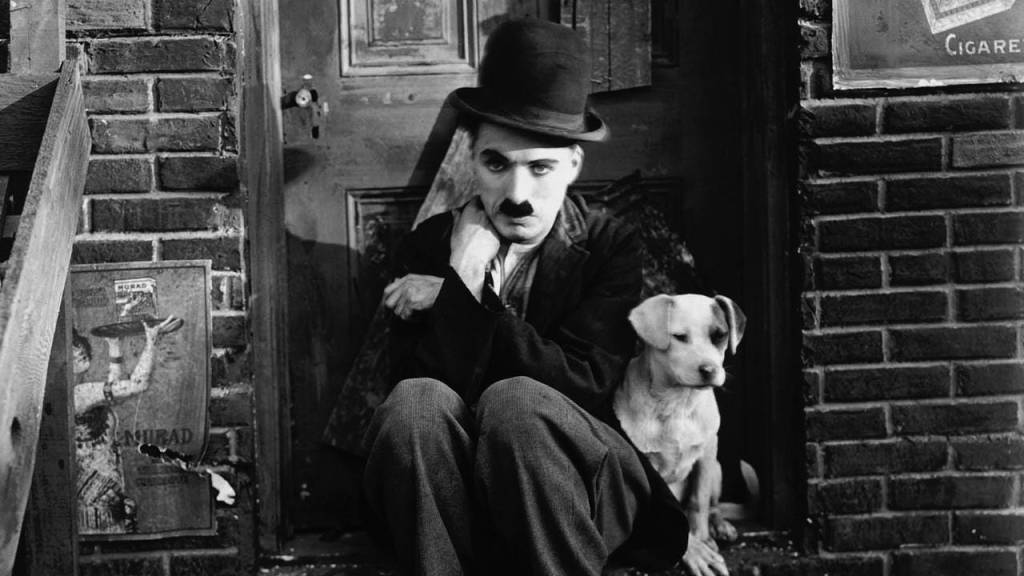
    Bombón, El Perro (2004), known simply as El perro in its homeland of Argentina, is a film that seeks to frame this national mood through the sheer charisma and star presence of its on-screen hound. It belongs to an exceptionally long line of pooch-fronted features such as A Dog’s Life (1918), Lassie Come Home (1943), White God (2014), and 777 Charlie (2022) that use their canines to illustrate important issues of moral agency and empathy. The fact that this blog has not already been subsumed by my overriding fascination with ‘dog pictures’ is a source of substantial surprise to myself. You can expect me to turn my attention to those other features sooner rather than later.

    Image: A Dog’s Life, First National Pictures Inc, 1918.

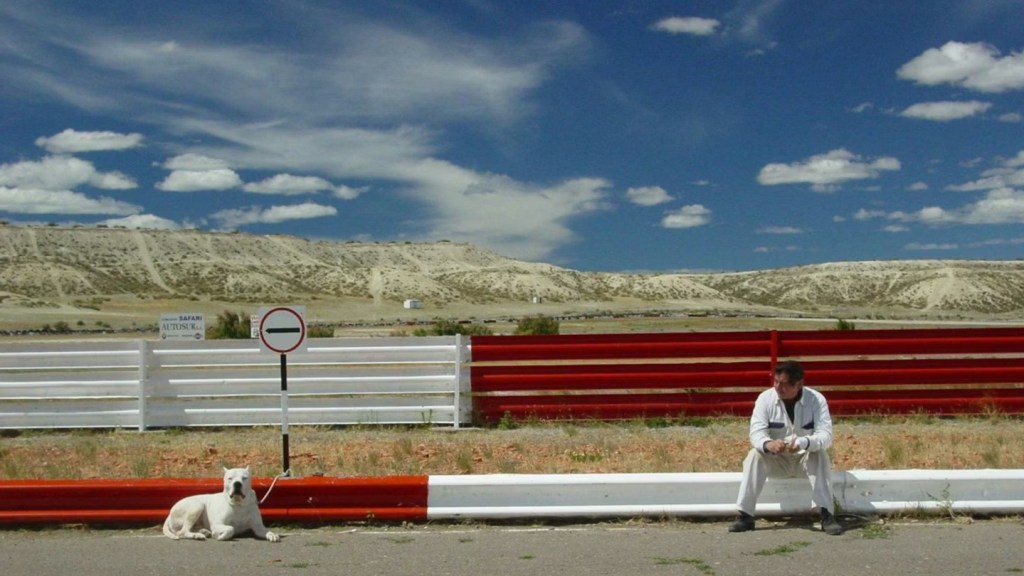
    Bombón, El Perro’s director, Carlos Sorín, had already made his name in the Argentine film industry with two comedy-dramas in prior decades. However, it was in Intimate Stories (Historias minimas, 2002) that he laid the neo-realist foundations that he would return to for this later feature. Utilising predominantly non-professional actors, rural settings, and naturalistic cinematography, both these films foreground Sorín’s human-interest observations of life in the windswept expanses of Patagonia. As the director would state shortly after Bombón, El Perro’s release, ‘my tendency was to emphasise a realistic point of view, which gives a raw element, almost like in a documentary’ (Kalinowska 2005).

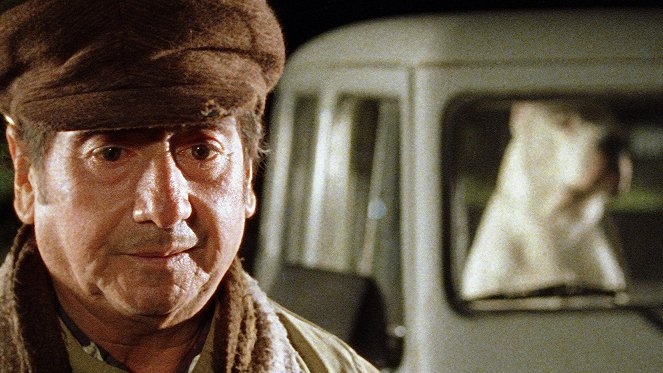
    In neo-realist tradition, Bombón, El Perro affords an opportunity to explore the lives of individuals neglected by the film industry’s drive towards glamour and polished spectacle. The hero of this fable is ‘Coco,’ tenderly portrayed by Juan Villegas, a parking attendant who Sorín would meet at a garage near the director’s production company in Buenos Aires (Sorín 2004). Coco is a 52-year-old mechanic and, after the remote gas station where he is employed shuts down, struggles to make a living selling knives with carefully crafted handles. Villegas plays the lead with affable dignity that endures his hardships in quiet contemplation. Despite his troubles, Coco is shown consistently going out of his way to help others with his skills. At the end of the film’s first act, a widow, grateful for his help reviving a broken-down car, gifts him an enormous Argentine mastiff that transforms his life in ways he never could have anticipated.

    Image: Bombón El Perro, Cinema Tropical, 2004.

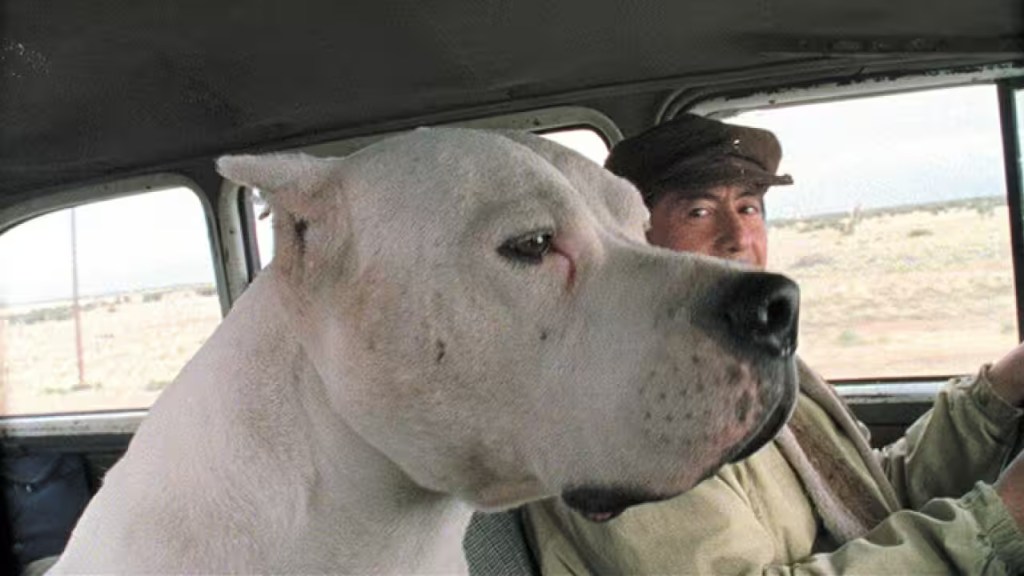
    Initially calling him Lechien through a misunderstanding of the words le chien (French for ‘the dog’) on a sign that hangs above his kennel, Coco eventually nicknames his new companion Bombón. What follows is a man-and-dog road movie where Coco’s life is dramatically transformed by Bombón’s charm and, ironically, considering his small and delicate namesake, his towering presence. Gregorio is the Dogo Argentino who portrays Bombón’s 40 kilos of taciturn muscle, seemingly filling every frame he appears in. His inscrutable expression is the perfect complement to Villegas’ baleful resilience and, without diminishing the film’s other numerous strengths, their interactions steal every scene they share.

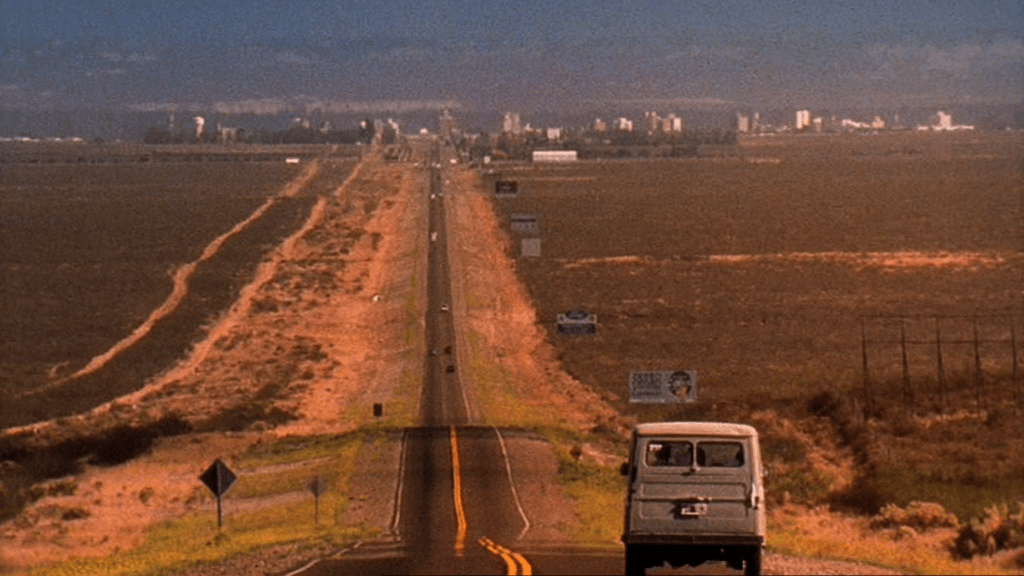
    Sorín would argue that he appreciated Gregorio’s reserved nature, stating that ‘he’s not very affectionate, he’s a bit of a mystery himself and you never really know what he is going to do,’ arguing that ‘some moments you actually see that he is thinking, he’s got his internal conflicts’ (Clee 2007). Sat in the front passenger seat of Coco’s old camioneta, Bombón strikes a stately figure that affords the man a sense of self-assured confidence and unwavering composure that he desperately needs.

    Image: Bombón El Perro, Cinema Tropical, 2004.

    Now travelling with Bombón at his side, Coco’s fortunes begin to change. He finds himself recruited as a security guard at a wool warehouse and, as the plot develops, is gradually drawn deeper into the world of dog training and exhibition. Throughout, Coco’s relationship with Bombón is one guided by empathy and solidarity, privileging acts of decency and compassion over opportunities for wealth and personal gain. He refuses, for example, the order to set the dog upon a beleaguered ex-guard who returns to the warehouse to fetch his possessions. Similarly, while those he encounters are keen to exploit Bombón as the valuable commodity they perceive him to be, Coco sees him as an inseparable ally, allowing the dog’s autonomy to reflect the man’s own freedom and agency.

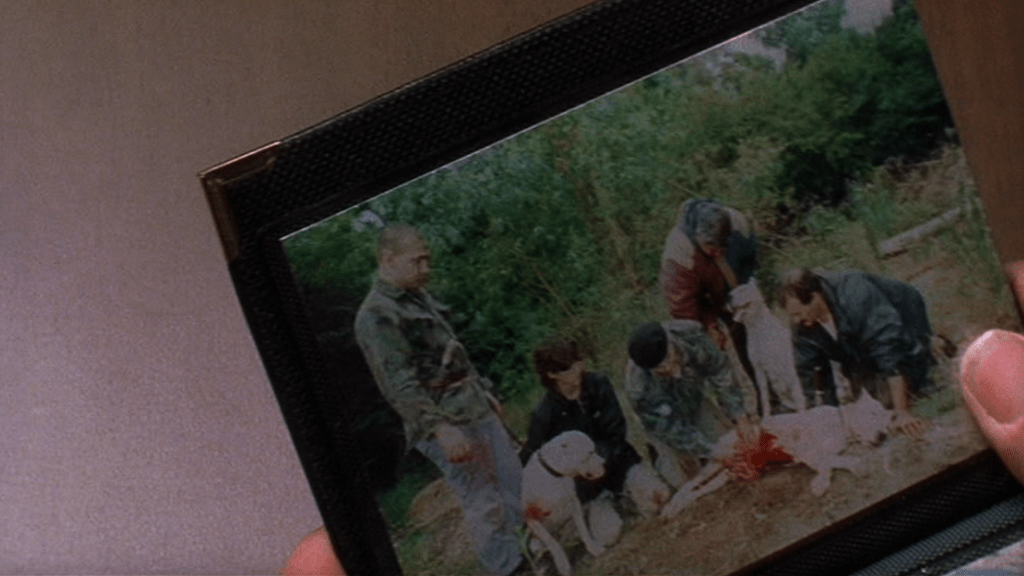
    Both find their identities systematised based on their perceived value. While Coco’s is dehumanised when broken down for a computer used at his local job agency, Bombón’s is associated with prestige. He is described as a ‘posh dog’ when Coco looks through his papers, fathered by ‘a grand champion’ named ‘Quilapán de los Andes’ after an Araucanian chieftain. In one of the film’s most significant turning points, a bank manager, motivated by his admiration of Bombón, invites Coco into his office. There, he explains how possession of the breed affords access to both financial and social affluence, highlighting his experiences on hunting expeditions. Showing him a photograph of his own Dogo Argentino, horrifically wounded after being gutted by a wild boar, the manager unnervingly states that ‘they don’t feel pain… they are beasts from outer space.’ Coco’s disgust and reluctance are matched only by Bombón, who cocks his leg and urinates underneath the bank manager’s desk, unseen.

    Image: Bombón El Perro, Cinema Tropical, 2004.

    For the hunters and breeders who Coco encounters, Bombón is little more than a ‘specimen’ to be prized for the physical traits relentlessly bred into him. Teaching Coco how to prepare the dog for exhibition, the dog trainer Walter Donado corrects Bombón’s posture by firmly gripping his head. ‘This is what we’re trying to sell,’ he explains. The mastiff’s character, however, seems made of firmer stuff than many of the humans that they confront. When attempting to stud him, the owner of the female Dogo Argentino is infuriated by Bombón’s utter disinterest. ‘This dog is a coward!’ he angrily exclaims at Coco. ‘She’s in heat today. I’ll have to wait another six months! Who pays me for the food? Who pays me the lost profits? Who? You?’

    Coco is clearly enamoured by the newfound respect and appreciation that Bombón grants him. The look of pride on his face when he and the dog are awarded third in a local competition expresses the unexpected satisfaction of the recognition denied him his entire life. Even so, Coco becomes increasingly dissatisfied with the unrelenting machismo that stands in stark opposition to his own gentle and measured outlook. The film ends with Coco in search of Bombón, who has escaped from Donado’s kennels. He is delighted to discover him at a nearby building site, freely mating with a black mongrel of clearly indeterminate breed. Bombón’s act, while more impulsive than intentional, is nevertheless a triumphant defiance of his breeders’ own financial desires and a compelling vindication of his irrepressible freedom. As Coco and Bombón depart together in their van, joined by a pair of hitchhikers similarly in search of work, the possibility of a freer, more self-determined future quietly emerges.

    Image: Bombón El Perro, Cinema Tropical, 2004.

    It is through Sorín’s neo-realist lens that comparisons between Coco and Bombón seem most apt. Rather than relying on intense dialogue, the director chooses to foreground their expressions. ‘I have always preferred gesture to text in cinema,’ Sorín would note, ‘a look, a silence, an imperceptible grimace glimpsed in a close-up, expresses far more than any rhetoric,’ (Sorín 2004). His camera lingers upon Bombón and Coco as they both warily observe those around them. Even motionless, the dog is constantly watching, offering silent judgment on the injustices they encounter. Similarly, it is the expression in Coco’s eyes that wordlessly conveys his distaste when an agency administrator, for example, threatens and admonishes a caller for complaining that they have been underpaid by their employer.

    In contrast to Coco’s well-meaning and affable personality, the spectre of Argentina’s political landscape remains ever-present. Following decades of military dictatorships, Argentina had suffered one of its worst recessions in the years that preceded Bombón, El Perro’s release. As the economist Kurt Schuler summarises, the country was emerging from ‘deepening depression; unemployment among nearly a quarter of its working population; and poverty among more than half of its people’ (2005: 267). In two extraordinary weeks of Argentine history at the end of 2001, the country would rotate through five presidents, one of whom defaulted on the government’s foreign debt. As Coco states in his predictably understated manner while job hunting, ‘things are not going too well.’

    Image: Bombón El Perro, Cinema Tropical, 2004.

    ‘I wanted to tell the story of an unemployed man,’ Sorín would state, ‘you see it in the streets unlike before. There are queues for food and begging for charity, so many people, which we call “Cardboard Men” that go through the rubbish and sell the recyclable stuff to those who have commercialised recycling’ (Kalinowska 2005). It is no coincidence that Sorín had also used a canine to frame the narrative of his earlier neo-realist work, Intimate Stories. This earlier film had centred much of its drama upon a character who searches for a lost dog to atone for the guilt of a hit-and-run accident that weighs upon him. In With Dogs at the Edge of Life, Colin Dayan argues that representations of these animals are often used to orient definitions of our own species. He terms the cinematic representation of so-called ‘Pariah Dogs’ as reflecting the ‘mercenary pressures of progress,’ enacted through the ‘disposal and extermination’ of creatures that society deems unfit for survival (2016: xv).

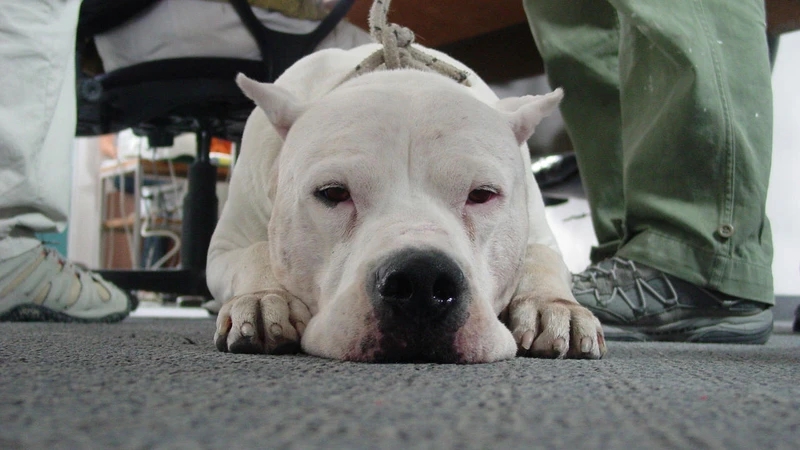
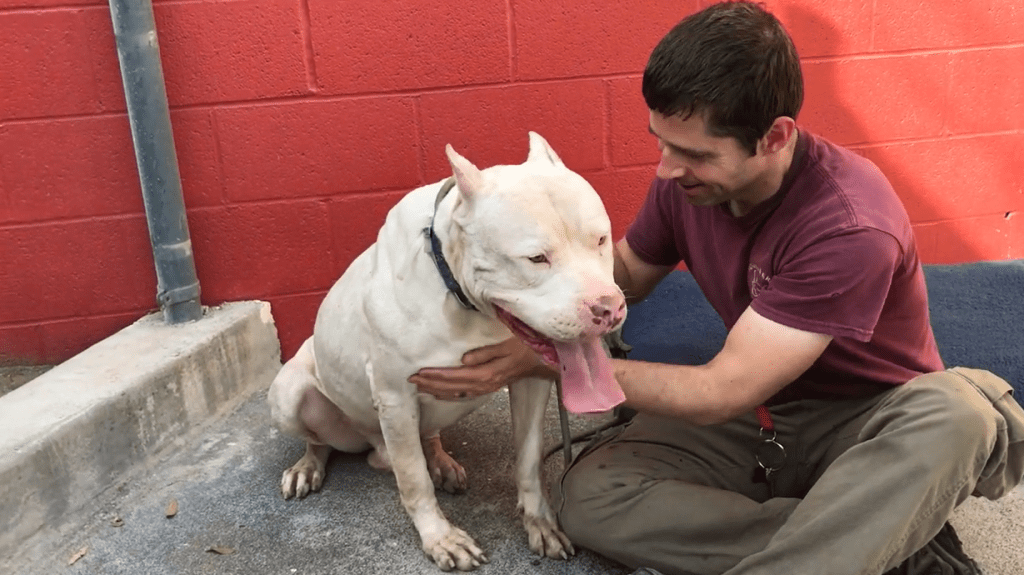
    The Dogo Argentino, bred for hunting large game in Córdoba just under a century ago, is rife with cultural meaning. It was purposefully created from stock of the city’s Córdoba fighting dog to increase the breed’s size, while retaining and enhancing its physical power and stamina after Argentina outlawed dog fighting in 1954 (Wilcox & Walkowicz 1995: 340). In my own country, the United Kingdom, as well as numerous others, the breed was banned when the Dangerous Dogs Act 1991 was introduced. There are probably few animal-related debates that I could engage with that are thornier than those surrounding aggression in canines, and probably fewer still that are approached without immediate assumption and bias.

    Image: Dogo Argentino, Tim Giles, 2018.

    Although we live in a world governed by those who repeatedly seem to undermine existing expertise when constructing policy, research should, I believe, remain our first turning point whenever engaging with such contentious topics. Several studies have been conducted on Dogo Argentinos in the hopes of better understanding their temperaments and how these are impacted by their upbringing. One such examination, for example, found numerous ‘critical predictors of many outcome variables’ that indicated when signs of aggression and nervousness would appear (Diverio & Tami 2014: 151). These included distinctions between kennel and house living dogs and, most significantly, the level of experience possessed by the owners and how familiar they were with handling the breed (ibid.).

    Similarly, a later study of various types of dogs found that ‘no breeds in particular were responsible for severe or multiple bites towards either humans or dogs’ (Notari et al. 2020: 1162). Instead, they asserted that ‘helping owners to have a better understanding of their dogs’ welfare, behaviour and communication via educational programs’ acted as a deeply necessary method of harm prevention (ibid.). The RSPCA has long pointed towards Breed Specific Legislation unnecessarily being used to justify the euthanasia of thousands of dogs in Britain that have been put down despite exhibiting no behavioural issues. In evidence submitted to a government inquiry on this legislation, the organisation noted that, despite its introduction, hospital admissions for dog bites rose by 76% (RSPCA 2018). They argued that a lack of educational resources and scientific research acted as a notable detriment to public safety (ibid.).

    Image: Dogo Argentino, Rawpixel, n.d.

    This debate, concerning the distinctions between innate and learned behaviours, is one that Sorín’s film is deeply interested in. When Bombón’s initial owners discuss his breeds’ temperament, the older woman states that ‘nobody is born bad,’ while the younger observes that ‘they are not bad, but wild.’ I am neither qualified nor willing to moralise on the inherent natures of Dogo Argentinos. However, eschewing prejudice and generalisation of the breed itself, I am more than happy to lay such responsibility at the feet of the negligent processes of genetic selection, mistreatment, and improper training that are endemic in the world of dog breeding and ownership. The repeated and resounding failure of humanity to properly care for and protect the species we have willingly bred into existence is, quite simply, unconscionable.

    While outlawed (shockingly recently) in the UK, mutilations such as tail docking and ear cropping are commonly inflicted upon Dogo Argentinos and other breeds globally. Although dog fighting has been outlawed by many nations, illegal rings continue to operate or are simply tolerated due to lacklustre enforcement. A 2018 report by the ASPCA estimated that there were ‘tens of thousands of dog fighters across the country’ and claimed that they had, in a single year, ‘rescued more than 400 animals’ utilised within the blood sport (ASPCA 2018).

    Image: United Hope for Animals, YouTube, Creative Commons License, 2018.

    Distressingly, the mistreatment of dog breeds extends to acts that are not only legal, but social ingrained within our culture. One only needs to turn to the hereditary issues caused by selective breeding to observe that their physical well-being is of secondary importance to their appearance and status as commodities. One veterinary surgeon lists the conditions associated with Dogo Argentinos as including hip dysplasia, joint pain, mobility issues, arthritis, congenital deafness, and gastric dilatation volvulus ‘due to its large size and deep chest’ (Crookes & MacMillan 2025). Any discussion about criminal cruelty to canines is deeply entwined with those that any of us interested in dog welfare must contend with on an everyday basis when engaging with the animals.

    As a neo-realist feature, Bombón, El Perro may look tough, but, just like its formidable-looking creature, is embodied by an unmistakable sweetness. Both Bombón and Coco are defined by their loyalty and gentleness, refusing to be constrained by the harsh realities of their world. Writing about Carlos Sorín’s features, Daria Cohen argues that the director’s protagonists might be termed ‘Subordinate or Quiet heroes’: ‘rather than combining mental and physical strength,’ she writes, ‘Sorín’s heroes’ successes are predicated on persistence and spirit’ (2016: 129). Placing its focus on characters that have been stripped of power, Bombón, El Perro is, if anything, a fable of adoption. The film’s muted, yet hopeful, conclusion expresses the grace that can be acquired for those who, mistreated and abandoned, are afforded a much-needed second chance.

    Head Image: Bombón, El Perro, Cinema Tropical, 2004.

    777 Charlie. 2022. D. Kiranraj K., Film, India: Paramvah Studios.

    ASPCA. 2018. ‘ASPCA National Poll Reveals Dogfighting Goes Underreported Despite Hundreds of Thousands of Dogs Being Forced to Fight Nationwide,’ ASPCA, April 3: https://www.aspca.org/about-us/press-releases/aspca-national-poll-reveals-dogfighting-goes-underreported-despite-hundreds.

    Bombón El Perro. 2004. D. Carlos Sorín, Film, Argentina & Spain: Cinema Tropical.

    Clee, Peter D. 2007. ‘Bombon El Perro,’  LondonNet, December 13: https://www.londonnet.co.uk/cinema/cinema-interviews/bombon-el-perro/.

    Crookes, David & MacMillan, Rebecca. 2025. ‘Dogo Argentinos are loyal and intelligent but also incredibly controversial,’ Pets Radar, May 3: https://www.petsradar.com/dogs/dog-breeds/dogo-argentino-breed-profile.

    Dayan, Colin. 2016. With Dogs at the Edge of Life. New York: Columbia University Press.

    Diverio, Silvana & Tami, Gabriella. 2014. ‘Effect of owner experience, living environment, and dog characteristics on owner reports of behavior of Argentine Dogos in Italy,’ Journal of Veterinary Behavior 9. 4: pp. 151-157.

    A Dog’s Life. 1918. D. Charlie Chaplin, Film, USA: First National Pictures Inc.

    Intimate Stories. 2002. D. Carlos Sorín, Film, Argentina & Spain: Guacamole Films.

    Kalinowska, Ania. 2005. ‘Bombón: El Perro (2004) – Q&A interview with Carlos Sorin,’ Phase9, June 17: https://www.phase9.tv/bombon-el-perro-2004-q-and-a-interview-with-carlos-sorin/.

    Lassie Come Home. 1943. D. Fred M. Wilcox, Film, USA: Metro-Goldwyn-Mayer.

    Notari, Lorella, Simona, Cannas, di sotto, Ylenia Agetta & Palestrini, Clara. 2020. ‘A Retrospective Analysis of Dog–Dog and Dog–Human Cases of Aggression in Northern Italy,’ Animals 10. 9: 1162.

    RSPCA. 2018. ‘Written Evidence Submitted by the RSPCA (DDL0229): Dangerous Dogs – Specific Legislation,’ UK Parliament, June: https://committees.parliament.uk/writtenevidence/91217/html/.

    Schuler, Kurt. 2005. ‘Ignorance and Influence: U.S. Economists on Argentina’s Depression of 1998-2002,’ Econ Journal Watch 2. 2: pp. 234-278.

    Sorín, Carlos. 2004. ‘Bombón, the dog,’ Casamerica: https://www.casamerica.es/cine/bombon-el-perro.

    White God. 2014. D. Kornél Mundruczó, Film, Hungary, Germany & Sweden: InterCom Zrt.

    Wilcox, Bonnie & Walkowicz, Chris.1995. Atlas of Dog Breeds of the World. Neptune City: TFH Publications.

  • Turtles All the Way Down: Marine Conservation and The Red Turtle (2016)

    Turtles All the Way Down: Marine Conservation and The Red Turtle (2016)

    Those who know me best probably assume that, of all the films released to general audiences in 2017, Guillermo del Toro’s Academy Award-winning The Shape of Water surely secures the top spot in my heart. Not so. It was pipped at the post, remarkably, by another film about a human protagonist forming a romantic relationship with an aquatic creature. Once is happenstance; twice, as in this case, feels faintly conspiratorial. Whatever the case, I’ve championed The Red Turtle at almost every opportunity. Revisiting it now, ten years after its premiere in the Un Certain Regard section of Cannes, it remains an utterly beguiling animation that inspires reflection on the delicate ecosystems of our planet’s oceans.

    Produced through an alliance of the Parisian arm of the European animation studio Wild Bunch and Tokyo’s own Studio Ghibli, The Red Turtle boasts a transcultural identity that is as adrift as its castaway protagonist. Impressed by the animated short films of Michaël Dudok de Wit, the producers at Ghibli wrote to the London-based Dutch filmmaker in the hope of collaborating on a feature. Watching Dudok de Wit’s prior shorts, it’s clear to see how his silent and painterly expressions of animals and objects, imbued with magical significance, would have charmed the talent at Ghibli.

    Image: Father and Daughter, CinéTé Filmproductie, 2000.

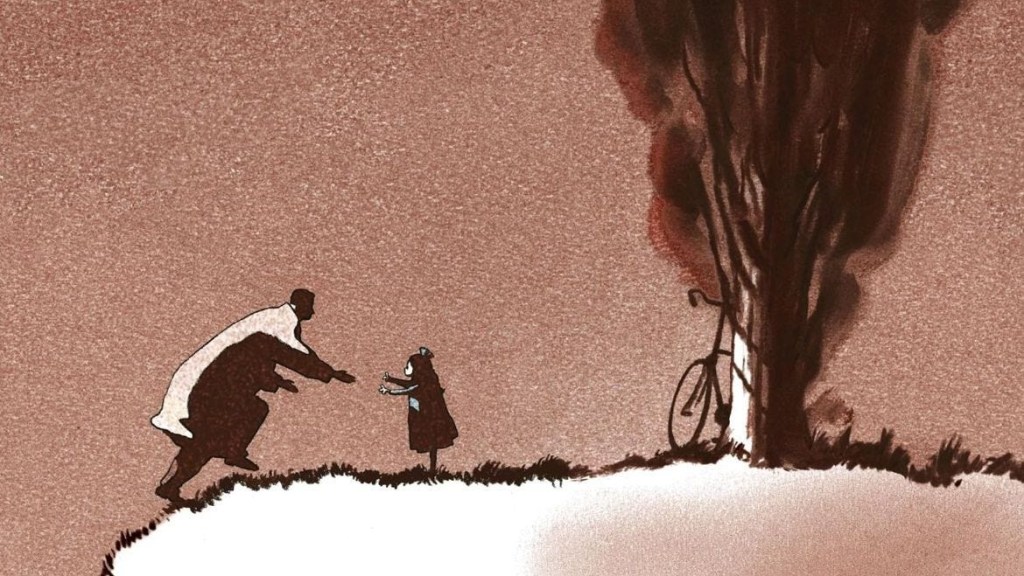
    For the animation enthusiasts among you, I highly recommend watching The Monk and the Fish (1994), Father and Daughter (2000), and The Aroma of Tea (2006), all currently available online, collectively demonstrating Dudok de Wit’s gifts as a storyteller, crafting deeply moving and meditative experiences through illustrations in motion. ‘I aim for audio silence and also visual silence. I call it “timelessness”,’ the animator explains, ‘I find it hard to pinpoint but it’s a very still moment, not because nothing happens, but because whatever happened before and whatever will happen next doesn’t matter. We’re just there, now’ (Williams 2016).

    Toshio Suzuki and Isao Takahata, filmmakers who had worked, respectively, as director and producer on features of such towering brilliance as Grave of the Fireflies (1988), were clearly impressed by Dudok de Wit’s animations and signed on as producers, alongside Vincent Maraval, Wild Bunch’s own representative in France. It’s tempting to dive head-first into deep waters with The Red Turtle, to discuss how Dudok de Wit’s first feature acts as an important landmark in the animation industry as its traditions navigate from East to West and back again. If these are debates that interest you, pick up a copy of Andrijana Ružić’s recent book on the filmmaker, as she offers comprehensive analysis of the cultural exchanges that lie at the centre of his work, arguing that ‘his unadorned drawings reflect themselves vaguely in Hergé’s clear line, whilst his watercolour settings, inspired by compositions from Rembrandt’s etchings and Hakuin’s artwork, evoke transcendence and spirituality’ (2021: xxi). Hefty praise! We, however, are here to talk about turtles and, more specifically, the ways that Dudok de Wit’s film can be placed amidst debates that concern our oceans’ ecologies.

    Image: The Red Turtle, StudioCanal, 2016.

    Like Dudok de Wit’s other features, The Red Turtle eschews dialogue in favour of articulating its story through movement and environment. Inspired by the many adaptations that rework Daniel Defoe’s archetypal tale of shipwrecked adventure, Robinson Crusoe (1719), we watch its nameless protagonist wash ashore a tropical island and construct a new life for himself, far from the reach of his home civilisation. As such, The Red Turtle contributes to a long line of so-called ‘Robinsonades’ that explore the identities of their heroes by relocating them outside of their communities and isolating them in the natural world. Defoe’s novel explores these issues through the lens of Empire-building and colonialism, with Crusoe shipwrecked while on an expedition to procure slaves for his plantation. He is also quick to convert his Native American companion, whom he names Friday, to Christianity, all the while imposing his enlightenment-era sense of moral and rational Englishness upon both the wilderness that surrounds him and the heathen cannibals who threaten his existence.

    For Stefan Č. Čizmar, our fascination with such tales ‘embodies and epitomises the general worldview of the time, especially in the British context’ of ‘ever-growing colonial expansionism, which in turn strengthened the ideas of British racial superiority and the belief in Britain’s need to expand its colonial dominion’ (Čizmar, 2021: 215). How, then, does Dudok de Wit’s transcultural feature re-approach such well-established representations of men lost at sea? The answer comes fairly quickly in the form of its castaway’s interactions with the eponymous turtle herself.

    Image: The Red Turtle, StudioCanal, 2016.

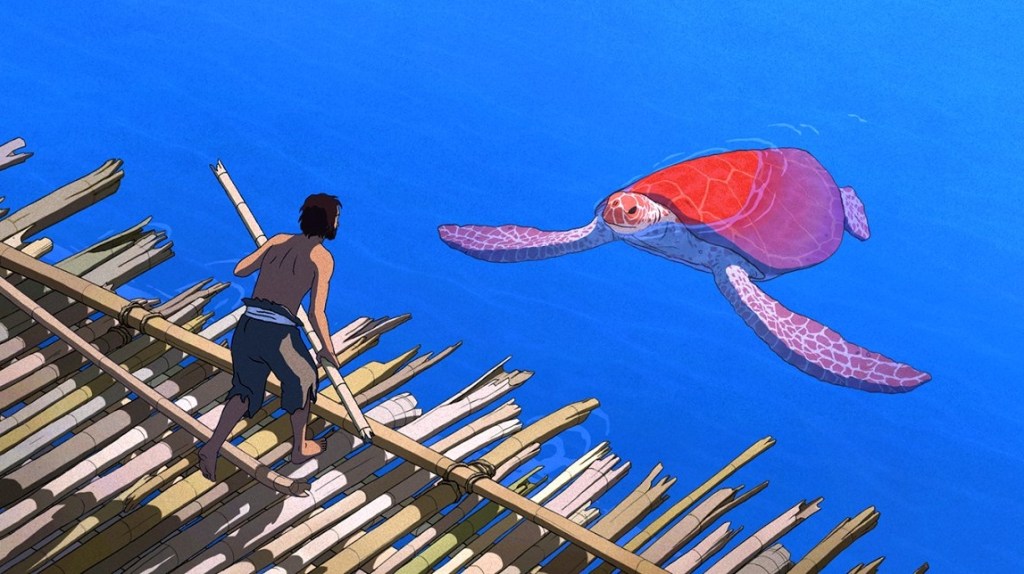
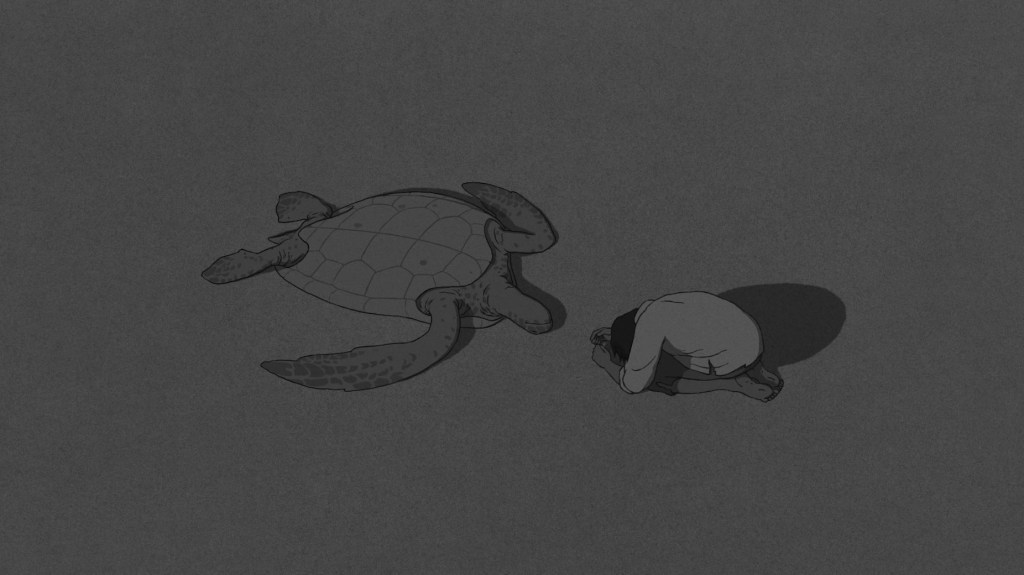
    Upon awakening on the beach, The Red Turtle’s protagonist, somewhat understandably, is determined to return to his homeland and constructs a raft from the forest of bamboo stalks covering the island. He is horrified when he is approached each time by this huge sea turtle, which, looming from within the waves, rams and batters his raft, destroying his sole means of escape. Enraged, the man eventually seeks revenge, attacking it when it comes ashore with a stick of bamboo and flipping it onto its back, leaving it beached and immobile.

    Watching as the hulking creature slowly perishes, the castaway soon begins to feel remorse for his action and attempts to flip the creature upright, failing due to its colossal weight. After running desperately to and fro to fetch water in the hopes of keeping the animal hydrated, he returns to find it dead and collapses in exhaustion next to its lifeless body. As the film’s name suggests, it is the appearance of this mysterious turtle that distinguishes Dudok de Wit’s animation from so many comparable Robinsonades. This is not, despite its nameless hero’s initial intentions, the story of environmental escape or conquest. His own humanistic confidence, desperation, and certainty, invested in his rickety raft, were, after all, disastrously misplaced. The turtle’s actions have saved him from certain death in the roaring ocean surrounding him, and his act of revenge is quickly revealed as one of impotent rage. What follows is, instead, a story of ecological revival and return, where the hero is offered a second option: accept the turtle’s suggested guidance and make peace with the wilderness in which he finds himself.

    Image: The Red Turtle, StudioCanal, 2016.

    Although the turtle’s actions have denied the protagonist his seeming preference for a watery demise over his condemnation to the isolation of the island, its actions have nevertheless provided him with the opportunity to carve out a new existence that he would have otherwise been denied. Change may be traumatic and unwanted but, rather than embrace death, he is now free to recontextualise his identity among the natural world he once sought to escape. Adithian K. describes the film’s titular turtle as representing a ‘renewal of nature,’ writing that ‘humanity has posited itself as an alienated being that is separate from the natural entity, and we have almost forgotten the truth that the destruction of nature will eventually lead to self-destruction, for in essence, we are inseparable parts of a larger unity’ (2025: 33).

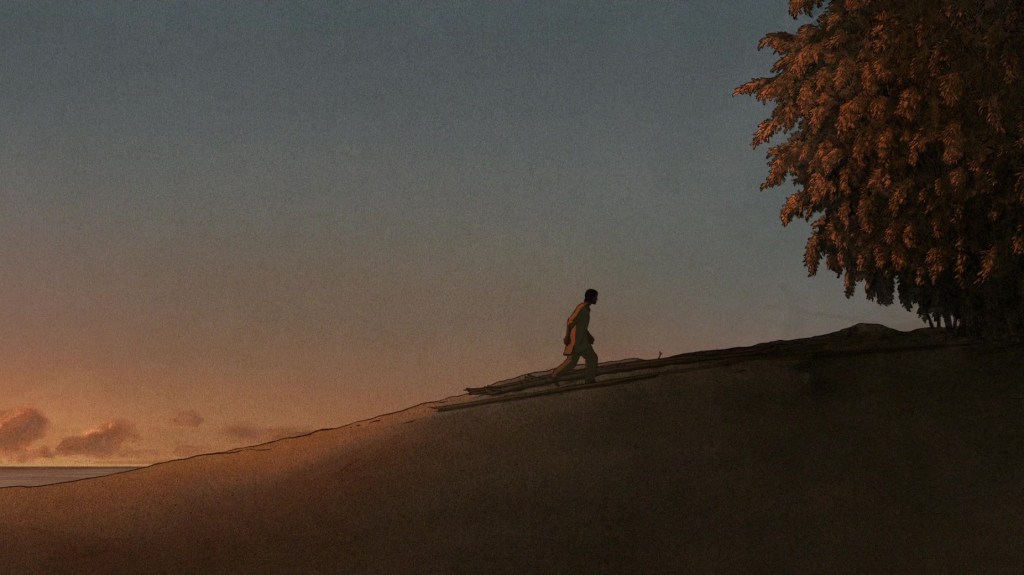
    The film’s central hook, driving the entirety of its remaining narrative, is revealed when the unnamed hero awakens to discover that the turtle’s shell has split open and, from within, a red-headed woman has emerged. We watch as the two decide to accept their changed identities, as castaway and newly formed human, overcome their resentments, and build a life with one another. For its remaining running time, Dudok de Wit silently renders their time together on the island in series of hauntingly beautiful vignettes that, frame by frame, maintain a minimalistic palette detailed with elegant, yet rich, texture. We see the two fall in love and raise a son, educate him on his mixed heritage, and collectively fight for their survival when a storm sweeps through the bamboo forests of their home, leaving it a desolate wasteland.

    Image: The Red Turtle, StudioCanal, 2016.

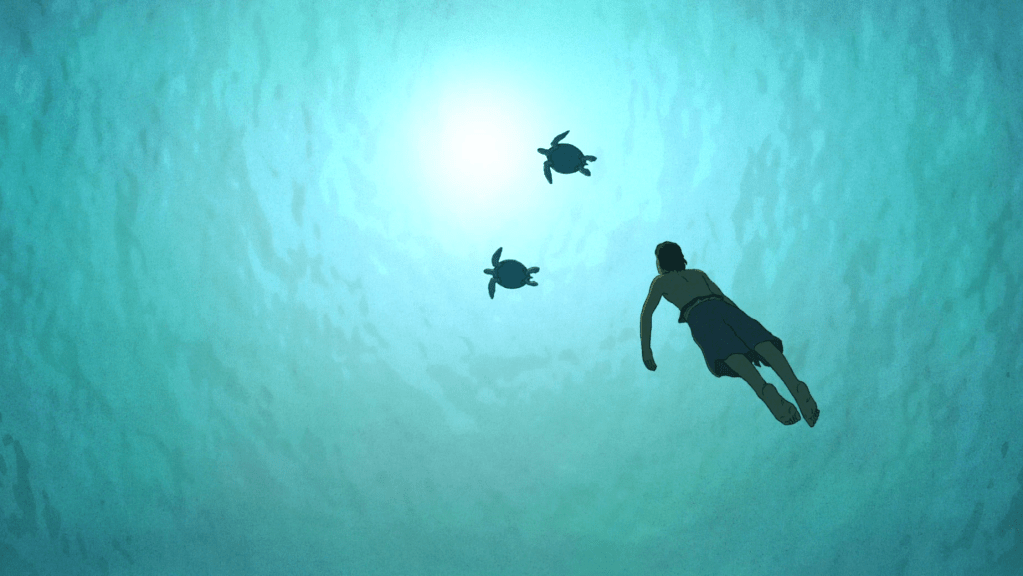
    Eventually, the boy ages and, with an emotional send-off from his parents, swims away with another group of sea turtles that he has befriended, leaving the island that has, since his birth, been his home. The parents age and the man eventually passes away peacefully in his sleep as they lie together on the beach. The woman wakes, gently holds his hand and then, after a beat, returns yet again into the form of a sea turtle before slipping quietly into the ocean. Summarily, Dudok de Wit uses his film to explore the triumphs and tragedies of life, from youth to old age, dramatised through three figures building a home together out of unlikely circumstances.

    Importantly, the familial dynamic of The Red Turtle does not bear any resemblance to the sorts of escapades evident in similar narratives such as The Swiss Family Robinson (1812). Theirs is not a story of salvaging supplies and using their ingenious know-how to attempt to replicate the comforts of civilisation. Just as Dudok de Wit’s style of animation is sparse and minimalistic, so too is he uninterested in depicting the mechanics of their everyday lives. His heroes are perfectly content to get on without language, complex tools, or contraptions. Rather than being defined by the trappings of modernity, the essential merits of their existence are measured by the love and devotion they share, the fundamental roots of human behaviour that life on the island can reveal. The natural world and, in effect, life itself, is depicted as traumatic, tragic and unrelentingly shaped by the forces of change and destruction. Yet it is, in Dudok de Wit’s animation, the same force that provides his protagonists with everything upon which they depend. It is notable that the only man-made object featured in the film is a single bottle that survived the initial shipwreck. This item then inspires the child’s curiosity and allows him to understand that there is a world beyond the island than he is unaware of.

    Image: The Red Turtle, StudioCanal, 2016.

    From Thomas More’s Utopia (1551), William Shakespeare’s The Tempest (1623), Jules Verne’s The Mysterious Island (1875), and William Golding’s Lord of the Flies (1954), we possess a centuries-old tradition of utilising imagined islands to map out landscapes through which dystopian and utopian ideals can be encountered. Patrick Gill argues that The Red Turtle’s ecocritical, anticolonial representation of its family is its most remarkable quality: ‘no longer identified with ideas of civilisation, cultivation and domination,’ he writes, ‘humanity in Dudok de Wit’s film can forgo attempts at physical and verbal empire building and instead be at one with nature’ (2019: 153).

    Reading the animator’s description of his childhood, it’s easy to see where this mindset developed, and how it became such an important component of his works’ shared aesthetic: ‘We lived near heather moors and I would cycle across the moors to school,’ Dudok de Wit would remember, ‘they were part of a vast nature reserve, gorgeous in all weather conditions: snow, rain or mist. They would be covered once a year with lavender coloured flowers. The attraction of the flat polder landscape too lies in its vastness, in its infinity. When you cycle there, you are very aware of the sky and the horizon. Faraway in the distance, you spot a tiny profile of a poplar tree or a church bell tower. All this space was exhilarating’ (Ružić, 2021: 4).

    Image: The Red Turtle, StudioCanal, 2016.

    The romantic coupling of The Red Turtle’s human protagonist and his animal companion might be thought of as a contemporary reworking of Odysseus’ subjugation by Calypso, or the countless selkies, sirens, mermaids, rusalki, and nereids that our cultures have variously imagined seducing men to the lakes, rivers, and oceans within which they reside. However, rather than motivated by fear of entrapment, trickery, and domestication, Dudok de Wit positions his character’s metamorphosis as an opportunity for renewal. As with its reframing of Robinsonade adventure, the threat of the wilderness and its creatures, so often indicative of monstrosity, pales in comparison to the human willingness to dominate and destroy.

    Similarly, while the fantastical transformation of a giant sea turtle into a woman might seem conspicuously bewildering, it participates in a tradition of animal-bride narratives that are as old as civilisation itself. Anthrozoologist Boria Sax, who has written a fascinating book on the subject titled The Serpent and the Swan (1998), argues that such narratives are fundamental components of humanity’s attempts to reconcile its relationship to the natural world. ‘The process we call “civilisation” is, in general, characterised by increasing distance from the natural world,’ he writes, ‘in older tales the world is less likely to be sharply divided into different realms, appropriate to animals, human beings, and divinities’ (1998: 30). The image below is an excellent example of these folk tales immortalised in recent years, showcasing a statue of Kópakonan, or the selkie, the seal woman, shedding her skin upon the shores of Mikladalur in the Faroe Islands.

    Image: Kópakonan, Hans Pauli Olsen, 2014.

    Turtles are, like the seals that inspired the selkie, fundamentally liminal beings. They are able to exist on both land and in water, and have, therefore, often been used within folklore to represent distinctions between diametrically opposed states of being. In the Japanese legend Urashima Tarō, a turtle carries a fisherman who had saved its life to the fantastical palace of Ryūgū-jō beneath the sea. The Vietnamese golden turtle god Kim Quy is seen to be a keeper of great secrets and wisdom, capable of acting as an intermediary between humans and the land of spirits. The Chinese, indigenous Lenape peoples of North America, and Hindus all boast their own variations of a ‘world turtle,’ a beast so large that it supports entire islands, continents, and even worlds on its immense back.

    In contemporary popular culture, there are multiple authors who appropriate and rework such folklore: a world turtle named Great A’Tuin carries aloft Terry Pratchett’s entire setting of Discworld as it slowly swims through space, while Stephen King sees Maturin the Turtle as the overarching protagonist of his own creative multiverse. The popular adage ‘turtles all the way down,’ in reference to such cosmologies, speaks to a sense of existential continuity and infinite regress that positions humanity’s existence as a mere speck within the grand workings of our universe.

    Image: ‘The Cosmic Tortoise, and Mount Meru,’ Thunot Duvotenay, 1843.

    Turtles are employed for similar effect in Dudok de Wit’s film, symbols of a world that is unquestionably beyond the boundaries of our understanding. Just as we are given no information about our nameless protagonist’s prior identity, or the nature of his shipwreck, so too are we left in the dark as to the reasoning behind the red turtle’s own transformation and eventual departure. I have offered my own readings of the film here, but devoid of verbal narration or expository dialogue, Dudok de Wit leaves this completely up to personal interpretation. The film’s inscrutable identity, explicitly refusing to explain its meanings, will either bewitch or frustrate those who seek to engage with it.

    It is notable, however, that the creature featured in the film is based upon the hawksbill sea turtle, a critically endangered species that possesses nesting sites that span throughout the world’s tropics. The practice of eating the hawskbills and their eggs, has led to them being a target for human hunters for centuries, but it is the harvesting of their shells that has had the greatest impact on their numbers. In 2008, a report by the Marine Turtle Specialist Group (MTSG) noted that ‘Japanese statistics document the import of shell equivalent to more than 1.3 million large Hawksbills from around the world between 1950-1992 and more than 575,000 stuffed juveniles from Asia between 1970-1986,’ instigating a population decline that has been measured at approximately 80% (Mortimer & Donnelly). It is apt that The Red Turtle, a film defined by the shifting waters of international cooperation, would orient itself through the iconography of an animal that has been used as a trophy through thousands of years of international trade and conquest, latter European colonialism, and contemporary industrialised exploitation.

    Image: ‘Illegal Chinese Fishing Vessel Seized in Indonesia,’ WWF-TNC Joint Marine Program, 2007.

    Now listed in the Convention on International Trade in Endangered Species (CITES), commercial dealing of the creatures has been prohibited, with numerous programs designed to assist conservation efforts. Just this month, The State of the World’s Sea Turtles organisation (SWOT) highlighted promising developments in attempts to bolster existing laws and consolidate information and regulation that is spread across habitats that span across numerous national boundaries. Unsurprisingly, however, they also point towards major issues in ‘the scarcity of funding and technical expertise,’ as well as the immense damage produced by sea turtle bycatch in ‘illegal, unreported, and unregulated (IUU) fishing’ (Hawksbill SSAP Steering Group & CMS IOSEA Secretariat, 2026: 31).

    Beyond the issues of bycatch and trafficking, hawksbills are dependent on a range of different habitats such as coral reefs, seagrass meadows, and undisturbed beaches that are variously threatened by the impact of manmade degradation, climate change and pollution. In April of 2025, President Donald Trump reversed decades‑old protections by signing a proclamation that opened the Pacific Islands Heritage Marine National Monument to commercial fishing by the nation’s vessels. “This is one of the most pristine tropical marine environments in the world that already faces dire threats from climate change and ocean acidification,” David Henkin, an attorney for the nonprofit Earthjustice would state, ‘we will do everything in our power to protect the monument’ (Fox, 2025). That same month, the U.S. Fish and Wildlife Service and National Marine Fisheries Service would similarly publish a Notice of Proposed Rulemaking titled ‘Rescinding the Definition of Harm under the Endangered Species Act’ (Hays Barho, 2025). Environmental campaigners have argued that changing the definition of ‘harm’ in such a way would profoundly weaken the Act’s existing protections of animals, downplay the significance of their habitat loss, and open up new opportunities for their exploitation (Steinzor 2025).

    Image: ‘Hawksbill Sea Turtle,’ U.S. Fish and Wildlife Service.

    Dudok de Wit was firm in his belief that ‘I don’t see this as a film with an ecological message,’ arguing instead that his animation ‘is just a film that expresses my deep love and respect for nature’ (Pape, 2017). He purposefully designed The Red Turtle so that it did not possess an easily digestible ‘moralistic’ point; ‘the film doesn’t present an answer,’ he would assert, when questioned on the matter (ibid). Visualised through stunning sun-drenched landscapes upon shore and positively luminescent undersea sequences, the animator succeeds admirably in capturing what he describes in another interview as an ‘emotional and intuitive relationship to nature’: ‘I like the word “awe,”’ he would say, ‘it’s about the temperature we feel on our skin, the breeze in our hair.  It’s about the sunlight and the shadows it casts, It’s about the changing of lights outside.  It’s about nature in all shapes, in all senses’ (Jacobs, 2017).

    Michaël Dudok de Wit may not be supplying any answers, but it is impossible, when swept up within the majestic imagery of his debut feature, to prevent that feeling of awe from manifesting into questions about the world’s changing ecologies. Our marine life has long been mythologised as representatives of the interconnected nature between our species and the oceans that surround us. Reframing its shipwrecked narrative upon a creature that is at home on both land and in water, and developed through the international collaboration of its globe-spanning production companies, The Red Turtle is a reminder of common interests that defy national borders and our impulse towards self-segregation. There may well come a time when, castaway and lost at sea, survival may depend on our willingness to unlearn our instinct to dominate.

    Head Image: The Red Turtle, StudioCanal, 2016.

    The Aroma of Tea. 2006. D. Michaël Dudok de Wit, Film, Netherlands: CinéTé Filmproductie.

    Čizmar, Stefan Č. 2021. ‘Colonialism and Capitalist Ideology in Robinson Crusoe,’ Philologia Mediana 13. 13, pp. 215-228.

    Earthjustice. 2025. ‘Earthjustice Statement on Trump Administration Executive Order to Open Pacific Marine Monument to Commercial Fishing,’ Earthjustice, April 17: https://earthjustice.org/press/2025/earthjustice-statement-on-trump-administration-executive-order-to-open-pacific-marine-monument-to-commercial-fishing.

    Father and Daughter. 2000. D. Michaël Dudok de Wit, Film, Netherlands & UK: CinéTé Filmproductie.

    Gill, Patrick. 2019. ‘Dystopian and Utopian Omission of Discourse in Three Modern Robinsonades: Lord of the Flies, Concrete Island, The Red Turtle,’ Porównania 2. 25, pp. 145-156.

    Golding, William. 1954. Lord of the Flies. London: Faber & Faber.

    Hawksbill SSAP Steering Group & CMS IOSEA Secretariat. 2026. ‘Strengthening Collaboration for Hawksbill Protection,’ The State of the World’s Sea Turtles Report, XXI: pp. 30-31.

    Hays Barho, Rebecca. 2025. ‘Agencies Move to Rescind “Harm” Definition under Endangered Species Act,’ Endangered Species Law and Policy, April 17: https://www.endangeredspecieslawandpolicy.com/agencies-move-to-rescind-harm-definition-under-endangered-species-act.   

    Jacobs, Derek. 2017. ‘Interview: Michaël Dudok de Wit talks The Red Turtle,’ Cinema Axis, January 23: https://cinemaaxis.com/2017/01/23/interview-michael-dudok-de-wit-talks-the-red-turtle/.

    K, Adithian. 2025. ‘The Minimalist Poetics of Ecology: A Study of The Red Turtle,’ Creative Saplings 4. 4: pp. 27-37.

    The Monk and the Fish. 1994. D. Michaël Dudok de Wit, Film, France: Folimage.

    More, Thomas. 1551. Utopia. Translated by Ralph Robinson. London: Abraham Veale.

    Mortimer, J.A & Donnelly, M. 2008. Eretmochelys imbricata. The IUCN Red List of Threatened Species: https://www.iucnredlist.org/species/8005/12881238.

    Pape, Stefan. 2017. ‘“I couldn’t believe it” – Michael Dudok de Wit on collaborating with Studio Ghibli on The Red Turtle,’ HeyUGuys, May 24: https://www.heyuguys.com/michael-dudok-de-wit-interview-the-red-turtle/.

    The Red Turtle. 2016. D. Michaël Dudok de Wit, Film, Japan & France: Wild Bunch.

    Ružić, Andrijana. 2021. Michael Dudok de Wit: A Life in Animation, Boca Raton: CRC Press.

    Sax, Boria. 1998. The Serpent and the Swan: The Animal Bride in Folklore and Literature. Virginia: McDonald & Woodward.

    Shakespeare, William. 1623 ‘The Tempest,’ Mr. William Shakespeares Comedies, Histories, & Tragedies. London: Isaac Jaggard and Edward Blount.

    Steinzor, Nadia. 2025. ‘Wildlife need habitat! Speak out to stop federal agencies from changing the definition of “harm” in the Endangered Species Act,’ Rewilding Institute, April 30: https://rewilding.org/wildlife-need-habitat-speak-out-to-stop-federal-agencies-from-changing-the-definition-of-harm-in-the-endangered-species-act/.

    Verne, Jules. 1875. The Mysterious Island. Translated by W. H. G. Kingston. London: Sampson Low, Marston, Low, & Searle.

    Williams, Fiona. 2016. ‘Michael Dudok de Wit talks ‘Red Turtle’, and being backed by Studio Ghibli,’ Special Broadcasting Service, September 20: https://www.sbs.com.au/whats-on/article/michael-dudok-de-wit-talks-red-turtle-and-being-backed-by-studio-ghibli/5xoyoko5w.

    Wyss, Johann David. 1812. Der Schweizerische Robinson [The Swiss Family Robinson]. Zurich: Orell, Füssli und Compagnie.

  • Tykes in Flight: Social Mobility and Falconry in Kes (1969)

    Tykes in Flight: Social Mobility and Falconry in Kes (1969)

    The recent release of H is for Hawk (2025) has encouraged me to revisit Ken Loach’s Kes (1969), an extraordinarily empathetic production that needs little introduction. As well as helping to cement British social realism as one of the country’s most significant cultural movements, Loach’s body of work provides UK cinema with a degree of conscience, articulated through the exploration of debates such as immigration, colonialism, poverty, workers’ rights, and social justice. As the director’s second feature film, Kes arguably remains one of his finest calls to compassion, an unflinching, yet tender and poetic exploration of a young Yorkshire lad who finds fleeting fulfilment in the art of falconry.

    The boy himself is Billy Casper, convincingly played by 14-year-old David Bradley. Billy suffers physical and mental abuse at both school and home, and, despite his distress at the prospect of working down the pits, there seems to be little opportunity for him to break free of the exploitative grind that determines his present and will surely govern his future. Frustrated, alone and with no emotional support, he resorts to petty criminal acts to escape the tedium of life in the amalgam of mining communities surrounding Barnsley, South Yorkshire, that the film is set and shot within.

    Image: Kes, United Artists, 1969.

    Kes’ social significance has been well-documented and covered by an endless array of critics, authors, and film historians. As Jacob Leigh highlights in the loftily-titled The Cinema of Ken Loach: Art in the Service of the People, ‘Kes protests against an educational system which fails to recognise individual talent, and it suggests that this is a consequence of a capitalist society which demands a steady supply of unskilled manual labour’ (Leigh 2002: 64). In this article, I’ll be engaging with discussions that explore how these themes are expressed through a key icon of the film’s cultural authority and relevance: the eponymous avine himself.

    Kes’ use of falconry subverts and develops perceptions of class and social status that can be traced through centuries of avicultures that have spread around the world. When UNESCO recognised the practice as an Intangible Cultural Heritage of Humanity in 2010, it did so in recognition of the indelible ties that link birds of prey to various cultures’ antiquities, spanning thousands of years across several continents. For the Bedouin peoples of the Middle East and North Africa, raptors were integrated into all strata of their nomadic life, signposting discipline, heritage, and identity, as well as providing a practical means of subsistence hunting (Wakefield 2012: 280). In Medieval Europe, their purpose was more recreational, but nevertheless still signalled social position.

    Image: De Arte Venandi Cum Avibus (The Art of Hunting with Birds), 1240s.

    Much of this history is foreshadowed in the name of the book that Kes adapts, A Kestrel for a Knave (1968), by Barry Hines. Hines’ novel will be familiar to generations of Brits who read his work on their GCSE English syllabus, and was based on the escapades of his own brother, Richard, who, after being inspired by T. H. White’s The Goshawk (1951), had trained a kestrel himself while growing up in Hoyland Common, South Yorkshire.

    Hines’ title was borrowed from The Book of Saint Albans (1486), otherwise known as The Book of Hawking, Hunting, and Blasing of Arms, which provides a hierarchy of raptors based on social positioning, assigning those on the lowest rung, the knave or servant, the small Eurasian kestrel (Berners 1486 [1881]). The art of falconry, then, reflects recognition of the social restrictions that limit Billy’s horizons, but also provides him with the tools that, for a time, allows him to defy them.

    For Billy, training Kes affords him a freedom and autonomy that he drastically lacks both at home and school. The cunning that he demonstrates as a troublemaker, filching milk and eggs from carts, is granted a productive outlet and he is finally able to engage with a practical and intellectual challenge that stimulates him. It is his own curiosity that draws Billy to the kestrel’s nest in the ruins of Tankersley Old Hall, and he mimics the actions of his real-world counterpart, Richard Hines, by furtively trespassing under the cover of darkness and stealing a nestling from its shelter in the stonework (Hines 2016: 165).

    Image: Kes, United Artists, 1969.

    Blocked at almost every turn by authority, Billy’s attempt to acquire both knowledge and resources are systemically restricted. With no assistance, he has to get by on his own initiative and intuition to begin training the bird. He is denied membership to his library due to his dirty hands and the lack of authorisation from a parent, and, with no money, Billy resorts to stealing a book on falcons from a second-hand shop. His elder brother, Jud, Freddie Fletcher, mocks him and treats it with disdain: ‘you must be crackers,’ he says, ‘I could understand if it were money, but chuff me, not a book!’

    Billy’s ability to engage in the art of falconry is not only a sign of his maturity and growth; it is the product of a Promethean act of rebellion against an educational system that is failing him on every conceivable level. Theft remains the boy’s only recourse. Whether it be the removal of Kes from his nest or the pilfering of a book, everything that Billy holds dear must be self-gained.

    Simon Golding associates this misfortune with the tripartite system that, throughout mid-twentieth-century Britain, ensured that pupils were segregated based on their performance in their examinations at the ages of eleven to twelve. ‘Billy Casper,’ he writes, ‘was a victim of the 11-plus. A government directive that turned out, who passed the exam, prospective white-collar workers, fresh from grammar schools, into jobs that were safe and well paid. The failures, housed in secondary modern schools, could only look forward to unskilled manual labour or the dangers of the coal face’ (2014: ii).

    Image: Kes, United Artists, 1969.

    If Billy’s acquisition of Kes and his book on falconry are the product of his own tenacity and resourcefulness, then his eventual skills reflect his patience and competencies. Training a wild bird is no small feat, and little by little, we watch as Billy learns to leash his bird and guide it through the air using his lure. Karl-Heinz Gersmann and Oliver Grimm argue that, while our fascination with hawks and falcons may have been born from an envious fascination with their ability to glide and kite through the air, stooping down suddenly in pursuit of their prey, it is ultimately the patience required to handle and train them that underlines their significance as cultural symbols. ‘In the history of domestication, birds of prey hold a special position,’ they write, ‘strictly regarded, they are not domesticated; they can only be trained to grow accustomed to the presence of humans, which is time-consuming and calls for patience’ (2018: 19).

    This patience, for many cultures, becomes emblematic of both wisdom and effective leadership, meaning that to properly train a falcon walks hand in hand with the qualities required to be an adept ruler. Kes, therefore, helps to elevate Billy’s sense of self-worth and gives him an opportunity to prove his mettle. Writing for Sight & Sound, Isabel Stevens marvels that Loach had never considered the symbolic meaning of the kestrel itself, but argues that it is impossible not to, with hindsight, interpret the bird as representative of stymied potential. In opposition to the fact that ‘the fate of many working-class boys like Billy lies underground in one of Barnsley’s collieries,’  she argues that Kes demonstrates ‘mastery of the sky, soaring and swooping high above’ (2021).

    Image: Kes, United Artists, 1969.

    Significantly, Billy’s skill in falconry not only affords him self-earned agency, but also, to his great surprise, gains him a degree of dignity and respect that he has never received before. One of his teachers, Mr. Farthing, Colin Welland, is impressed enough to watch him train Kes after school, remarking ‘Well done, Casper. The most exciting thing I’ve ever seen in my life. Great!’ The boy is even encouraged to develop the confidence to talk with authority about a subject of which he now has specialist knowledge, standing in front of his class, answering questions from his curious schoolmates, and explaining equipment such as jesses and a creance.

    As well as affording Billy his own autonomy and pride, the young boy’s respect for his kestrel is undeniable. He is particularly affronted by the suggestion that it might be considered a domesticated pet. ‘Is it heck tame! Hawks can’t be tamed,’ he explains enthusiastically, ‘they’re manned. It’s wild and it’s fierce and it’s not bothered about anybody. Not bothered about me, right. That’s what makes it great.’

    In Kes, Billy has discovered a creature worthy of the adoration that is denied to him at home. In counterpoint to Jud’s domineering bullying and his mother’s exhausted indifference, the kestrel’s wild nature acts as preferable source of emotional support and companionship. Sean Nixon notes in Passions for Birds: Science, Sentiment and Sport (2022), that Billy thrills ‘at being connected to its more-than-human world’ and contends that while the boy ‘identifies with the independence and wildness and violence of the kestrel’s life, he does not want to dominate it and own it in any proprietorial sense’ (185).

    Image: Kes, United Artists, 1969.

    Kes’ majestic characteristics transfer to the textual qualities of Loach’s film as well. His flights provide both Billy and his audience respite from the kitchen-sink aesthetic so often associated with British social realism. There can be no denying the natural beauty surrounding the villages of South Yorkshire, not yet excavated by the coal fields that Billy’s brother toils within. The sight of boy and kestrel training in the neighbouring countryside, captured by cinematographer Chris Menges, provides the film a serenity and grace that is far removed from the hubbub of Billy’s domestic and school life.

    Mr. Farthing immediately notices a sense of awe and sanctity when watching the bird in flight. ‘It’s as if they’re flying in a pocket of silence,’ he says while Billy houses Kes in his mews, ‘have you noticed how quietly we’re speaking? As if we’re frightened to raise our voices, a bit like shouting in church.’ Spatially and audibly, the world seems to slow down when Billy flies his kestrel, accompanied by the lilting tones of a sole flute, composed for the film by John Cameron.

    These are sublime moments captured in a movement of realist filmmaking most familiarly represented through that of gritty miserabilism. Of his own research into the film, David Forrest states that Kes ‘shows us that places like Barnsley – often overlooked and maligned in mainstream culture – are sites of humour, creativity, beauty, and potential. Far from being pessimistic, Kes points to a hopeful way of imagining Britain as formed from the unique cultural contributions of its regions, towns, and cities’ (Barton 2024).

    Image: Kes, United Artists, 1969.

    The virtues to be found in the tale of Billy and Kes had not gone unnoticed. The Walt Disney Company had expressed interest in adapting Hines’ novel, with the condition that Kes survive and Billy be provided a happy ending (Stevens 2021). Loach’s Kes might possess idyllic moments but, like the young boy’s attitude towards his bird, is certainly not sentimental and ultimately concludes, like the book, in tragedy. Jud, angry that his brother didn’t place a bet as he was instructed, kills Kes in callous retribution. For Jud, the kestrel’s death is rightful recompense for the loss of winnings that equated to a week’s work he could have avoided down the pits. For Billy, the loss is catastrophic and he responds in impotent fury. The film’s final moments see the boy tenderly stroking Kes’ feathers, before digging a makeshift grave and burying him.

    As for the fate of the real animals used during filming, Richard Hines, acting as technical adviser, had caught and trained three kestrels to be used during filming, taking them from their nests at Tankersley Old Hall Farm (Hines 2016: 164). David Bradley would remember spending numerous days at the Hineses’ house in Hoyland, steadily learning to work with the birds that had been named Freeman, Hardy and Willis, after the shoe-store chain. ‘Freeman is the kestrel that flies fairly low to ground, whereas Hardy flies from a fairly high vantage point and he would swoop down at me,’ Bradley would explain decades later, ‘Willis, unfortunately, was completely neurotic and psychotic and we couldn’t use him’ (Loach et al. 1999).

    Barry Hines would describe the process as being complex and painstaking: ‘It’s not like working with a trained dog. A kestrel has to be the right weight,’ he would explain, ‘they only fly if they’re hungry so we would weigh them before a scene and if they were too heavy they had to wait to shoot the scene’ (ibid.). In a bid to heighten Bradley’s emotions before shooting the film’s conclusion, Loach and his team informed the boy that they had needed to kill one of the kestrels to use on screen. ‘I was really miffed when it came to do that sequence,’ the actor recalled, ‘it was quite upsetting’ (ibid.). The filmmakers would assure Bradley after filming that the body used had been sourced from a bird that had died from natural causes, with Freeman, Hardy and Willis being hacked back to the wild when they were no longer needed (Stevens 2021).

    Image: Kes, United Artists, 1969.

    Kes’ arrival on screen coincided with a renewed public interest in aviculture, with Rachel Carson’s Silent Spring (1962) and J. A. Baker’s The Peregrine (1967) both gaining success as natural science books in the years before its release. This public interest was timely and vital due to the fact that kestrel numbers, alongside many species of wild birds, were experiencing a steep decline. Use of organochlorine pesticides had devastated their population after the Second World War, while ever-intensifying methods of farming made a similarly destructive impact on their habitats throughout the 1970s (UK Gov 2025).

    The profound influence of T. H. White’s evocative writing on Richard Hines, passed in turn onto Billy Casper, has proved similarly long lived. It has, however, been significantly reframed since its publication. Helen Macdonald, author of H is for Hawk (2014) is plain in her admiration for White’s prose, but distances herself from his falconry techniques which, she argues, expressed far more of his relationship to himself and his repressed sexuality that it did the needs of his goshawk: ‘He couldn’t be himself,’ she states, ‘so he wanted to associate with the hawk because it was all the things he wanted to be – powerful, sadistic’ (Barkham 2014). Indeed, White would describe depriving the creature of rest, ensuring it was exposed to extreme stress, and, in moments of anger, wishing to inflict upon it the ‘extreme torture it deserved’ (White 1951: 115). The depictions of animal care in Kes, and for that matter, H is for Hawk, are, thankfully, more ethically robust than White’s. Both are tender without overly anthropomorphising their subjects. The greatest unease to those outside of falconry circles is undoubtedly the visceral manner with which the training of these captive animals requires the hunting of those that remain in the wild.

    Image: The Goshawk, Jonathan Cape, 1951.

    The practice of wild take, that undertaken by both Richard Hines and Billy to acquire their kestrels, has also significantly changed over the last half century. A 2025 report by Natural England observed that the state receives almost no requests for licences to retrieve birds of prey from their nests in the United Kingdom, and that, instead, falconers now entirely rely on captive breeding to obtain the creatures (Natural England 2025). One interviewee stated that when they were a child ‘everybody went out and collected eggs and robbed nests. Kids don’t do that anymore. They identify nests or they jump on their webcam and watch a peregrine breeding its young and it’s enough, and that’s great’ (ibid).

    The Wild Animal Welfare Committee welcomed the news that the review recommended the cessation of such licenses, stating firmly that ‘wild caught individuals are likely to experience an increased likelihood of motivational frustration, a high likelihood of negative affective states (such as fear) and behaviours consistent with experiencing stress in captivity’ (Wild Animal Welfare Committee 2025).

    Image: ITV News, 2020.

    Even with the end of licensed wild take, current conservation laws are consistently flouted in ways that the British government is struggling to police. A 2025 report by The Guardian observed that UK-based breeding facilities of falcons had grown from approximately 27 in the 1980s to a current tally of 160, all of which have ties to Middle Eastern markets that are driving an underground industry of illegal capture and smuggling of wild birds (Weston 2026).

    Half of these facilities are considered non-compliant with contemporary UK legislation, driving an international trade within which a well-bred falcon can cost upwards of tens of thousands of pounds. ‘This Bedouin tradition has evolved into a spectacle of wealth and prestige to meet the tastes of the modern Gulf elite,’ Phoebe Weston reports, ‘the cold climate of northern Europe is considered the ideal for creating tough, fast birds, and British-bred birds from established lines carry additional prestige’ (ibid).

    Image: The Guardian (photo credit: ARIJ).

    The mistreatment of birds of prey is not isolated to illegal acts of capture, trade, and smuggling. The RSPB recently highlighted the widespread killing of threatened species such as golden eagles, goshawks and hen harriers that has gone almost completely unprosecuted throughout the United Kingdom (RSPB 2024). ‘In the past 15 years, only one person has been jailed,’ their report claims, ‘and of all individuals convicted of bird of prey persecution-related offences between 2009 and 2023, 75% were connected to the gamebird shooting industry’ (ibid). Conservationist Ruth Tingway’s blog, Raptor Persecution UK, acts as a harrowing, but vital, attempt to track such acts of violence, and is an essential resource for understanding the scale of human-inflicted damage upon these remarkable creatures.

    Acts of hunting, trading, and smuggling continue to have devastating consequences for species of birds that, for centuries, have been utilised by humanity as icons of nobility and dignity. Their training and use for sport encourage the same discussions that are necessitated whenever our species chooses to capture or domesticate other animals for our own interests. Our love of raptors has ensured that they are ferried around the country for handling experiences, kept captive in bird display centres, and tethered for the entertainment of the public. It is significant that Kes’ socialist power, as an exploration of hierarchies that restrict and curtail, should be articulated through the bond between a boy and his bird. Billy’s respect for Kes’ autonomy reflects the cultural contradiction that lies at the heart of our fascination with falcons and hawks. His admiration, like ours, also brings with it the discomfort found when wildness is expressed through fettered wings.

    Head Image: Kes, United Artists, 1969.

    Baker, J. A. 1967. The Peregrine, London: Collins.

    Barkham, Patrick. 2014. ‘Helen Macdonald: ‘I Ran to the Hawk Because I Was Broken and Grieving,’ The Guardian, August 1: https://www.theguardian.com/books/2014/aug/01/helen-macdonald-interview-hawk-grief.

    Barton, Sean. 2024. ‘Kes Recognised as British Classic and Landmark in World Cinema,’ University of Sheffield, May 7: https://sheffield.ac.uk/news/kes-recognised-british-classic-and-landmark-world-cinema.

    Berners, Juliana. 1486 [1881]. The Book of Saint Albans: https://archive.org/details/cu31924031031184/mode/2up.

    Carson, Rachel. 1962. Silent Spring, Boston: Houghton Mifflin.

    Forrest, David. 2024. Kes, London: Bloomsbury.

    Gersmann, Karl-Heinz & Grimm, Oliver. 2018. Raptor and Human: Falconry and Bird Symbolism Throughout the Millennia on a Global Scale, Hamburg: Wachholtz Verlag.

    Golding, Simon. 2014. Life after Kes, Clacton on Sea: Apex Publishing.

    H is for Hawk. 2025. D. Philippa Lowthorpe, UK & USA: Lionsgate.

    Hines, Barry. 1968. A Kestrel for a Knave. London: Michael Joseph.

    Hines, Richard. 2016. No Way But Gentlenesse: A Memoir of How Kes, My Kestrel, Changed My Life, London: Bloomsbury.

    Kes. 1969. D. Ken Loach, United Kingdom: United Artists.

    Leigh, Jacob. 2002. The Cinema of Ken Loach: Art in the Service of the People, London: Wallflower Press.

    Loach, Ken, Garnett, Tony, Hines, Barry, Bradley, David & Welland, Colin. 1999. ‘A Typical Reaction Was A Snigger… I Was Making A Film About the Wrong Kind of Bird,’ The Guardian, August 29: https://www.theguardian.com/film/100filmmoments/story/0,4135,77579,00.html.

    Macdonald, Helen. 2014. H is for Hawk, London: Jonathan Cape.

    Natural England. 2025. ‘Summary of Natural England’s Position on Wild Take Licensing for Falconry and Aviculture,’ gov.uk, March 6: https://www.gov.uk/government/publications/taking-birds-of-prey-from-the-wild-for-falconry-and-aviculture-outcome-of-review/summary-of-natural-englands-position-on-wild-take-licensing-for-falconry-and-aviculture.

    Nixon, Sean. 2022. Passions for Birds: Science, Sentiment and Sport, London: McGill-Queen’s University Press.

    RSPB. 2024. ‘Illegal Bird of Prey Killing Must End, Urges RSPB Birdcrime Report,’ RSPB, October 22: https://www.rspb.org.uk/media-centre/illegal-bird-of-prey-killing-must-end.

    Stevens, Isabel. 2021. ‘Kes: Big Screen Classics,’ Sight & Sound, September: https://bfidatadigipres.github.io/big%20screen%20classics/2022/08/09/kes/.

    UK Government; Department for Environment, Food & Rural Affairs. 2025. ‘Wild Bird Populations in the UK and England, 1970 to 2024,’ gov.uk, September 23: https://www.gov.uk/government/statistics/wild-bird-populations-in-the-uk/wild-bird-populations-in-the-uk-and-england-1970-to-2024.

    Wakefield, Susan. 2012. ‘Falconry as heritage in the United Arab Emirates,’ World Archaeology 44. 2: 280-290.

    Weston, Phoebe. 2026. ‘How Demand for Elite Falcons in the Middle East is Driving Illegal Trade of British Birds,’ The Guardian, January 5: https://www.theguardian.com/environment/2026/jan/05/elite-falcons-middle-east-illegal-trafficking-trade-british-birds.

    White, T. H. 1951 [2023]. The Goshawk, Alien ebooks.

    Wild Animal Welfare Committee. 2025. ‘Wild Take Licences Come to an End,’ Wild Animal Welfare Committee, March 6: https://www.wawcommittee.org/news/wild-take-licences-come-to-an-end.

  • Comic Cryptids and Eco-Sustainability in Sasquatch Sunset (2024)

    Comic Cryptids and Eco-Sustainability in Sasquatch Sunset (2024)

    I’ve always had a soft spot for cryptozoology, the pseudoscientific field of fascination with unsubstantiated creatures. Who can resist the romantic allure of the Loch Ness Monster that supposedly dwells in the Scottish Highlands, the chupacabra of Hispanic America, or Point Pleasant’s own Mothman? Cryptozoology’s marriage of ‘kryptós’ and ‘logos,’ translated directly to ‘hidden knowledge,’ reminds us that the world undoubtedly possesses secrets that have not yet been revealed. Beyond the astonishing fervour that a surprising number of conspiracy theorists continue to demonstrate, cryptozoology’s broader appeal reflects an understanding that nature still possesses the ability to surprise and delight us.  

    If there is any cryptid who rivals Disney’s Mickey Mouse or Nintendo’s Mario as an immediately recognisable mascot, it is almost certainly Bigfoot, alternatively known as Sasquatch, the hairy, hulking, bipedal beast that patrols both American and Canadian folklore. As with the Himalya’s own Yeti, or Abominable Snowman, on the other side of the globe, North America’s Bigfoot demonstrates a continued fascination with ape-like and Neanderthalic humanoids that can be traced throughout all our species’ history.

    The Sasquatch has become an important emblem of North American cultural identity, with its origins rooted in the legends and folklore of the Sts’ailes, a community indigenous to Chehalis, in British Columbia, who ‘passed down songs and stories about sasq’ets, a supernatural slollicum, or shapeshifter, that protects the land and people’ (Kadane 2022). As so often occurs with indigenous mythologies, the fascination surrounding these wildmen was soon Anglicised and eventually, after several well-publicised hoaxes by North Western loggers and foresters, translated into a veritable commercial empire.

    Image: Rocky LaRock, Salish, Photo by Bill Jorgens.

    Following a tidal-wave of media interest that reached fever pitch in the late 60s and 70s, Bigfoot has certainly found itself well-represented in film. From horror movies such as Bigfoot (1970), Night of the Demon (1980) and Abominable (2006), which depict its sightings ending in violence and carnage, to saccharine family-friendly adventures such as Cry Wilderness (1987), Bigfoot: The Unforgettable Encounter (1995) and Little Bigfoot (1997), America’s love of the hairy cryptid appears relatively boundless. It goes without saying that the Academy-Award-winning masterpiece Harry and The Hendersons (1987) deserves an article of its own for featuring John Lithgow begrudgingly learning to befriend one of the creatures after hitting it with his station wagon.

    All in all, for contemporary audiences, bigfoots and sasquatches – let’s settle on our plurals now – have come to signal a sense of instability and incompatibility in our own relationship to nature. Whether they depict the cryptid as a rampaging monster or benevolent beast, these are films that collectively draw upon the shared fears and anxieties that are produced when we feel a sense of removal from the natural order we associate with the wilderness.

    Image: Harry and the Hendersons, Universal Pictures, 1987.

    Sasquatch Sunset (2024), one of the more recent attempts to engage in this shared mythology, wears its cult credentials proudly on its furry sleeves. Directors and brothers Nathan and David Zellner had previously dabbled in bigfoot filmmaking with Sasquatch Birth Journal 2 (2010), an absurdist short that is almost entirely constructed around a single take of one of the creatures giving birth while bracing itself among the branches of a tree.

    Sasquatch Sunset maintains this singular focus by featuring no human characters or discernible dialogue. Throughout its entire theatrical running time, audiences are treated to performances of Riley Keough, Jesse Eisenberg, Christophe Zajac-Denek, and Nathan Zellner himself, elaborately costumed as a family of nomadic bigfoots who go about grunting, whooping, and huffing through the wilderness.

    Image: Sasquatch Sunset, Bleeker Street, 2024.

    The Zellners’ film relies on a strange concoction of crude scatological humour, sexual encounters, and full-frontal sasquatch nudity with an eerily beautiful depiction of the American wilderness. Life as a bigfoot is represented as comically visceral and bawdy, yet underscored by a wordless and ever-present sense of existential melancholy. If this is a film that either intrigues or repels you, you can probably already tell. Sasquatch Sunset is undeniably a passion project produced by like-minded collaborators who vibe with its tonal shifts and absurdist humour, with Eisenberg even footing some of the production budget himself when an initial financier backed out (Salisbury 2024).

    The film’s most remarkable quality is that it is framed as a fabricated nature documentary, taking inspiration from the Patterson-Gimlin footage of 1967 that supposedly captured images of a bigfoot striding purposefully through Six Rivers National Forest. ‘It’s one of the most famous pieces of film in film history,’ David Zellner would argue, describing the fascination that he and his brother developed after watching the footage in an episode of the 1970s paranormal investigation series In Search of… hosted by Leonard Nimoy (ibid).

    Image: Roger Patterson and Robert Gimlin, 1967.

    Sasquatch Sunset might best be defined as a kind of cryptid mockumentary, playfully mashing up conventions of satire and documentary just as its subject stalks the boundaries of science and pseudoscience. While paranormal investigation series such as Finding Bigfoot (2011-2018) have helped perpetuate the creature’s myth, the Zellners’ film is presented as if it were a David-Attenborough-esque nature documentary, minus the presenter’s dulcet narration. Similarly, the film’s drama is depicted as emerging naturally from the four sasquatches as they meander around their woodlands, rather than conforming to the tightly plotted regimes of scripted filmmaking.

    Sasquatch Sunset’s ridiculous central premise, that of human performers stomping about in bigfoot costumes, satirises the seemingly unimpeachable authority that Matthew Brower argues is often falsely attributed to wildlife photography: a ‘nonintrusive, environmentally friendly activity that shows proper respect for the fragility of nature’ (2011: xiii). Our media’s representations of the natural world have, of course, always been the product of deliberate construction. Disney’sWhite Wilderness (1958), for example, grotesquely featured filmmakers carolling a group of lemmings off a cliffside to emulate mass migration, while, more recently, the BBC defended its decision to record scenes of a polar bear giving birth in a Dutch zoo for its Frozen Planet (2011) series (Burrell 2011).

    Image: White Wilderness, 1958.

    The refusal of Sasquatch Sunset’s subjects to behave in a manner that might see them appropriate for wide-spread documentation is undeniably part of their charm. Scenes in which they variously consider having sex with a hole in a log after being rebuffed by a potential mate, throw a recently birthed placenta to distract a hostile mountain lion, or embark on a hallucinatory rampage after consuming a psychoactive cocktail of berries, aren’t just silly, they are amusing precisely because they are delivered in the straight-faced and erudite delivery of the wildlife documentary. By revisiting Patterson and Gimlin by way of Attenborough, the Zellner brothers identify, as with all good mockumentaries, an appropriate target for ridicule. The sasquatches’ antics remind us that nature is, in contrast, equal parts funny, tragic, grotesque, and absurd.

    Sasquatch Sunset undermines another significant fallacy that Brower identifies, one that acts as a lynchpin of the Bigfoot myth. This is the argument that wildlife footage and photographs ‘function as a substitute for a real nature that the images themselves assert is impossible for humans to enjoy’ (2011. xiv). Brower’s claim here is that the pleasure of watching animals in the wild is often credited to the act of looking into a world that we believe we are excluded from. Just as Bigfoot’s status as a wildman emphasises our own seemingly distinct identity as modern and civilised beings, so too does the nature documentary’s erasure of signs of human observation help to reinforce the myth that our species is ultimately separated from the wildlife that surrounds us.

    This perspective is often masked under noble intentions, that of conservationism, yet belies an anthropocentric arrogance that defines much of our species’ experience. The idea that humans are different, distinct, and no longer bound to a natural order is everywhere. René Descartes famously labelled species different from our own as ‘automata,’ machine-like beings incapable of thought or reason (Brown 2018), while Aristotle and Giovanni Pico della Mirandola respectively cited humanity’s seeming rationality and self-determinism as evidence of our apparent distinctiveness (Aristotle 1925 [circa 350 BCE]: X.7, Pico della Mirandola 2016 [circa 15th c.]).

    Humanity’s innate belief in its own exceptionalism is not aided by the fact that we are the last surviving Hominina species. Our developing understanding of taxonomic threads such as Neanderthals, Denisova, Luzonesis and Floresiensis actively remind us that our direct siblings have only been extinct for a brief span of our existence. The mystique of the ‘missing link’ is a testament to the perceived gulf that can, with enough evidence, be breached. That, surely, is part of the appeal of Bigfoot; the idea that we might bump into a fellow family member were we to delve deep enough into the surrounding wilderness. We might, we imagine, not be as alone as we first assumed.

    Image: Pexels, 2021.

    Attempting to explain his movie’s ambitions beyond its gross-out humour, David Zellner would argue that he wanted to subvert the tradition of films featuring Bigfoot, as well as similar monsters and cryptids, that privilege a human perspective and point of view: ‘we really wanted to have it reversed where the humans assume that position, where they’re the mysterious alien life form basically that you’re only exposed to to a certain degree’ (qtd. in Frank 2024). As such, Sasquatch Sunset reframes its bigfoots from being the supporting and antagonistic figures most predominantly depicted in media, into full-ledged protagonists. Audiences are then invited to play at being ethologists, deciphering the nature of their relationships, reactions, and rituals entirely non-verbally.

    Watching Keough playing the sole female in the group, we gradually come to understand her resolve to keep her family together despite the hedonistic impulses of Zellner, whose territorial and aggressive personality quickly gets the better of him. The grunts and huffs of Eisenberg’s curious sasquatch teach us that he is attempting to dabble with basic arithmetic, although he struggles to make it past the number three, while Zajac-Denek’s youngster of the group carefully watches and learns from his elders’ interactions.

    Sasquatch Sunset’s positioning of its audiences amongst its hairy subjects reflects how our relationship to animals is ordered by the very acts of spectatorship and subjectivity that film-watching itself is defined by. As Murray Smith argues, character engagement is constructed through various processes of ‘recognition, alignment, and allegiance,’ or, rather, the human need to find a point of identification through which we can experience a narrative (2022: 73). The team behind the film were well-aware of the potential problems that they might encounter when dramatising a story that features a cast entirely buried beneath fur suits and thick latex prosthetics. Eisenberg enlisted the movement coach Lorin Eric Salm, whom he had worked with when playing Marcel Marceau in Resistance (2020), and the Zellners ran a ‘Sasquatch School’ to help the performers cultivate a consistency between their behaviour and mannerisms (Nemiroff 2024).

    Image: Sasquatch Sunset, Bleeker Street, 2024.

    Despite the already laborious make-up process, the decision was made to avoid using contact lenses, with David Zellner explaining that ‘we wanted the actors’ real eyes to be seen because so much information was going to be communicated through them. Especially with Riley, because she’s so expressive. She has these bright blue eyes that pop and telegraph so much info.’ (qtd. in Salisbury 2024). Zellner’s comment that it is the performer’s eyes that act as the gateway to a meaningful connection recalls popular discussions of similar opportunities to develop human-animal empathy. As Jane Goodall wrote of her first close encounter with the apes that would forever shape her life and work, ‘staring into the eyes of a chimpanzee, I saw a thinking, reasoning personality looking back’ (1999: 2).

    Whether through sight gags, such as the compulsion of Keough’s sasquatch to repeatedly sniff at her fingers after scratching her crotch, or scenes of despair, as experienced when a newborn infant suffers from asphyxiation, the film’s seemingly raw and observational nature emphasises its connection between observer and subject. The film’s chief delight is reconciling the sasquatches’ strange behaviour with relatively primal impulses that we, as humans, are all familiar with. More sinisterly, this process acts as an opportunity to question our species’ tendencies towards anthropomorphism, and the dangerous consequences that occur when our ability to empathise is primarily motivated by whether or not we can position ourselves alongside the identities of those different to us.

    Image: Sasquatch Sunset, Bleeker Street, 2024.

    As well as reflecting questions of human experience and subjectivity, the myth of Bigfoot evokes the concerns of countless species that are on the brink of extinction due to human encroachment upon their habitats. The Zellners don’t need to articulate directly that this clan may be the last of their kind as we are all too familiar with the fact that the sasquatches’ elusive aura is sustained by their scarcity. Folklorist Joshua Blu Buhs connects the creature to various tales of similar spirits and wildmen, arguing that ‘sasquatch became a symbol of the environmental movement, a myth created to re-enchant the world and make its preservation a sacred task’ (2009: 234)  

    An existential sense of loneliness seeps throughout Sasquatch Sunset as successive misadventures see their number slowly dwindle. At various points in their journey, we watch as the family ritualistically drums upon tree trunks with branches, beating out a call that echoes through the forests. Prominent Bigfoot trackers who have heard such noises, called tree-knocking, coming from woodlands have argued that the sound likely acts as a means of communication by the species (Carrol Sain: 2020). Whatever the case, when Sunset Sasquatch’s protagonists send out their call, there is no answer but silence.

    Shot in Six Rivers National Forest, the same region that the Patterson-Gimlin footage was captured, Sasquatch Sunset is something of a pilgrimage for the Zellner brothers. The landscape photography of cinematographer Mike Gioulakis is suitably awe-inspiring, depicting acres of coniferous forests and towering redwoods that sweep across the Klamath Mountains into a seemingly endless expanse of greenery.

    Image: Sasquatch Sunset, Bleeker Street, 2024.

    The stalking image of Bigfoot has become what ethnohistorian Robert Walls describes as ‘a kind of charismatic megafauna’ (2022), indivisible from the greater ecology of the Pacific North West within which it lives. Eisenberg would consider these themes a primary motivator for his interest in the fictional cryptid, stating that sasquatches ‘represent our connection to nature and other creatures in a mythological—or perhaps not mythological—way’ (qtd. in Frank 2024).

    Throughout most of the film, the Zellners depict this wilderness as a liminal space, completely devoid of any markers that we can grasp upon to locate ourselves within a specific period of time. That is, until the film establishes its final act, and the sasquatches encounter a road. The family react in abject horror at the enormous and alien strip of tarmac that carves through their territory, urinating and defecating upon it to express their displeasure. Soon after. they quizzically attempt to decipher the strange ‘x’ marks that have been branded upon several trees, flee from a forest fire that bellows smoke in the distance, and stumble upon an abandoned campsite where they rummage through the decidedly human artefacts that have been left strewn about.

    The finest sequence in the film is undoubtedly the one in which Keough’s sasquatch lifts a boombox aloft and, fiddling with the device, plays a tape which has Erasure’s hit, ‘Love to Hate You’ (1991), recorded upon it. Keough stands as if in a trance as the synth-pop tune blares from the boombox’s speakers. When the refrain of ‘Waoh Oh Oh Oh!’ begins, she appears captivated by what are, significantly, the first human voices that we have heard in the entire film. They are almost certainly the first that she has heard in her entire life. Her response, when she finally moves, is one of primal rage and loathing, and she proceeds to destroy every constructed human object that is within her reach. 

    Image: Sasquatch Sunset, Bleeker Street, 2024.

    This is the moment where the gulf between the sasquatches and their human audience is at its largest. They are completely unaware of the nature of the strange world they have entered, while we, of course, are able to experience it with easy familiarity. Yet, although the dramatic irony experienced through our differing understanding might be distinct, the anger directed at humanity’s encroachment of the forest is certainly not.

    In April of this year, soon after taking office for his second term, Donald Trump rescinded various environmental protections that applied to over half of the U.S.’s national forests. The administration cited attempts to control wildfires as the cause of their decision (Brown 2025), but fingers were quickly pointed at Trump’s desire to cut lumber imports and his statement that ‘we have massive forests. We just aren’t allowed to use them because of the environmental lunatics who stopped us’ (qtd in. Milman 2025).

    Researchers and state foresters have argued clearly and vocally that the strategy of preventing wildfires via increased logging requires careful and precise management if it is not to worsen the situation, and can only be of potential aid if done selectively (Cornwall 2025). Such recent changes in policy are only the tip of an ecological and biological collapse that decades of climate change and industrialisation have wrought. Sasquatch Sunset might dramatise the moment that its family of bigfoots stumble upon the Anthropocene, but the tipping point that announces the irreversibility of our own relationship to our forests is, sadly, already far behind us.

    Image: Pexels, 2019.

    However, just as the myth of Bigfoot encourages the human propensity to anthropomorphise the natural world into a human form, so too are there dangers to overly-sentimentalising our wildernesses. The cryptid’s commercialisation throughout popular media in the 1970s brought with it what Joshua Blu Buhs defines as a particularly middle-class fantasy of the natural world: ‘the paradise that Bigfoot guarded was a place where leisure was valued over work,’ he writes, ‘where walkers and hikers and backpackers knew the world better, survived the world better than those who worked in it’ (2013: 45).

    The particularly bourgeois tendency to imagine the wilderness as a place that should be cleansed of human influence threatens to erase the countless communities, trades and businesses that are inexorably tied to its well-being. The current administration’s rolling back of environmental laws and heavy tariffs have been announced as the remedies for the struggling logging towns scattered throughout the Pacific North West, but forestry experts contend that doing so does little to assist their long-term survival (McNichols 2025). Similarly, plans to entirely close the U.S. Forest Service’s headquarters in the region under the guise of cutting public spending will effectively dismantle the vital presence of rangers, firefighters, ecologists, and researchers who help maintain the area (Ehrlich 2025).

    Image: Sasquatch Sunset, Bleeker Street, 2024.

    The ecosystems that the legend of Bigfoot encourages us to engage with are, to put it mildly, extraordinarily complex. Sentimentalism and anthropomorphism are not the answers to the region’s survival, but empathy for the realities of the beings that live there is essential. It is notable, therefore, that Sasquatch Sunset concludes on imagery that complicates the mythologies that it helps to advance. The surviving bigfoots never encounter a living human throughout the duration of their long journey, but they do conclude it by staring up at a strange effigy that our species has created in their own image.

    This endpoint is a 25-foot statue called ‘Oh Mah Bigfoot’ that stands at the entrance of Willow Creek-China Flat Museum, self-proclaimed ‘Gateway to Bigfoot Country’ (‘Willow Creek’ 2025). This encounter, static though it may seem, enables the Zellners to flip the position of observer and subject that has sustained the production so far. The camera lingers as Keough and Zajac-Denek stare, dumbfounded into the statue’s face, seeking recognition in the warped, uncanny totem that stands alone within this utterly alien world. In our desperate attempt to give form to ideas and mythologies that we do not truly understand, humanity’s attempts to represent the sasquatches mean little to the creatures themselves. As Margaret Atwood wrote in a poem she once penned about the ever-mysterious cryptid, ‘sasquatch can never be known: he can teach you only about yourself.’ (1970: 20).

    Head Image: Sasquatch Sunset, Bleeker Street, 2024.

    Abominable. 2006. D. Ryan Schifrin, Film, USA: Freestyle Releasing.

    Aristotle (1925 [c.350 BCE). The Nicomachean Ethics: Translated with an Introduction. Translated by David Ross. Oxford: Oxford University Press.

    Atwood, Margaret. 1970. ‘Oratorio for Sasquatch, Man, and Two Androids,’ Poems for Voices, Toronto: Canadian Broadcasting Corporation.

    Frozen Planet. 2011. TV Series, October 26 – December 28, UK: BBC.

    Bigfoot. 1970. D. Robert F. Slatzer, Film, USA: Ellman Enterprises.

    ‘Bigfoot.’ 1977.  In Search of…, TV Episode, April 28, USA: Alan Landsburg Productions.

    Bigfoot: The Unforgettable Encounter. 1995. D. Corey Michael Eubanks, Film, USA: PM Entertainment.

    Brower, Matthew. 2011. Developing Animals: Wildlife and Early American Photography. Minneapolis: University of Minnesota Press.

    Brown, Deborah J. 2018. ‘Animal Souls and Beast Machines: descartes’s mechanical biology’, in Peter Adamson, and G. Fay Edwards (eds) Animals: A History, New York: Oxford Academic: 187-210.

    Brown, Matthew. 2025. ‘Trump administration rolls back forest protections in bid to ramp up logging,’ Independent, April 4: https://www.independent.co.uk/news/donald-trump-joe-biden-forests-congress-great-lakes-b2727730.html.

    Buhs, Joshua Blu. 2009. Bigfoot: The Life and Times of a Legend, Chicago: Chicago University Press.

    Buhs, Joshua Blu. 2013. ‘Camping with Bigfoot: Sasquatch and the Varieties of Middle-Class Resistance to Consumer Culture in Late Twentieth-Century America,’ The Journal of Popular Culture 45:1: 38-58.

    Burrell, Ian. ‘BBC denies fake polar bear scene was misleading,’ Independent, December 13: https://www.independent.co.uk/hei-fi/news/bbc-denies-fake-polar-bear-scene-was-misleading-6276283.html.

    Carrol Sain, Johnny. 2020. ‘Finding bigfoot: in the woods in search of North America’s great, wild ape,’ Hatch, September 25: https://www.hatchmag.com/articles/finding-bigfoot/7715127

    Cornwall, Warren. 2025. ‘Trump wants to log more forests. Will it really help prevent wildfires?’ Science, April 17: https://www.science.org/content/article/trump-wants-log-more-forests-will-it-really-help-prevent-wildfires.

    Cry Wilderness. 1987. D. Jay Schlossberg-Cohen, Film, USA: Visto International Inc.

    Ehrlich, April. 2025. ‘Time is running out to weigh in on Forest Service overhaul that would close Pacific Northwest headquarters,’ Oregon Public Broadcasting, September 27: https://www.opb.org/article/2025/09/27/forest-service-northwest-headquarters-closure/.

    Smith, Murray. 2022. Engaging Characters: Fiction, Emotion, and the Cinema, Oxford: Oxford University Press.

    Finding Bigfoot. 2011-2018. TV Series, May 29 – May 27, USA: Animal Planet.

    Frank, Allegra. 2024. ‘There’s Much More to Sasquatch Sunset Than Piss and Poop,’ Daily Beast, April 20: https://www.thedailybeast.com/obsessed/sasquatch-sunset-is-about-so-much-more-than-piss-and-poop/.

    Goodall, Jane and Berman, Phillip. 1999. Reason for Hope: A Spiritual Journey. New York: Warner Books.

    Harry and The Hendersons. 1987. D. William Dear, Film, USA: Universal Pictures.  

    Kadane, Lisa. 2022. ‘The true origin of Sasquatch,’ BBC, July 21: https://www.bbc.co.uk/travel/article/20220720-the-true-origin-of-sasquatch.

    Little Bigfoot. 1997. D. Art Camacho, Film, USA: Republic Pictures.

    ‘Love to Hate You.’ 1991. Erasure, Song, Chorus, UK: Mute Records.

    McNichols, Joshua. 2025. ‘Could Trump’s tariffs bring back the Pacific Northwest lumberjack?’ Oregon Public Broadcasting, July 20: https://www.opb.org/article/2025/07/20/washington-lumberjack-trump-tariffs/.

    Milman, Oliver. 2025. ‘Outcry as Trump plots more roads and logging in US forests: “You can almost hear the chainsaws,”’ The Guardian, October 6: https://www.theguardian.com/us-news/2025/oct/06/trump-logging-forests.

    Nemiroff, Perri. 2024. ‘Riley Keough Opens Up About Having a Sasquatch for a Director,’ Collider, January 27: https://collider.com/sasquatch-sunset-riley-keough/.

    Night of the Demon. 1980. D. James C. Wasson, Film, USA: VCII, Inc.

    Pico Della Mirandola, Giovanni. 2016 [circa 15th c.]. ‘Oration on the Dignity of Man’, translated by Richard Hooker, Brians: https://brians.wsu.edu/2016/11/14/pico-della-mirandola-oration-on-the-dignity-of-man-15th-c-ce/

    Resistance. 2020. D. Jonathan Jakubowicz, Film, USA, UK & Germany: IFC Films.

    Salisbury, Mark. 2024. ‘How Jesse Eisenberg “saved the day” by helping to fund Sasquatch Sunset,’ Screen Daily, February 15: https://www.screendaily.com/features/how-jesse-eisenberg-saved-the-day-by-helping-to-fund-sasquatch-sunset/5190541.article.

    Sasquatch Sunset. 2024. D. Nathan and David Zellner, Film, USA: Bleecker Street.

    Walls, Robert. 2022. ‘Bigfoot (Sasquatch) legend,’ Oregon Encyclopedia, September 7: https://www.oregonencyclopedia.org/articles/bigfoot_sasquatch_legend/.

    ‘Willow Creek.’ 2025. The Humboldt County Visitors Bureau: https://www.visitredwoods.com/listing/willow-creek/118/.

  • Capturing Animals in Motion

    Capturing Animals in Motion

    Have you seen this image before? If you have, it’s almost certainly because someone has attempted to illustrate an example of early photographic motion to you. These distinct silhouettes of a galloping horse are what we first call to mind when we think of cinema’s birth. Before we imagine Louis Le Prince’s family at a garden in Roundhay, Leeds (1888), before Fred Ott sneezes for William Dickson at Thomas Edison’s movie studio (1894), before the Lumière brothers’ train pulls up to its station (1896) and before Georges Méliès memorably embeds a rocket ship in the eye of the man in the moon (1902), all our visual media seems to trace us back to this horse, seemingly hanging in mid-air, as its legs gallop beneath it.

    Most of us are aware that these images were captured by Eadweard Muybridge, the photographic pioneer who would publish them throughout the 1880s. Muybridge had been commissioned by the industrialist and politician Leland Stanford to help him determine the exact gait of a horse and settle the issue as scientifically as possible. It’s a reminder to us that the film industry first arose out of nineteenth-century technological experimentation and was often driven by attempts to study the natural world and document it for posterity. The image of the horse wasn’t only the product of this curiosity; it was its inspiration.

    Image: Stanford University Archives (left); Library of Congress (right)

    The power of film’s historical gaze forces us to consider the extent that its foundational images play a hugely significant role framing, focusing upon, and erasing the lives of those that it ostensibly attempts to capture. We would, after all, do well to remember that, in his time as Governor of California, Stanford perpetuated the suppression and elimination of the state’s Native American communities (Madley 2016), and referred to Chinese immigrants that had sought labour during the gold rush as ‘an inferior race’ (qtd. In Sandmeyer 1973: 43). Before the publication of his historical plates, Muybridge had already proved himself to be a similarly controversial figure, having shot and killed the man he believed was having an affair with his wife, a woman half his age at the time of their marriage. The all-too-familiar moral whiplash of encountering the attitudes of the past through those of the present is one that is experienced by anyone who expresses any degree of historical curiosity. If history teaches us anything, it is that, rather than avert our gaze, we possess a responsibility to consider how these uncomfortable truths are embedded in both our most treasured myths and, therefore, our contemporary surroundings.

    Jordan Peele calls this history into question in his sci-fi horror movie Nope (2022), offering a powerful indictment of the erasure of Black bodies from cinema’s history by utilising Muybridge’s images. Plate 626 (1887), of mare Annie G. being ridden by an unnamed Black rider, is used in the film to illustrate the voices, perspectives and experiences forever condemned to silence. Engaging with similar debates, art history professor John Ott used Muybridge’s photographs to consider the barriers and restrictions facing a Black American workforce: ‘boxing and horse racing were two fields where they could make a name for themselves and could mingle with white Americans,’ he states, arguing that such roles also had the effect of positioning Black sportsmen within racist associations of animalistic performance’ (qtd. in Han 2022).

    Image: Universal Pictures, 2022.

    As for the horses, their value was great enough that their names were indeed recorded.  Sallie Gardner, Abe Edgington, Mahomet, Annie G., and Occident, as well as others, were all owned by Stanford and had their names listed alongside their respective plates. As standard and thoroughbreds, their names were worthy of record and signalled their status as creatures with immense commercial value. Lyman Horace Weeks’ historical account, The American Turf, tracks well-trained racehorses being sold for multiple thousands of dollars in this era, while those whose costs of upkeep outpaced their ability to perform were, instead, ‘shot as useless’ (1898, p. 92).

    The exploitation of racehorses is as well-documented as it is harrowing. While it was in the best interests of owners such as Stanford to keep their top-achieving animals fit, well-fed and cared for, their status as investments to be capitalised upon was without question. Bone and tendon injuries are endured from over racing, pain-based techniques using whips, spurs and harsh-bits are implemented to advance speeds, heritable weaknesses are driven by genetic exploitation, while the animals can find themselves wracked by musculoskeletal damage, respiratory conditions, bleeding lungs, gastric ulcers, and chronic lameness.

    Such conditions are inflicted through breeding and training, well before the sheer danger involved in racing itself is encountered. The Horseracing Integrity and Safety Authority (HISA) reported that, in 2024, the fatality rate of breaking the gate in America could be measured at 0.90 of 1,000 (Carroll 2025). Although an improvement over previous years, this statistic confirms that almost one in a thousand horses will not survive the races that they endure, let alone the harrowing experience of cruelty, drug-use and slaughter experienced off the track.

    Image: Pexels, 2022

    Beyond their commodification within the sporting world, Muybridge’s images remind us of the vivisectional status of animals within our society. In both the twenty-first and nineteenth-centuries the autonomies of non-human animals are treated as inconsequential if their lives may be put to the service of our scientific enquiries. As Annie Dwyer argues of Muybridge’s photography, ‘the camera not only captures but actively constructs animal life as a mechanical phenomenon, stripped of animacy or agency’ (2022: 34). Dwyer positions Muybridge’s photographs of horses alongside those of humans: men, who he depicts in the act of ‘carpentry, masonry, and blacksmithing,’ and women, who he comparatively captures performing domestic tasks such as ‘sweeping, washing, and scrubbing floors’ (ibid.: 44). Human and horse alike find their bodies reduced to anatomical projections of expectations regarding identity and labour.

    Similarly, Stanford’s racehorses are swept up in Muybridge’s catalogue of railroads, dockyards and plantations, transformed into icons of industrialised capitalism that careens forwards with forceful momentum. In An Introduction to Animals and Visual Culture (2012), Randy Malamud contends that ‘the horses lose something in this transaction’ (66). ‘Muybridge’s photographs starkly alienate animals from their natural context,’ he writes, ‘exuberantly reframing them in his own amazing new technological discourse of visual culture. The animals appear against a backdrop of numbered scales and grids, the more convenient to chart and graph them’ (ibid.: 66).

    Image, Muybridge, 1887.

    Capturing them within his lens, Muybridge turned Stanford’s galloping horses into icons of the birth of an entire industry. Their emergence into the world of the moving image carried with it the sense of dignity, endurance, gender, nation, Empire, chivalry, and industry that our species has projected upon equines for numerous centuries. In the very-same decades that Muybridge’s work capitalised upon these attitudes, women such as Caroline Earle White and Anna Sewell were actively transforming conceptions of equine welfare through, respectively, the foundation of the American Anti-Vivisection Society and the publication of Black Beauty (1877). Our relationships to horses had become a means through which our entire civilisation and engagement with the natural world could be understood.

    Much of the history of film scholarship has taught us that to photograph, to gaze and to look is not a passive activity. Instead, to distil an identity into a moving image is to engage in dynamics of power and dominance. To represent the lives around us in our visual media is to define and control them through our own understandings and prejudices. Muybridge’s images act as a branch of natural photography that treated animals as subordinated tools to further humanity’s industrial and scientific enterprises.

    In his book, Developing Animals: Wildlife and Early American Photography (2011), Matthew Brower argues that these photographs ‘have been seen as offering us access to an otherwise inaccessible “truth” of animals. But this access has come at the cost of devaluing the unmediated experience of animals,’ asserting that such imagery ‘does not provide unmediated access to the animals depicted, but rather it structures its audience’s understanding of animals in particular ways’ (xix).

    Humanity’s desire to watch and look at other creatures is an innate part of our species’ nature, especially as we find ourselves living in an ever-modernising world that seems to pull us further and further away from the realm of seemingly natural experience. Just as our ancestors daubed great beasts on the stone walls that surrounded their hearths, the photographic technologies we now utilise are products of our animalistic ingenuity, and allow us to leave an indelible imprint upon our cultures. While those cave paintings were rendered in flickering firelight, our own cinematic images of animals offer powerful opportunities to reflect upon our relationship with nature. Significantly, they also allow us to leave a lasting impression of how this bond might be remembered.

    Head Image: Muybridge, 1878.

    Brower, Matthew. 2011. Developing Animals: Wildlife and Early American Photography. Minneapolis: University of Minnesota Press.

    Carroll, Rory. 2025. ‘Horse racing-US horse racing deaths fell in 2024, regulator says,’ Reuters, February 20: https://www.reuters.com/sports/horse-racing-us-horse-racing-deaths-fell-2024-regulator-says-2025-02-20/.

    Dwyer, Annie. 2022. The Incorporation of the Animal: Eadweard Muybridge’s Animal-Machine. Transpositiones 1:2, 33-54.

    Fred Ott’s Sneeze. 1894. D. William Dickson. USA, Film: Edison Manufacturing Company.

    Han, Yoonji. 2022. ‘From a murderous affair to an anonymous Black jockey, the true story behind the moving pictures in Jordan Peele’s Nope,’ Business Insider, August 2: https://www.businessinsider.com/nope-black-jockey-pictures-muybridge-horse-in-motion-history-2022-8.

    L’Arrivée d’un train en gare de La Ciotat. 1896. D. August and Louis Lumière. France, Film: Société Lumière.

    Le Voyage dans la Lune. 1902. D. Georges Méliès. France, Film: Star Film Company.

    Madley, Benjamin. 2016. An American Genocide: The United States and the California Indian Catastrophe, 1846-1873. New Haven: Yale University Press.

    Malamud, Randy. 2012. An Introduction to Animals and Visual Culture. New York: Palgrave Macmillan.

    Nope. 2022. D. Jordan Peele. USA, Film: Universal Pictures.

    Roundhay Garden Scene. 1888. D. Louis Le Prince. UK, Film: Louis Le Prince.

    Sandmeyer, Elmer Clarence. 1973. The Anti-Chinese Movement in California. Urbana: University of Illinois Press.

    Sewell, Anna. 1877. Black Beauty: His Grooms and Companions, the Autobiography of a Horse. London: Jarrold and Sons.

    Weeks, Lyman Horace. 1898. The American Turf: An Historical Account of Racing in the United States. New York: The Historical Company.

  • Frankenstein (2025) and Vegetarian Monstrosity

    Frankenstein (2025) and Vegetarian Monstrosity

    Guillermo del Toro loves monsters. If there is any connective thread that runs through the director’s work, it is the very-same that the zealous Frankenstein uses to stitch together the patchwork flesh of his own creation. Whereas the latter would become horrified by the monstrous appearance of his life’s work, del Toro hopes to enthral us with his representations of outcasts who are demonised for their rejection of social norms.

    The anticipation surrounding his adaptation of Mary Shelley’s Frankenstein; or, The Modern Prometheus (1818) has been fuelled by its seeming inevitability. ‘The creature of Frankenstein,’ del Toro would argue, speaking of Boris Karloff’s portrayal, “was a more beautiful martyr figure than Jesus with the exposed fracture. And I started adoring him’ (qtd. in Sweet 2025). This veneration is on full display in his adaptation, not only through his casting of the impossibly chiselled Jacob Elordi, but through the dialogue of Elizabeth, Mia Goth, who questions the incredulous Frankenstein, Oscar Isaac, ‘What if, unrestrained by sin, our creator’s breath came into its wounded flesh directly?’ (Frankenstein, 2025).

    Image: Netflix, 2025

    Del Toro’s messianic depiction of his Creature reflects his ongoing attempts to relate the special-effects driven spectacle of genre cinema through stories that feature marginalised individuals that are villainised for their social difference. So too has Mary Shelley’s own work continually been opined as a significant opportunity to explore nineteenth-century attitudes towards issues such as sexuality, gender, and social strata from an almost endless array of perspectives.

    As George Haggerty argues in ‘What is Queer about Frankenstein?’ ‘there is nothing normative about the relationship between Frankenstein and his creature: the almost by-definition dysfunctional family relations are transgressive from the start’ (Haggerty 2016: 116). The scientist’s own fervour, after all, is defined by his willingness to deviate from expected roles regarding reproduction in the pursuit of the ‘perfect’ male form, while the resultant Creature is defined by its inability to find social acceptance.

    One act of defiance that the Creature claims for itself is its choice to refrain from eating meat, stating to his creator that “My food is not that of man; I do not destroy the lamb and the kid to glut my appetite; acorns and berries afford me sufficient nourishment.  (Shelley 1818: 149). Notably, Carol J. Adams linked the Creature’s diet to feminist scholarship by dedicating an entire chapter of her book, The Sexual Politics of Meat: A Feminist-Vegetarian Critical Theory (1990), to its exploration. ‘Vegetarianism, like feminism,’ she writes, ‘is excluded from the patriarchal circle, just as Mary Shelley experienced herself as being excluded from the male circle of artists of which she saw herself a part’ (Adams 1990, 119).

    Image: Theodor von Holst and William Chevalier, 1831

    The Creature’s revelation of his plant-based diet has several different functions in Shelley’s novel. Being a veggie, for him, is a means of persuading Frankenstein to create a female mate. His reasoning is that, if he were to have some companionship, he would have no incentive to harm anyone and could live out the remainder of his life beyond civilisation’s reach. A rejection of carnism, therefore, is an attempt to evidence both his moral dignity and his desire for social withdrawal.

    The idea that vegetarianism is a sign of monstrous deviance is everywhere in our contemporary culture. Think for a moment, of the many vegan and vegetarian characters who are depicted as fanatics or oddballs, smug moralists, or even dangerous psychotics. Tom Clancy, for example, seems to find the prospect of such lifestyles utterly baffling, depicting them in Rainbow Six (1998) as a sure-fire means of identifying extremist eco-terrorists hell-bent on humanity destruction. Worse still, refusing to eat meat is frequently depicted as a rejection of presumed maleness. ‘The vegan monster offers a monstrous embodiment of human desires,’ writes Emelia Quinn, ‘threatening, as a result, existing discourses of meat-eating that work to shore up and insatiate a particular ideal of white, Western masculinity’ (Quinn 2021: 17).

    So, how did these culinary contexts make their way into Frankenstein? As the child of pioneering women’s rights campaigner Mary Wollstonecraft and political author William Goldwin, Mary Shelley was profoundly influenced by the social circles that she encountered throughout her life. She would rub shoulders with several Romantic-era advocates for vegetarianism, including Joseph Ritson, John Frank Newton and, notably, Percy Bysshe Shelley, the writer with whom she would elope and begin a tumultuous relationship.

    Image: Richard Rothwell, c. 1831-1840

    Percy Shelley himself would produce a pro-veggie pamphlet in which he argued that, were it not for the Promethean theft of fire, we might not be so willing to tuck into the flesh of other animals: ‘It is only by softening and disguising dead flesh by culinary preparation that it is rendered susceptible of mastication or digestion, and that the sight of its bloody juices and raw horror does not excite intolerable loathing and disgust’ (Shelley 1813: 13). Food, as it were, for thought.

    By imagining another Promethean creation similarly falling from grace, Shelley’s writing acts a cornerstone of the Regency and Victorian-era Romantics who helped to develop criticisms of industrialisation, the potential hazards of over-agriculturalisation and inequality driven by starvation and malnutrition, developing many of the country’s first animal welfare laws. When Michael Owen Jones collated several articles that explore the relationship between food and culture, for example, he chose to title it Frankenstein Was a Vegetarian: Essays on Food Choice, Identity, and Symbolism (2022).

    With this history in mind, where does this leave Guillermo del Toro’s recent production, and his own obsession with the vegetarian monster that haunted Shelley’s imagination over two-hundred years ago? The director had stated in 2015 that watching The Texas Chainsaw Massacre (1974) had ‘made me a vegetarian for four years’ (qtd. In Alexander 2015), and he has similarly delivered a graduation commencement speech for the entirely vegan MUSE School in Los Angeles, where he argued that “we’re living in a world that is really on the brink in so many ways, ecologically, socially, full of injustice that seems to change, then comes back’ (MUSE School CA 2019).

    Image: MUSE School CA, 2019

    It’s in del Toro’s own body of work, however, that it becomes clear that his monstrous protagonists are all, in some way or another, shaped by issues surrounding speciesism and humanity’s fascistic approach to animal welfare. It is no coincidence that when the Creature of this film first encounters human civilisation, it is through an encounter of hunters stalking prey. Alone for the first time and wandering disorientated through the woods, Frankenstein’s creation encounters a deer peacefully grazing upon a bush. Approaching tentatively, he retrieves some berries and eats one himself, before extending his palm out to the animal in an invitation to feed. Bang! Suddenly this moment of serenity is shattered when hunters kill the deer with a single shot of a rifle.

    Despite being a product of man-made intervention, del Toro frequently positions his Creature as a force of nature, having a group of cottagers refer to him as ‘The Spirit of the Forest’ when he offers them unseen benevolence. Even when held captive within the bowels of the great stone tower that Frankenstein uses as his laboratory, the Creature is fascinated with the few elements of the natural world that he can interact with from his confinement, marvelling at leaves as he sets them upon water, watching them float down a small gulley that passes through his otherwise barren basement.

    Image: Netflix, 2025

    If the Creature’s identity is defined by his relationship to nature and vegetarianism, then Frankenstein’s is as carnivorous as one can imagine. It is an act of meat eating that establishes the toxic nature of his parents’ relationship and the scientist’s subsequent desire to penetrate the natural order of life and death. Charles Dance, coldly demands that his pregnant wife, Mia Goth in her second role, eat a piece of bread that has been dipped in the red juices of a particularly rare cut of meat, explaining to her that ‘the salts will enrich your blood.’

    Describing the shocking amount of flesh that covers many of the film’s sets, Oscar Isaac would describe his laboratory as a ‘meat banquet’ (qtd. in Hall 2025). Indeed, Frankenstein’s workshop opens into a butchers’ market that is decorated with a row of pigs’ heads hanging on a rail, carts of meat, and even a bucket of bones and offal. When the scientist invites his soon-to-be benefactor, Henrich Harlander, Christoph Waltz, inside, the audience is treated to a close-up of the latter hopping over a puddle of blood that has spilled down the street. It should be remembered that Shelley herself utilised similar imagery in her own novel, with her scientist stating that ‘The dissecting room and the slaughter-house furnished many of my materials; and often did my human nature turn with loathing from my occupation’ (Shelley 1818: 55).

    Image: Netflix, 2025

    Although they seem dissimilar, both Frankenstein and his creation are bound by their shared desire to understand the circumstances of their life, birth, and eventual death. What distinguishes the Creature’s gentle observations from his creator’s unempathetic zeal is their treatment of other living beings. It’s impossible to watch the film without comparing the scientist’s cruel conduct towards his creation, pulling him up in chains, barking instructions and beating him with a metal rod to real-world acts of animal mistreatment and captivity. Notably, when the scientist begins preparing for his final confrontation with his creation, he is asked by a merchant what he is hunting; his reply is, simply, ‘big game’.

    Frankenstein then, is not a character that del Toro depicts as one who would have any interest in animal lib. Instead, it is Elizabeth that allows the director to offer comparative acts of compassion. The dual casting of Mia Goth as Frankenstein’s deceased mother and unrequited paramour allows her to represent the life and love that the scientist is impotently unable to dominate. It is Elizabeth who challenges Frankenstein’s assumptions that humanity’s infliction of pain on other animals can be justified due to their seeming lack of sentience. ‘What is pain,’ Elizabeth proposes, ‘if not a mark of intelligence?’

    Image: Netflix, 2025

    Mary Shelley’s most enduring legacy is, perhaps, the rage expressed by Frankenstein’s ‘monster’ once it realises that its existence will not be tolerated by humanity. Some have chosen to explore this anger as an expression of the many traumas that the author endured throughout her life, especially the patriarchal injustices that she was subjected to as an intellectual (Tillotson 1983: 175). Others have continued to find courage in her Creature’s indignant wrath. ‘My Words to Victor Frankenstein above the Village of Chamounix: Performing Transgender Rage,’ for example, acts as a powerful example of Shelley’s novel being transformed into a performance piece designed to ‘harness the intense emotions emanating from transexual experience – especially rage – and mobilize them into effective political actions’ (Stryker 1994: 237).

    As for del Toro, his speech at the plant-based and sustainably-driven campus reflected similar concerns. ‘One of the energies you have as young people is rage. Most people tell you not to use it, to put it away, to be nice,’ he would claim, “I say make peace with it and use it. Be enraged at what you are inheriting. Be enraged at what you cannot do and what’s possible before and change it […] What makes you “stubborn” and “impossible” makes you tenacious’ (MUSE School CA 2019).

    The power of Mary Shelley’s creation has resonated across two centuries, in far greater effect than those of her male contemporaries. Del Toro’s newest incarnation of her Creature reminds us that rage is a natural response to injustice and that if we want to continue defining humanity through our seemingly humane natures, then we drastically need to rethink our relationship to the natural world that we exploit for the sake of our own pride, ambition, and gluttony.

    Head Image: Netflix, 2025

    Adams, Carol J.  1990. The Sexual Politics of Meat: A Feminist-Vegetarian Critical Theory. New York: Continuum.

    Alexander, Thomas. 2015. ‘[Interview] Guillermo del Toro on Serenading Crews, Silent Hills and Crimson Peak,’ October 7, Bloody Disgusting: https://bloody-disgusting.com/news/3364524/interview-guillermo-del-toro-on-serenading-crews-silent-hills-and-crimson-peak/.

    Clancy, Tom. 1998. Rainbow Six. New York: G.P. Putnam’s Sons.

    Frankenstein. 2025. D. Guillermo del Toro. USA, Film: Netflix.

    Haggerty, George. 2016 ‘What is Queer about Frankenstein?’ Andrew Smith ed. The Cambridge Companion to Frankenstein. Cambridge: Cambridge University Press, 116-127.

    Hall, Gerrad. 2025. ‘Oscar Isaac on creating Frankenstein’s doctor — and giving him a ‘rock star’ quality,’ September 4, Entertainment Weekly: https://ew.com/oscar-isaac-frankenstein-doctor-victor-rock-star-exclusive-11801021.

    Jones, Michael Owen. 2022. Frankenstein Was a Vegetarian: Essays on Food Choice, Identity, and Symbolism. Jackson: University Press of Mississippi.

    MUSE School CA. 2019. ‘2019 MUSE School Graduation Commencement Speech,’ June 26, YouTube: https://www.youtube.com/watch?v=NokdAkdjzFw&t=95s.

    Shelley, Percy Bysshe. 1913. A Vindication of Natural Diet. London: Smith & Davy.

    Shelley, Mary. 1818 [2013]. Frankenstein; or, The Modern Prometheus. London: Penguin Books.

    Sweet, Matthew. 2025. ‘How Netflix turned Frankenstein Catholic,’ November 11, The Telegraph: https://www.telegraph.co.uk/films/0/how-netflix-turned-frankenstein-catholic/.

    The Texas Chain Saw Massacre. 1974. d. Tobe Hooper. USA, Film: Bryanston Distributing Company.

    Tillotson, Marcia. 1983. ‘“A Forced Solitude”: Mary Shelley and they Creation of Frankenstein’s Monster,’ Julian E. Fleenor ed., The Female Gothic. Montreal: Eden, 176-175.

    Stryker, Susan. 1994. ‘My Words to Victor Frankenstein Above the Village of Chamounix: Performing Transgender Rage,’ A Journal of Lesbian and Gay Studies 1:3, 237-254.

    Quinn, Emelia. Reading Veganism: The Monstrous Vegan, 1818 to Present. Oxford: Oxford University Press.