
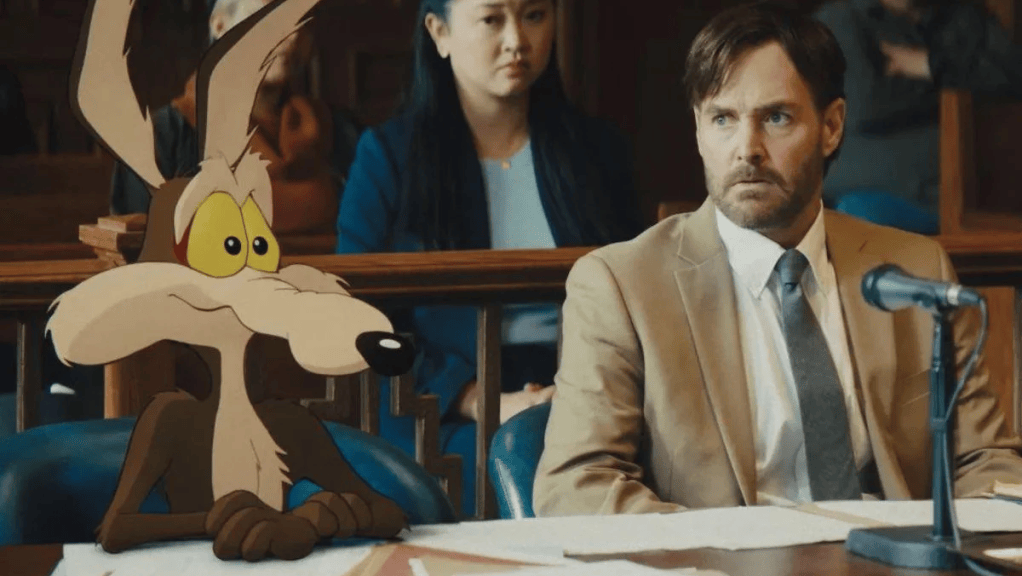
Like many filmgoers this year, I’ve been rooting for Coyote vs. Acme’s (2016) success. No metric-ton anvil has been necessary to weigh down the bar required for me to enjoy the prospect of Wile E. pitted against the mega-corporation Acme. As a fan of Looney Tunes, courtroom dramas, and live-action/animated hybrids, chances were good that, like its cartoon coyote’s designs on his favourite roadrunner, it was one worth catching. However, the real motivation encouraging so much interest in its box office release has been a healthy dose of spite directed at Warner Bros Discovery and its current CEO, David Zaslav.
Following Discovery Inc.’s merger with WarnerMedia in 2022, Zaslav has buried several nearly completed productions, denying them a release so that they can instead be claimed as tax write-offs. While it’s not unusual for a major studio to abandon a project during pre-production or filming, it’s a concerning sign for both audiences and filmmakers if a virtually finished feature can be entirely scrapped simply because its owner gets cold feet concerning its returns. Making movies is hard enough already without the heart-breaking potential for a team’s efforts to be unceremoniously shelved. Both Scoob! Holiday Haunt and Batgirl were denied releases in 2022 following their parents’ merger. Four years later, neither has seen the light of day. It’s hard not to consider Coyote vs. Acme’s current theatrical release, after it was similarly cancelled in 2023, as something of a victory.

Warner Bros.’ decision to ditch Coyote vs. Acme was an attempt to write down $30 million against its $70 million production costs, despite the film reportedly testing well with both audiences and industry insiders (D’Allesandro, 2023). The notion that Zaslav would opt to scrap a project with obvious potential rather than capitalise upon its commercial appeal demonstrated a total disrespect for its teams’ creative talent and a baffling level of incompetence. Rubbing salt in the wound was the revelation that none of the executives responsible for the decision had seen the finished cut of the movie, with Zaslav never having watched it at all (Taylor, 2024).
Following news of its abandonment, many members of Coyote vs. Acme’s production team took to social media to discuss the labours that had now been squandered. Dave Green, the film’s director, would mount a “funeral screening” on the Warners Bros.’ lot (Couch & Hibberd, 2023) and state that “I am beyond proud of the final product, and beyond devastated by WB’s decision. But in the spirit of Wile E. Coyote, resilience and persistence win the day” (@dgrenmachine, 2023).
After hearing of the farce surrounding its release, other industry figures rallied around Coyote vs. Acme’s cast and crew. Fellow director Scott Derrickson would announce that “I think it’s absolute bullshit that a studio can and does shelve the creative work of hundreds of people for a fucking tax break” (@scottderrickson, 2023), while screenwriter Peter Briggs bemoaned that “David Zaslav has turned a functioning movie studio into a mechanism to pay him an obscene amount of money annually, while not actually releasing movies” (@ThePeterBriggs, 2023).
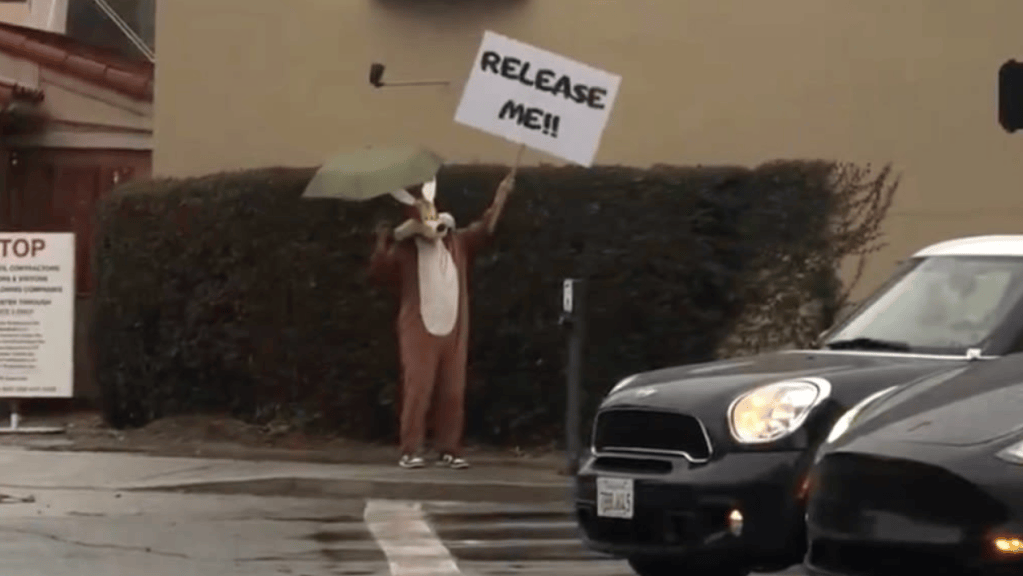
The irony of Coyote vs. Acme’s abandonment, considering its narrative focus on a David vs. Goliath battle of corporate greed and indifference, was not lost on the public either. One fan, Marco Vaccaro, would dress up as Wile E. himself and picket the entrance of the Warner Bros.’ lot. Eric Bauza, voice of Bugs Bunny and others in the film, would adopt the character of Daffy Duck when making a plea for the film’s case from the podium of the 2024 Annie Awards and help the hashtag #ReleaseCoyoteVsACME to go viral.
Responding to backlash, Warner Bros. eventually allowed Green to shop his film around to other potential buyers, leaving the director scrambling to create his own PR campaign in the hopes of salvaging the project. After rebuffing a variety of offers from rival media juggernauts, Warner Bros. would sell the feature to indie studio Ketchup Entertainment, who had previously distributed their similarly Looney-Tunes orientated The Day the Earth Blew Up (2024), for an estimated $50 million (Wiseman, 2025).
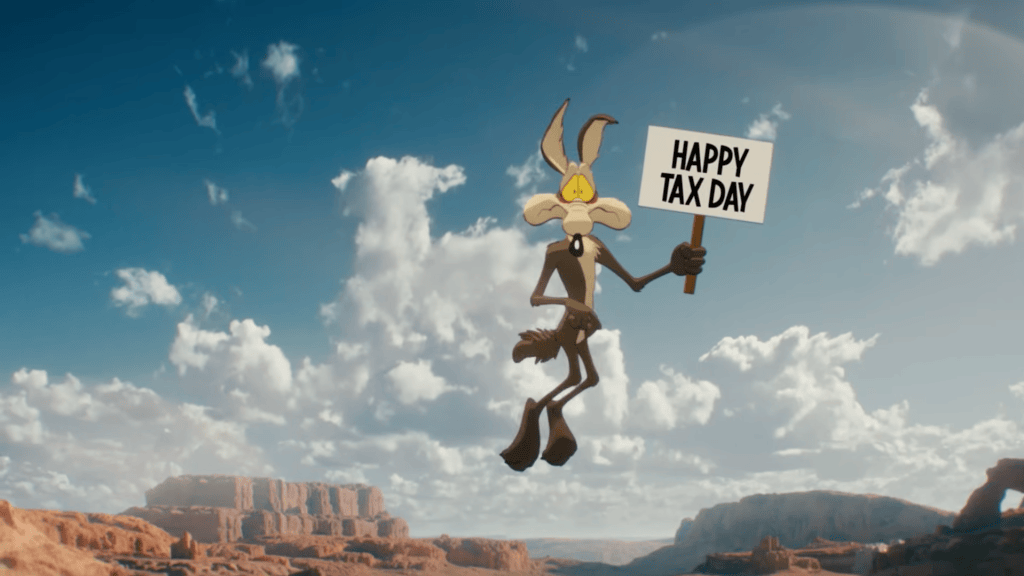
Supported by a meagre $10 million in additional marketing costs, the current success of Coyote vs. Acme in theatres owes much to strong word of mouth and, importantly, the tantalising prospect of seeing Warner Bros. with egg on their face. Ketchup would introduce the film’s teaser with Wile E. Coyote plummeting from a cliff with a sign stating ‘Happy Tax Day’ and ‘check your write offs.’ Their official trailer would similarly feature text describing itself as ‘the movie Acme doesn’t want you to see’ while accompanying the Warner Bros.’ logo with the byline ‘a wholly owned subsidiary of the Acme Corporation.’
Coyote vs. Acme’s respectable performance has proven a rebuttal to Warner Bros. and Zaslav’s indifference worthy of savouring. Recent figures estimate that the film has now taken in $57.3 million worldwide, with an opening weekend second only to Spider-Man Brand New Day (2026), handily outpacing Ridley Scott’s flop The Dog Stars (2026) (Lang, 2026). Even if Ketchup are unable to net a sizeable profit from the film, its reception has, like its silent protagonist’s own battle against a corporate behemoth, provided the film with a notable last laugh.
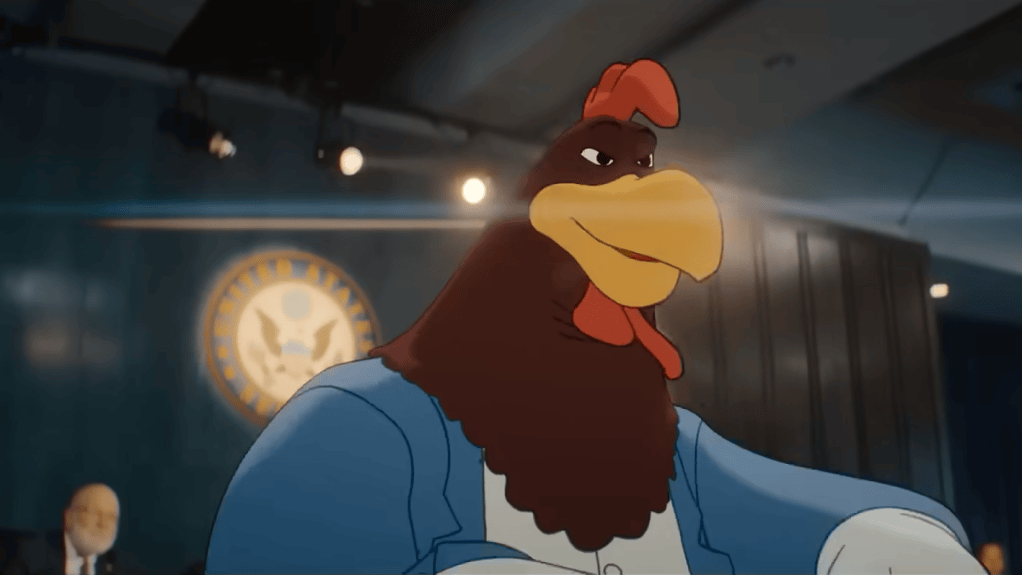
It’s no surprise that Wile E.’s decision to take Acme to court for a litany of physical calamities and indignities should strike such a chord with modern audiences. Who among us doesn’t wish to step out of the shadows cast by such monopolising corporations? Recast as Erin Brockovich in a fur coat, Wile E. recruits Kevin Avery, a shoestring lawyer played by Will Forte, to help him hold Acme accountable. Together, they face off against the unscrupulous Buddy Crane, John Cena, the hotshot attorney that Acme has assigned to the case. With the stakes set, the film does a commendable job providing a suitably loony spin on various well-established story beats. Bugs Bunny pops up as a whistleblowing informant, Acme’s Head of PR, the Tasmanian Devil, proves characteristically incomprehensible when cross-examined on the stand, while Foghorn Leghorn’s Southern drawl is set to appropriate work as Acme’s ruthless CEO. What’s not to love?
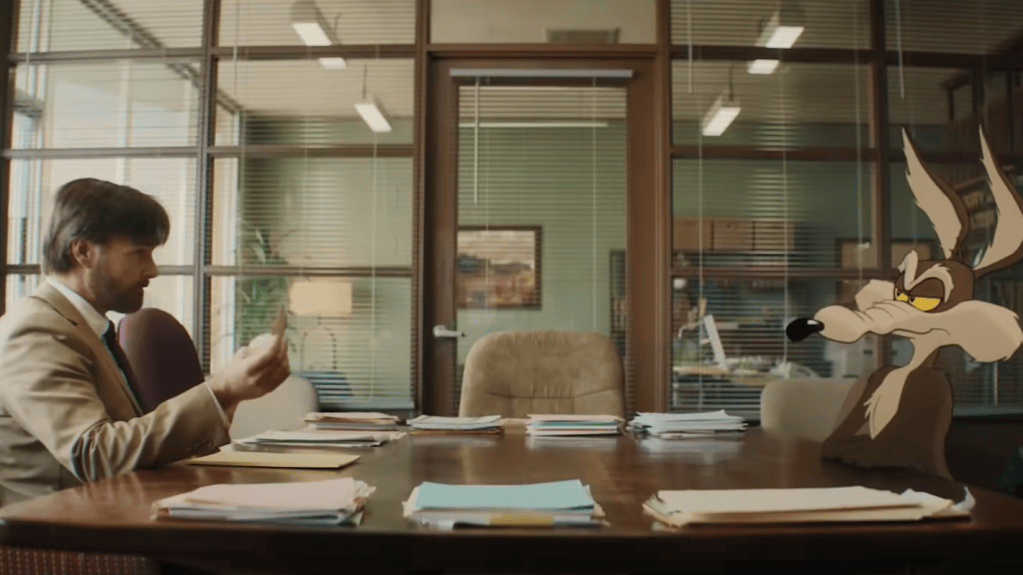
The film itself was developed from a satirical 1990 New Yorker article by humourist Ian Frazier. Frazier would consider the merits of a hypothetical claim by Wile E. against Acme based on product liability and inadequate safety guidance. However, the coyote’s plight in the film is not only framed around Acme’s lack of consumer standards, but eventually snowballs into a sinister conspiracy concerning equality-based jurisprudence. Or rather, the disparity of rights between cartoon animals and those of humans.
The film’s second and third acts reveal that the failures of Acme’s products are part of Project Sisyphus, an initiative designed to maliciously inflict injuries upon cartoons. This data is then collected and used by the company for the purpose of improving human-facing products and services. By depicting Acme’s culpability as deliberate, therefore, the film offers surprisingly direct parallels between Wile E.’s case and the experiences of his very real animal counterparts that are experimented on in our own world.
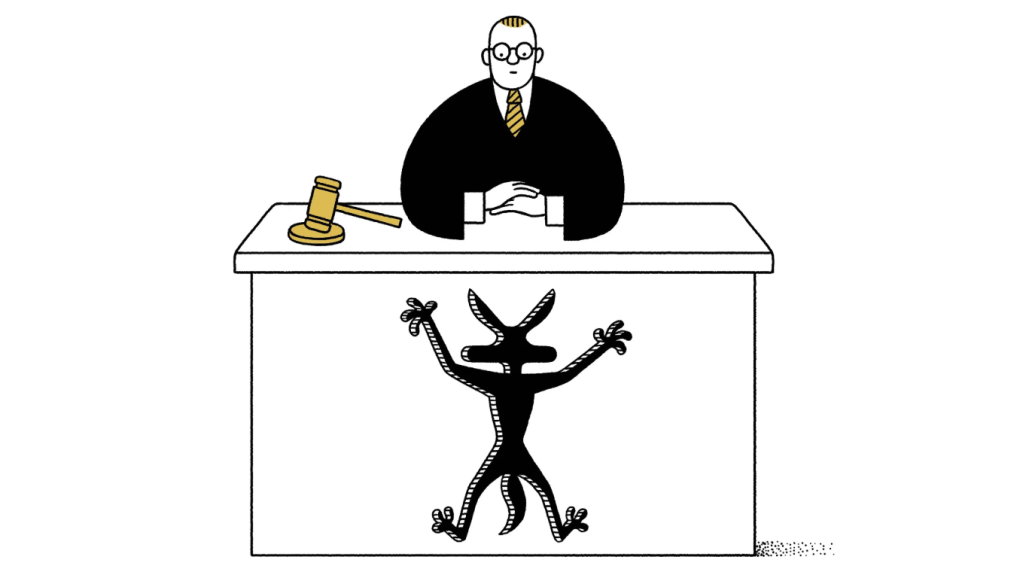
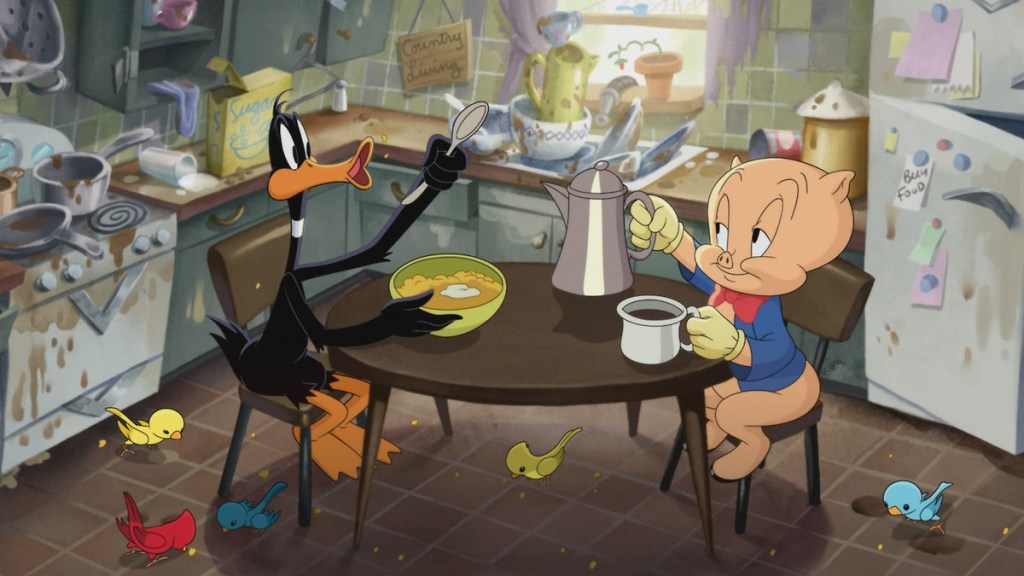
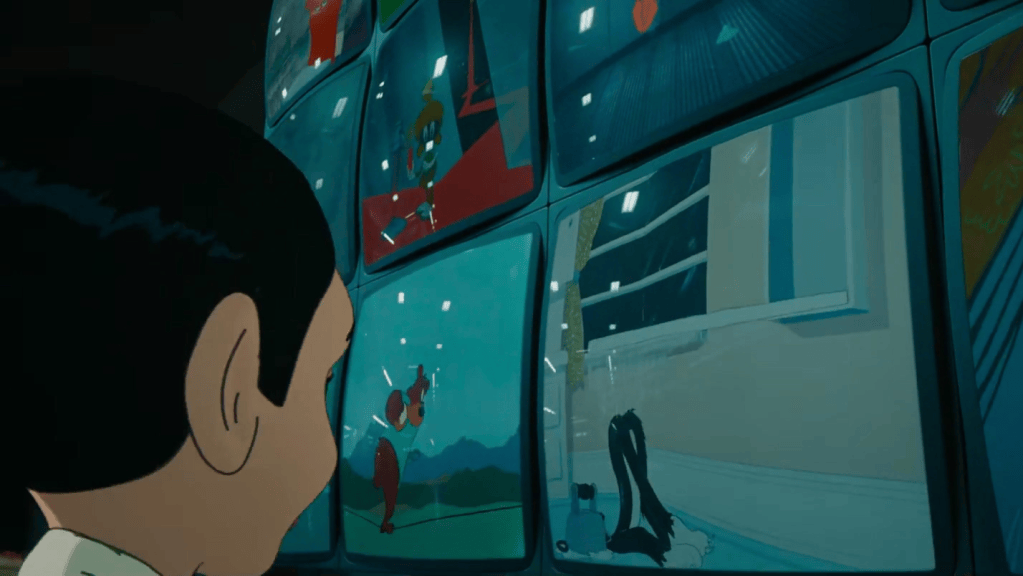
Visually, Acme’s data is represented as the rich catalogue of cartoons produced for Warner Bros. by the likes of Tex Avery and Chuck Jones. The film opens with a wall of monitors displaying their violent antics, reframed as experiments caused by the company’s numerous defective products. When Bugs Bunny’s intervention leads Forte’s attorney to Daffy Duck, the manic fowl is shown to have been driven even more insane than is characteristically normal, and committed to ‘St. Looneys’ Asylum.’
Defending his company’s unscrupulous endeavours, Foghorn Leghorn draws right from the playbook of A Few Good Men (1992) by stating “you think progress isn’t worth a little pain? A little discomfort? It is, son. It always has been.” While Coyote vs. Acme is certainly no My Cousin Vinny (1992), Foghorn’s attempt to outweigh the harm inflicted by Acme’s products against their utilitarian benefit is readily comparable to real-world legalese.
In the UK, it is the Home Office’s ‘harm-benefit analysis process’ that assesses whether or not animals can be licensed for use in scientific experiments. Inspectors working within the Animals in Science Regulation Unit have the role of considering “whether the likely harms to animals can be justified by the likely benefits” (Home Office, 2015). As with Foghorn’s defence, certain harms have legal definitions which allow them to be legally inflicted.
Various classifications must be checked, including the distressingly titled ‘severity limit,’ which researchers use to outline “the highest level of pain, suffering, distress or lasting harm that may be experienced by any animal undergoing an authorised procedure” (Home Office 2026a). Importantly, ‘severe’ is the highest definable category of harm that might be inflicted, with no restriction on such limits if the supposed benefits are considered adequate. The legal requirement is that such experiences must not be sustained. If the animal experiences “severe pain, suffering or distress that is likely to be long-lasting,” then it must be ameliorated; if this is no longer possible, the animal must be ‘humanely’ killed (ibid.).
Last year alone, 2.54 million scientific procedures were conducted on animals in the UK, with the top three research areas reported as the nervous system, the immune system, and cancer (Home Office, 2026b). Almost half of these procedures involved the creation and breeding of animals “whose genes have mutated or have been modified” for the purposes of such research (ibid.). The UK Government records that 99% of the total procedures were assessed as “non-recovery, sub-threshold, mild, or moderate in severity” (ibid.). Even if we were to generously assume that the majority of these animals survived, these statistics infer that 25,400 procedures were conducted on animals that led to ‘severe’ levels of suffering and harm (ibid.).
In the UK, there are currently 131 institutions licensed to conduct animal research, ranging from universities to biomedical research institutes, pharmaceutical companies, and contract research laboratories (Home Office, 2026b). Interestingly, the UK Government highlighted this year that it has not had reason to refuse a single licence on the grounds of unacceptable levels of harm since 2021, although Lord Hanson of Flint, Labour Peer, noted that “the number of formal refusals is not, however, a meaningful indicator of regulatory rigour” (UK Parliament, 2026).
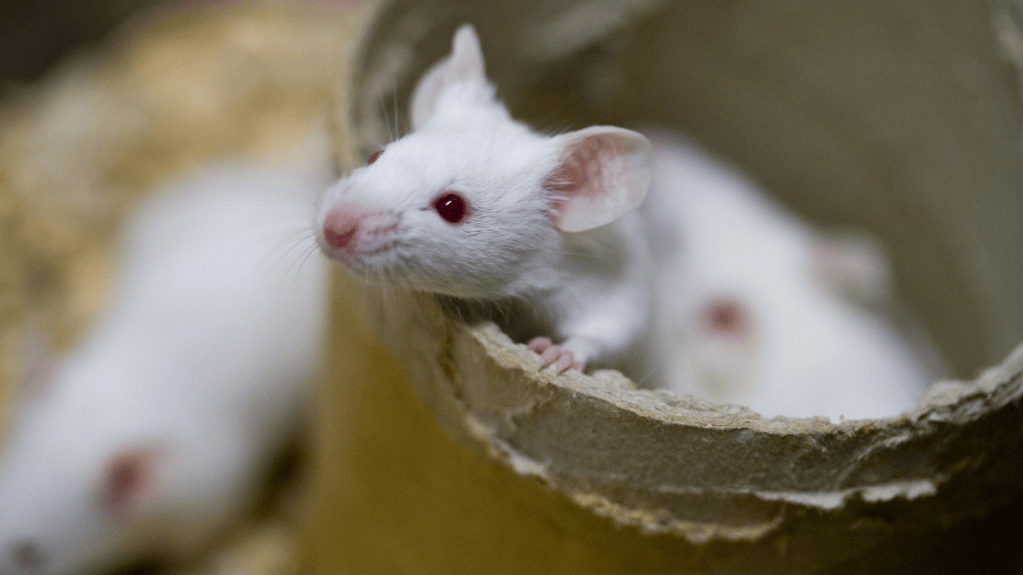
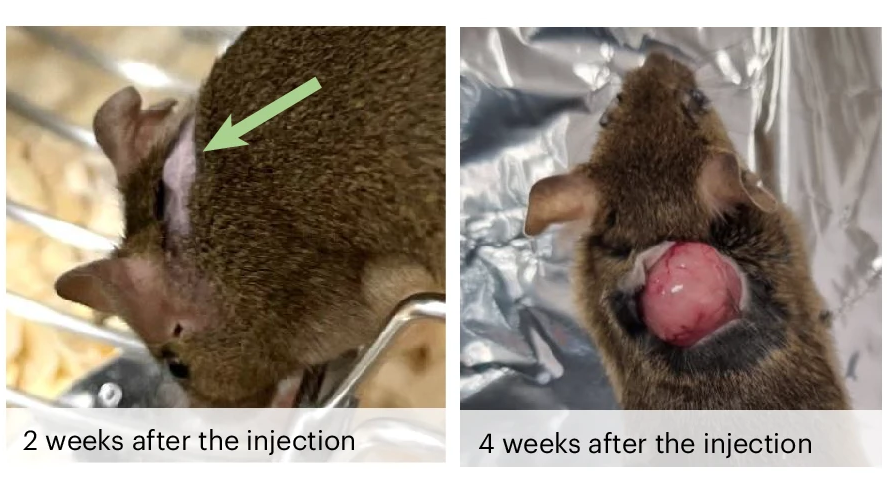
The experimentations conducted upon the toons in Coyote vs. Acme are, of course, played for laughs. Daffy Duck’s combustion and balding are as funny now as it was half a century ago. However, the real-world equivalents are significantly less comical. The image below, for example, is of a mouse implanted with an osteosarcoma tumour. In this instance, the procedure was conducted to aid measurements of radiotherapy efficiency.
The stakes for such research could not be higher. While this radiotherapy study was conducted within the GSI Helmholtz Centre for Heavy Ion Research in Germany, those undertaken by British institutions like the Francis Crick Institute, the Medical Research Council, and Imperial College London are of equal importance. Even including such imagery in an article concerned with the cultural relevance of a Looney Tunes movie seems almost as brazenly farcical as Bugs Bunny himself. Yet, it would be even more heinously inappropriate to overlook the price that is paid by animals when we subordinate their welfare for our species’ benefit.
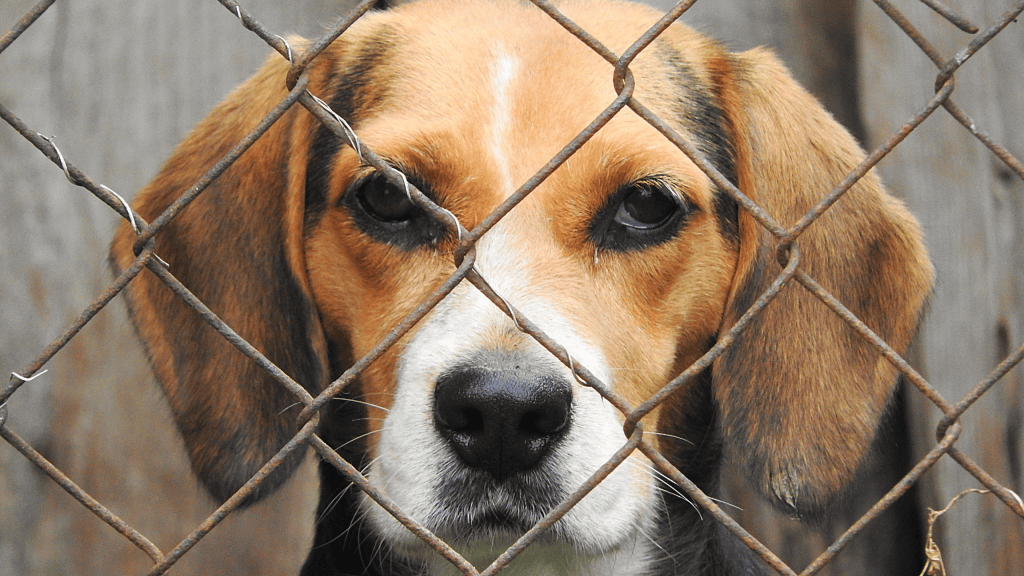
While images such as these are remarkably distressing, a quick review of briefs and videos by contemporary organisations that conduct animal research demonstrates an eagerness to reassure the public that the majority of their creatures are not placed in harmful situations. The terminology most frequently used is that of the ‘three Rs,’ being an attempt to ‘replace’ animal testing wherever possible, ‘reduce’ the minimum number of animals necessary, and ‘refine’ processes so that pain, suffering, and distress can be minimised.
The University of Glasgow’s animal research strategy states, for example, that, such procedures are only used “when there is no other suitable alternative available,” noting that, out of 96,038 procedures in 2025, 0.9% resulted in ‘severe’ harm to the animals in question (2026). Like the national statistics cited earlier, however, these figures determine that, over that single year, 864 procedures were inflicted upon animals that caused, in the University of Glasgow’s own language, “short-term severe pain, suffering or distress, or long-lasting moderate pain, suffering or distress” (ibid.).
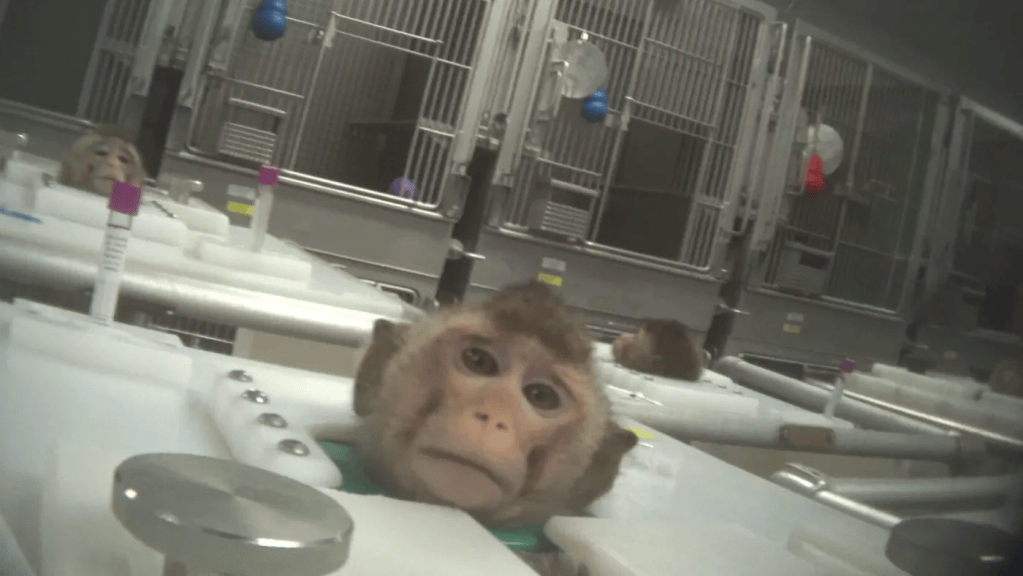
While animal experimentation remains common in the UK, growing research evidences a steady shift in consensus towards the need to emphasise non-animal related alternatives. In 2019, Emily Sena and Gillian Currie published ‘How Our Approaches to Assessing Benefits and Harms Can Be Improved,’ arguing for a rehauling of the practice’s regulation. Notably, they claimed that current definitions of potential ‘harms’ and ‘benefits’ rely on “generally subjective” assessments, and point towards a lack of rigour when determining whether the latter will ever actually materialise (2019: 107).
Just last month, Cancer Research UK published recommendations that the biomedical sector make further steps to replace animal-based approaches, claiming that “90% of drug candidates fail in clinical trials without ever reaching patients” (2026). They point towards ground-breaking research led by the Human Cancer Model Initiative (HCMI) that “allows researchers not only to reduce animal use but also to improve the quality and translational value of preclinical research” (ibid.).
Still, in many instances, changes in research methods are not being made quickly enough. Last year, the UK’s National Centre for the Replacement, Refinement and Reduction of Animals in Research claimed that, while animal-derived products such as foetal bovine serum caused “significant suffering for the animals involved,” they still remained in use despite the availability of non-animal alternatives “with significant scientific and ethical advantages” (National Centre for the Replacement, Refinement and Reduction of Animals in Research, 2026: 3).
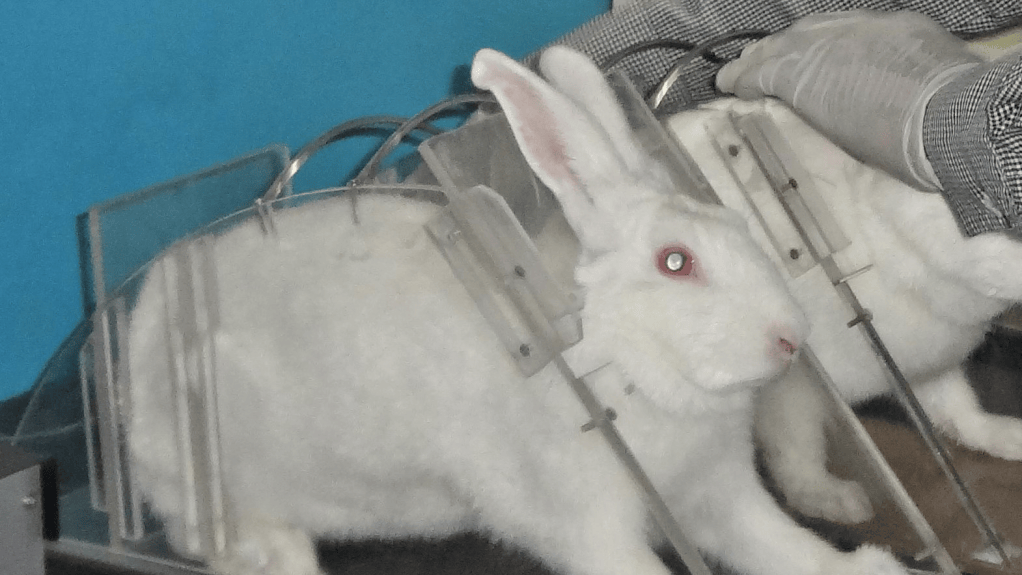
Thankfully, the testing of animals for the use of cosmetic and household products was banned in the UK in 1998. There is, however, no such federal law present in America and a proper examination of the cruelty inflicted on animals in the name of testing and experimentation lies tragically outside the scope of this single article. When conducting my own research, I was particularly distressed by the appallingly flippant slogan that the American company PLAS-LAB uses to advertise acrylic rabbit restrainers similar to those pictured above. With a level of callousness worthy of the Acme Corporation itself, they boast that “The only thing that wiggles is the nose!” (PLAS-LAB, n.d.).
Foghorn Leghorn’s legal testimony in Coyote vs. Acme seems cartoonishly arch, but his words are a painful reminder of the lived realities of millions of animals currently being experimented upon around the world. “Yes, yes, our cartoon products sometimes do explode, sometimes they do backfire, sometimes they push the boundaries of gravity and science,” he says, “but do you all want to live in a world without new? Without progress?” The question of the ethical price we pay for such research is easily answered when out of view, but reflective of an issue that demands further regulation and constant reflection.
It’s notable that neither Warner Bros.’ nor Zaslav is likely to have had their feathers more than ruffled by Coyote vs. Acme’s vindicated release. It’s appropriate that, in the film itself, Wile E. and Avery are unable to claim victory in court, instead seizing the opportunity to embarrass the company in a public forum, with an epilogue indicating that their Sisyphean struggle will continue.
Likewise, we live in a world where organisational structures consistently attempt to excuse their harms in the name of capitalistic and anthropocentric benefits. The creatures around us may possess a few limited protections but their voices are notably silent within our legal systems. There will always be those willing to exploit peoples, communities, and species that do not have equal representation. We should, like a certain intrepid coyote, demand that they are held accountable.
Head Image: Coyote vs. Acme, Ketchup Entertainment, 2026.
Cancer Research UK. 2026. ‘The Importance of Patients – the Decade Long Effort to Create Next-Gen Cancer Models,’ Cancer Research UK, August 11: https://news.cancerresearchuk.org/2026/08/11/the-importance-of-patients-the-decade-long-effort-to-create-next-gen-cancer-models/.
Couch, Aaron & Hibberd, James. 2023. ‘Warner Bros. Reverses Course on Coyote vs. Acme After Filmmakers Rebel,’ The Hollywood Reporter, November 13: https://www.hollywoodreporter.com/movies/movie-news/coyote-vs-acme-wb-warners-canceled-reversal-shop-film-1235645372/.
Coyote vs. Acme. 2024. d. Dave Green, Film: Ketchup Entertainment.
D’Alessandro, Anthony. 2023. ‘Coyote Vs. Acme: Warner Bros Shelves Finished Live-Action/Animated Pic Completely as Studio Takes $30M Tax Write-off,’ Deadline, November 9: https://deadline.com/2023/11/coyote-vs-acme-shelved-warner-bros-discovery-writeoff-david-zaslav-1235598676/.
The Day the Earth Blew Up. 2024. d. Pete Browngardt, Film: Ketchup Entertainment.
@dgreenmachine. 2023. ‘For three years, I was lucky enough…’ X, November 9, 9:21 p.m.
The Dog Stars. 2026. d. Ridley Scott, Film: 20th Century Studios.
A Few Good Men. 1992. d. Rob Reiner, Film: Columbia Pictures.
Frazier, Ian. 1990. ‘Coyote V. Acme,’ The New Yorker, February 19: https://www.newyorker.com/magazine/1990/02/26/coyote-v-acme.
Home Office. 2015. The Harm–Benefit Analysis Process: New Project Licence Applications. London: Home Office,
Home Office. 2026a. The Operation of the Animals (Scientific Procedures) Act 1986 (ASPA). London: Home Office.
Home Office. 2026b. Annual Statistics of Scientific Procedures on Living Animals, Great Britain. London: Home Office.
Lang, Jamie. 2026. ‘Coyote Vs. Acme Climbs to Third at Global Box Office; Cars, Akira Re-Releases Score Domestically,’ Cartoon Brew, September 7: https://www.cartoonbrew.com/box-office-report/coyote-vs-acme-cars-akira-paw-patrol-chiikawa-266303.html.
My Cousin Vinny. 1992. d. Jonathan Lynn, Film: 20th Century Fox.
National Centre for the Replacement, Refinement and Reduction of Animals in Research. 2026. Accelerating the Use of Non-Animal Reagents for In Vitro Research: Impact Report 2026. London: NC3Rs.
@ThePeterBriggs. 2023. ‘David Zaslav has turned a functioning movie studio…’ X, November 9, 10:03 p.m.
PLAS-LABS. n.d. ‘Rabbit Restrainers,’ Plas-Labs: https://plas-labs.com/products/animal-care-research/rabbit-restrainers.
@scottderrickson. 2023. ‘I think it’s absolute bullshit that a studio…’ X, November 10, 4:52 p.m.
Sena, Emily S. & Currie, Gillian L. 2019. ‘How Our Approaches to Assessing Benefits and Harms Can Be Improved,’ Animal Welfare 28: 107-115.
Spider-Man Brand New Day. 2026. d. Destin Daniel Cretton, Film: Sony Pictures.
Taylor, Drew. 2024. ‘The Final Days of Coyote vs. Acme: Offers, Rejections and a Roadrunner Race Against Time | Exclusive,’ The Wrap, February 9: https://www.yahoo.com/entertainment/final-days-coyote-vs-acme-140000578.html.
UK Parliament. 2026. ‘Animals (Scientific Procedures) Act 1986: Project Licence Applications’, UK Parliament, July 8: https://questions-statements.parliament.uk/written-questions/detail/2026-07-08/hl1807.
University of Glasgow. 2026. ‘Openness in Animal Research,’ University of Glasgow: https://www.gla.ac.uk/research/strategy/ourpolicies/animalresearch/.
Wiseman, Andreas. 2025. ‘Warner Bros Completes Worldwide Sale Of Coyote Vs. Acme,’ Deadline, March 31: https://deadline.com/2025/03/coyote-vs-acme-warner-bros-sale-complete-ketchup-1236354552/.
 Creature Features: Animal Welfare on Screen