
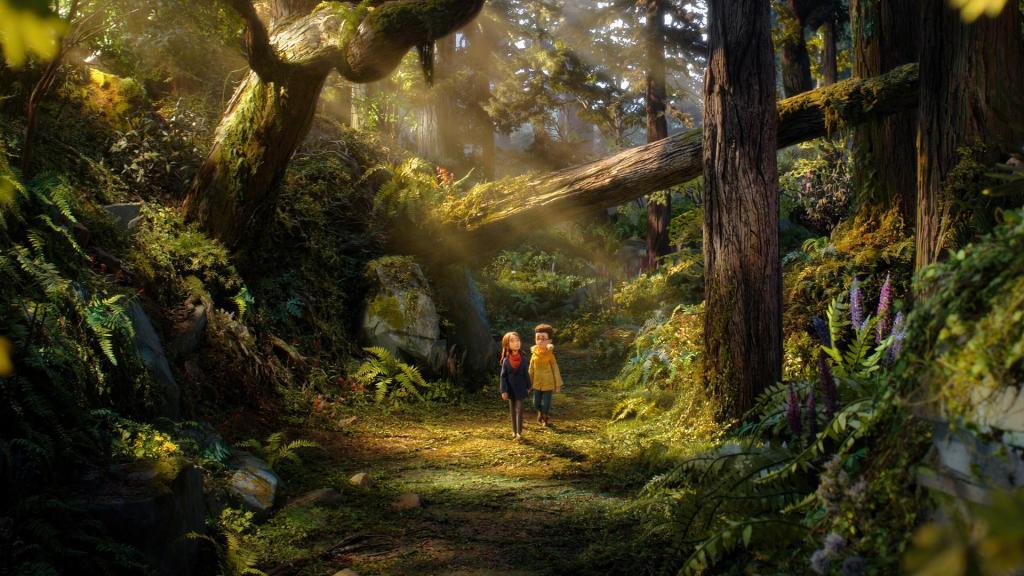
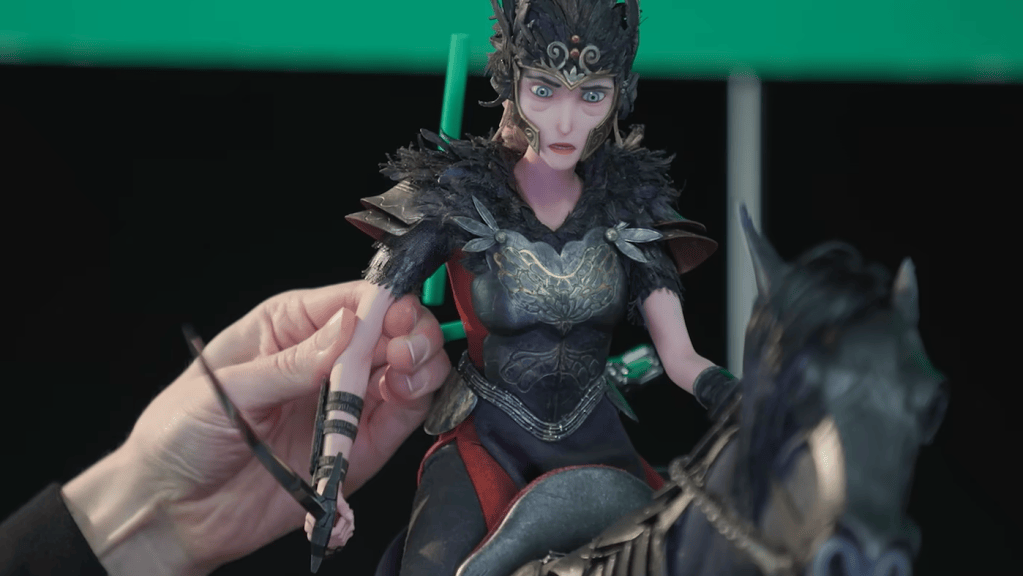
Wildwood (2026) is an astonishing creative achievement by any conceivable metric. As the longest stop-motion film ever produced, its release represents the cumulative work of over 1,000 creatives and artists stretched over a sixteen-year period (Kamegawa 2026). It’s hard to imagine a more labour-intensive method of filmmaking than one that requires 140,000 puppet masks to bring its impressive array of characters to life (Arsenault 2026). Collectively, 130 sets, all assembled upon LAIKA’s 100,000-foot soundstage, were used to embody the world first imagined within Colin Meloy and Carson Ellis’ novel of the same name (ibid).
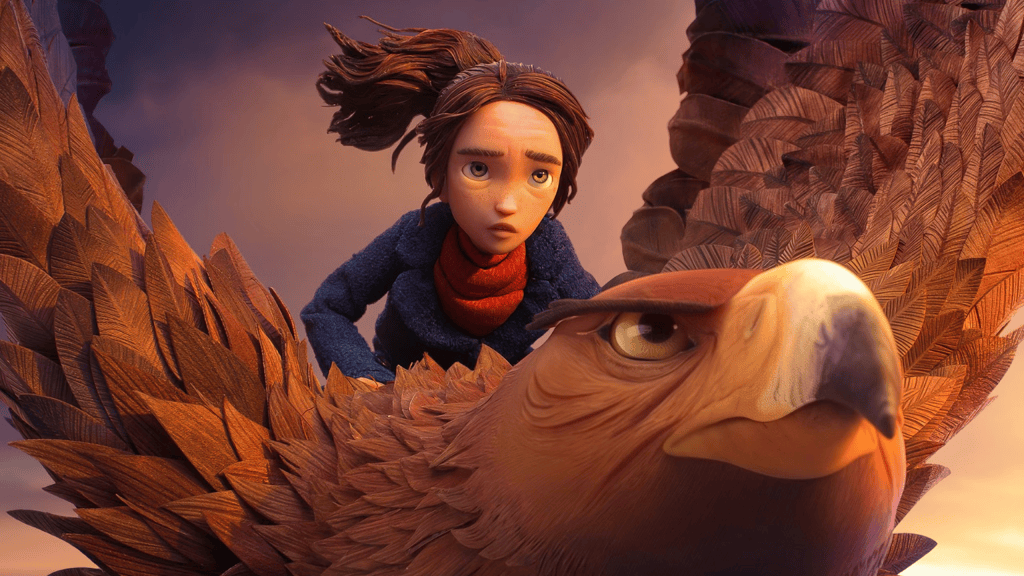
After its recent opening, critics and audiences alike have been rightfully swept up within Wildwood’s awe-inspiring spectacle. A battle scene featuring 400 shots and thousands of combatants is as impressive a showcase of LAIKA’s talents as any ever before recorded on film (Stenzel 2026). As staggering as this scale is, however, it is the detailing in these images that is truly breathtaking. The protagonist Prue’s knuckles, for example, get increasingly bloodied, bruised, and muddied throughout her adventure, escalating in stakes as she desperately scrambles to save her infant brother. Wildwood is, quite simply, one of the most self-evident triumphs of cinematic artistry in recent memory.
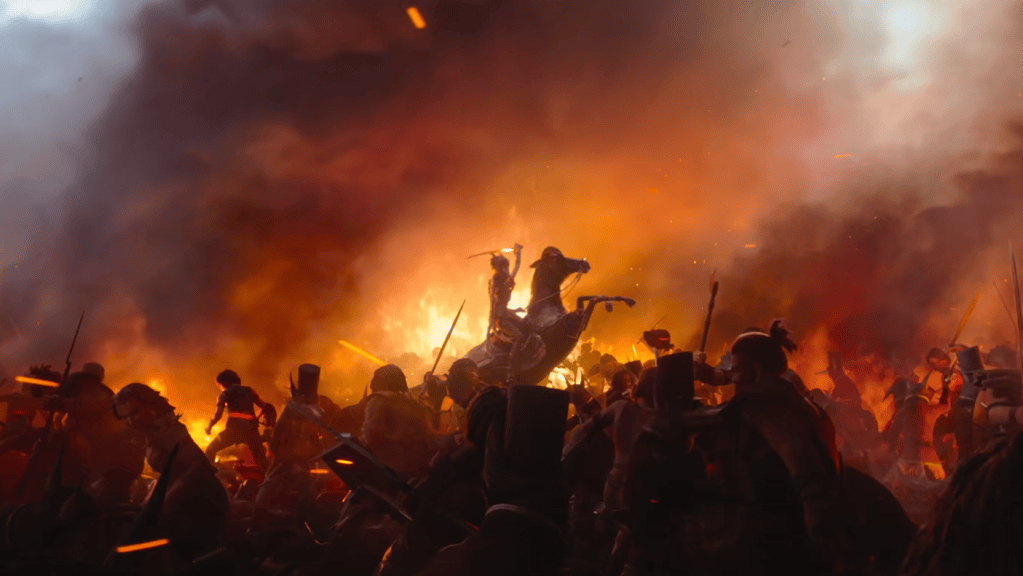
Despite its well-earned critical praise, box office pundits are currently in overdrive attempting to predict whether the film will see a return on its reported $100 million budget. As LAIKA’s first PG-13-rated feature, it’s not yet clear whether there is an appetite for a stop-motion animated fantasy in possession of its darker sensibilities and bold sense of grit. There’s no question, however, of whether or not animation aficionados will remember this one for generations. Wildwood is one for the history books.
Beyond its obvious artistic merits, it’s the current political climate that warrants discussion of the film within this blog. Wildwood’s arrival coincides with the razing of numerous natural spaces in the ceaseless drive towards automation in human industry. In comparison, the film’s marketing as “by the hands that made Coraline” willfully stakes its on- and off-screen identities upon the inherent quality of human-made art. Travis Knight, Wildwood’s director, would recently state that, while “incredibly impressive technology,” Gen AI is “antithetical to what an artist brings to the process, which is their experiences, their selves, their pain, their joy” (qtd. Cremona 2026).
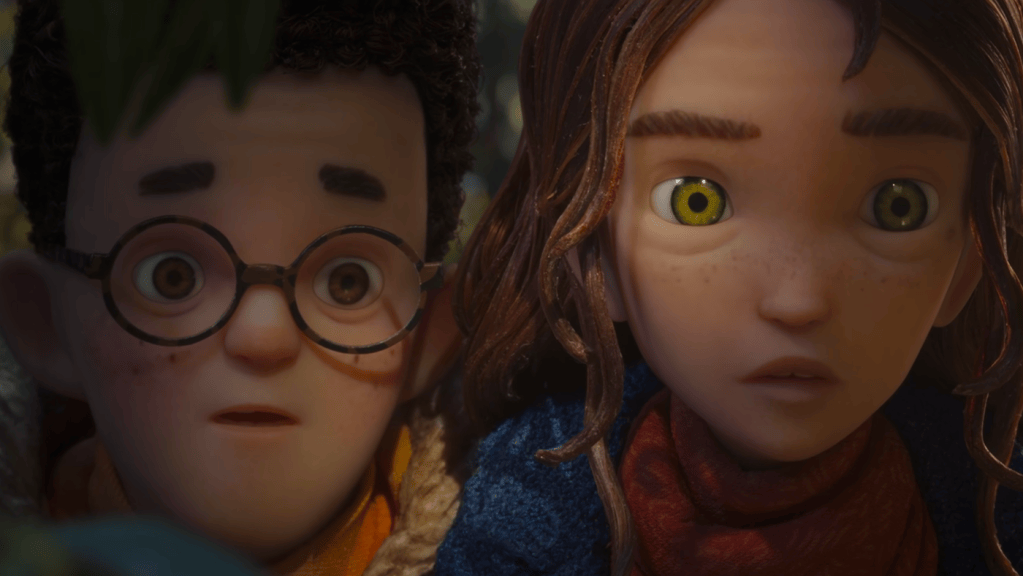
Knight’s opinions aren’t just embodied by the gruelling tactility of Wildwood’s production, but are also observable within the film’s on-screen setting as well. This fictional version of Portand, Oregon, LAIKA’s own hometown, is crowded with references to its real-world architecture, civic works, and businesses. Collectively, features like the Benson Bubbler water fountains and local eateries such as Voodoo Donut imbue Wildwood with the material presence of a culture rife with human invention, ingenuity, and labour. A reference to Powell’s Books, an independent bookstore whose workers have recently endured numerous union crackdowns and major layoffs, seems especially notable (McCurdy 2026).
Most potent, by far, is a sign within a craft fair that bears the warning “enjoy handmade art before it’s gone forever.” Similarly, text in the film’s credits that states “Handmade in Oregon” proudly roots Wildwood within the maker cultures of the region. It’s no coincidence that the narrative, of a young girl who travels to a fantastical realm to rescue her baby brother, bears such similarities to Labyrinth (1986). LAIKA have more than earned their status as the successors to the materially-orientated productions of the Jim Henson Company that once upon a time dazzled their audiences with their lovingly handmade creations.
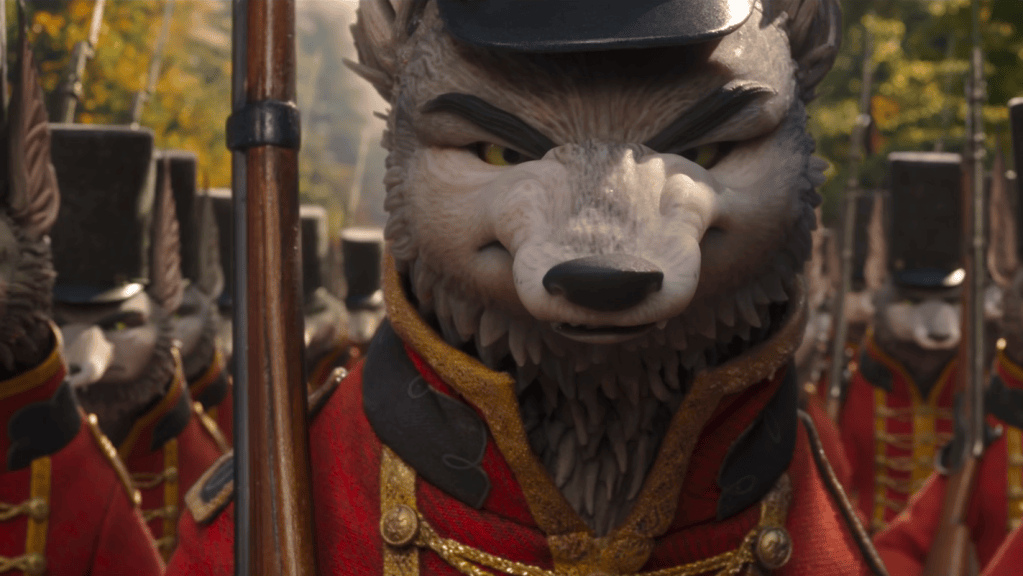
As its name suggests, Wildwood articulates these concerns through its fantastical representation of a wilderness that is cordoned off from our world by swathes of impenetrable ivy and thick mist. Prue’s adventure begins when her parents admonish her for failing to water a potted plant in her room, reminding her that “plants are people too.” The fairy-tale world that she eventually encounters is similarly populated by a host of anthropomorphised animals that exist uneasily alongside their human cohabitants. The coyotes are forced into the service of the antagonist’s military, while others labour under the reigning governor’s bureaucracy.
If Prue is to unite these animals and rally them to her cause, then she will need to employ the power of the forest. Her world’s greatest magic is represented as the living articulation of the ivy that snakes its way across the woodland floor. Her heroic worth is defined by her deference to these natural forces, explicitly tested when she communes with the oldest tree in the forest, ‘the council tree,’ placing her hands upon its trunk and tearfully begging for its wisdom so that she may save her brother.
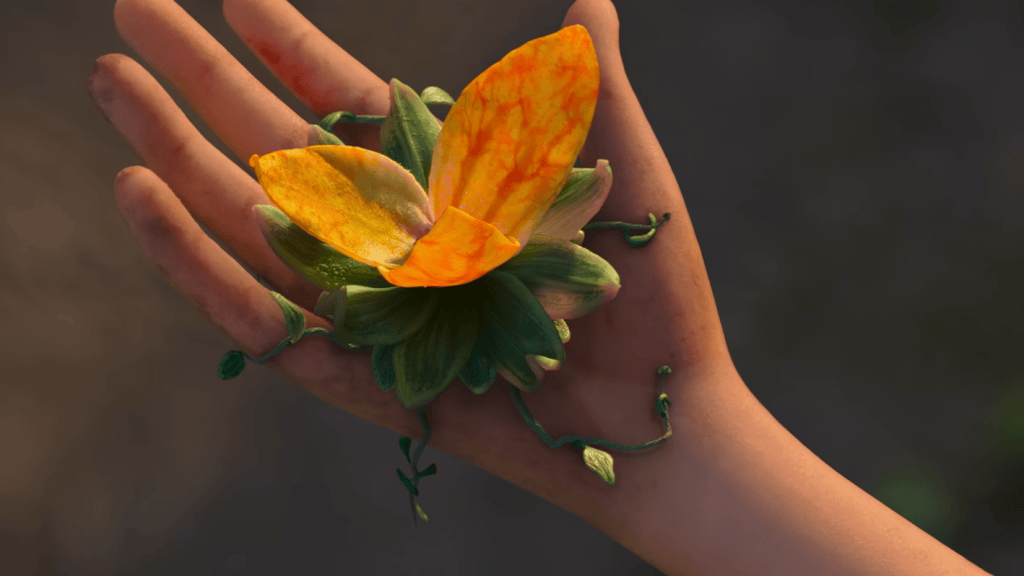
Wildwood’s depiction of its flora as a natural force in possession of a will of its own recalls the marching Ents of Tolkien’s The Lord of the Rings (1954-1955), and the rising earth of Susanna Clarke’s Jonathan Strange and Mr Norrell (2004). Here too, the woods are shown to possess a power and sentience beyond the understanding of our own species. Importantly, this is not a sentimental representation of nature that can be modelled in our image, but a wild and untamable presence that is deserved of respect lest it annihilate us entirely.
As well as evoking a land of prehistory, the forests of Wildwood have a decidedly postapocalyptic identity. They are pockmarked with the ruins of a human civilisation that has since been rewilded and reclaimed. As such, Wildwood’s fantastical setting sits within a tradition of eco-orientated features like Stalker (1979), Nausicaä of the Valley of the Wind (1984), and 28 Years Later (2025) that remind us that there are no manmade monuments that can outlast the vegetative reach of nature. As with all good fairy tales, Prue’s venture into the woods is definitively transgressive, a passage into a dangerous realm where neither creature nor nature is concerned with her wellbeing.
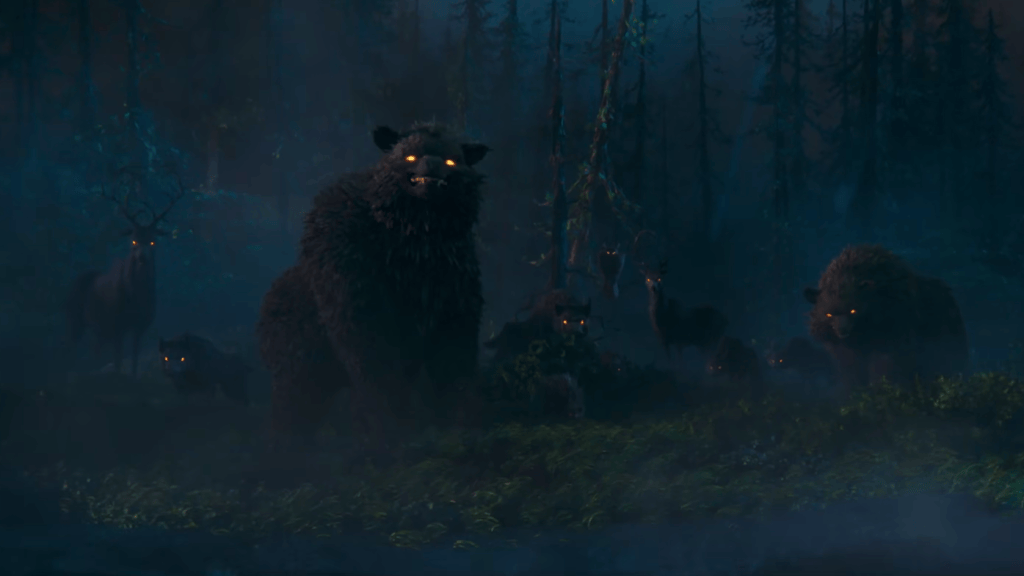
Compare Wildwood’s reverence for such spaces with current attitudes to protected wildernesses. Mere days ago it was revealed that Google had illegally stripped away 330 hectares of Finnish forest to build a new data centre (Bryant 2026). Anni Ranta, whose family has lived in the area for generations, would note that “we had wolves coming into the village because all the wild animals moved out of the forest,” adding that “what worries me about the data centres is also the noise because this is hardrock soil. Even when we are standing here talking[…] it’s like a drum” (ibid.).
While data centres are being constructed at an unprecedented rate worldwide, President Donald Trump has vocally opposed his country’s exportation of this infrastructure because he wishes them to be built within America itself. “These big, powerful, very rich, very smart companies are gonna be making massive contributions to communities,” he stated last month, “they’re gonna take something that people don’t understand and they’re gonna let them understand it” (qtd. ‘Press Gaggle’ 2026). Tell that to the people of Wildwood’s own Oregon. “I want to be proud of my city,” one resident of Portland’s neighbouring Hillsboro would say, “I want to settle down and make this my home, but how can I do this when I feel that my city isn’t looking out for me” (qtd. Fox 12 Staff 2026).
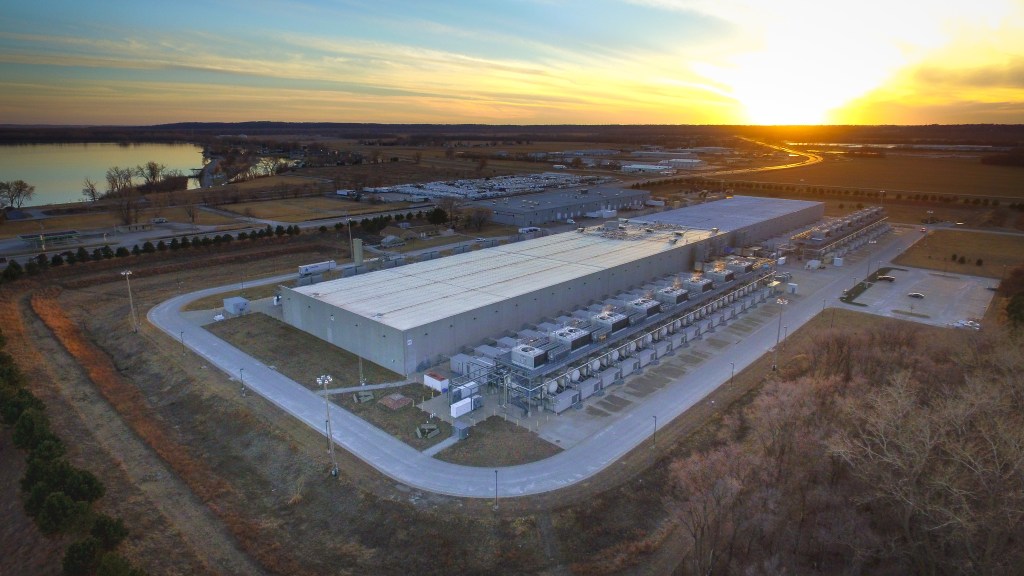
It’s difficult to wrap one’s head around the impact that our increased use of artificial intelligence is having upon our environment and communities. While data centres have been around for decades, the tech sector’s AI boom has caused an explosion in demand over the last few years (Next 10 2025). While issues such as air quality, noise pollution, and damage to local ecologies are readily visible, researchers are still attempting to estimate the scale of their environmental impact.
One study released last month by the UN’s Environment Programme attempts to highlight several estimates of particular concern. It summarises the “significant” ecological impact that has followed the quadrupling of demands for minerals and rare earth element mining that are required for GPU chips (UNEP 2025: 3). Similarly, they estimate that the global demand for water use from AI may reach 4.2-6.6 billion cubic metres by next year, which alone would exceed half the annual water use of the entire United Kingdom in 2023 (ibid.). Significantly, they highlight that a single large language model (LLM) generates approximately 300,000 kg of carbon dioxide emissions, leading electronic waste to become “one of the fastest-growing waste streams in the world” (ibid.).
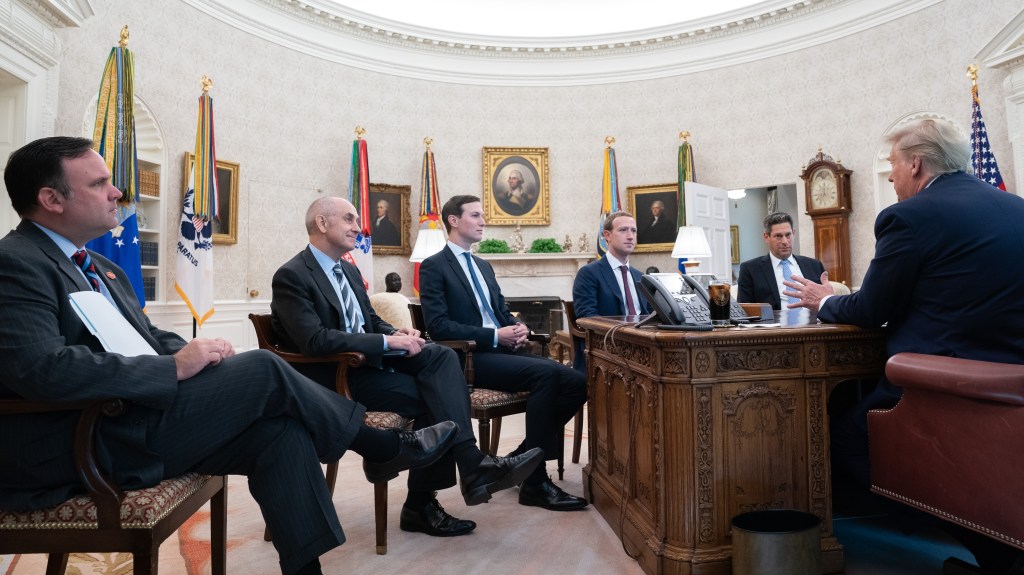
Any hopes that tech companies might be regulated went out the window during Trump’s summit last month with leaders from OpenAI, Anthropic, Nvidia, SpaceX, Meta, and Google. On Truth Social, the President would reveal a document signed by the companies’ heads that stated that “we believe every company is responsible for developing its own technology safely and in a way that builds trust with customers and the public” (@realDonaldTrump 2026a). In a characteristically bewildering manner, he would later add that anyone who does not term artificial intelligence “Super Intelligence” is “THE ENEMY” (@realDonaldTrump 2026b).
While AI may well have immeasurable benefits if employed in sectors such as medical research, there can be no doubt that the technology has had a devastating impact on our geopolitical stability. Alongside the increased dissemination of bots and cyberattacks, the recent vulnerabilities of PHP threw our reliance on digital infrastructure into frightening relief (Bhuiyan 2026). Evan Hubinger, Anthropic’s Alignment Science Lead, made headlines last month when tweeting that he believed there was a “>10%” chance that AI could wipe out humanity “within the next decade” (@EvanHub 2026). Trump’s statement that “whoever wins AI, wins” is one that sounds increasingly apocalyptic with each passing week (Labiak 2026).
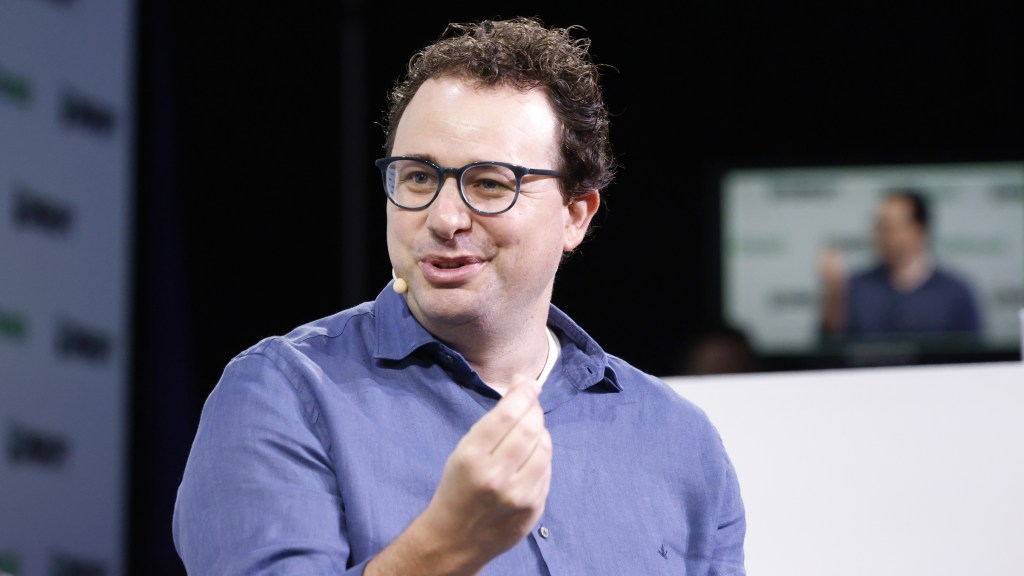
The truth of the matter is that we don’t need alarmist grandstanding or doomsaying to evidence the very real consequences of the unregulated expansion of AI. At the heart of the matter is a corporate compulsion to devalue the worth of human labour in favour of automatisation. When Wildwood’s director, Knight, was asked whether AI could have sped up his film’s sixteen-year production, he admitted “that very notion fills me with rage” (qtd. Malkin 2026). “The world we live in and the technology seems like it’s only pushing us in one direction, which is everything is going to be simpler. Everything is going to be automated,” he would continue, “what I would say to that is that there is something special about the human touch. There is something beautiful about humanity. And that’s one thing that stop motion represents” (ibid).
Knight’s views are perhaps clearest in Wildwood’s own representations of birth and creation. It’s not difficult to interpret the villainous Governess’ attempts to overthrow the natural order and revive her young son as a reflection of the creative industries’ own current insecurities around creation and birth. The film establishes these themes in its opening moments, beginning with an emotionally charged scene wherein the artificially created child, naked and vulnerable, steps out onto a balcony and rips the mechanical heart from his chest before toppling lifelessly to the ground. As Knight would say at Wildwood’s premiere at the Academy Museum last week, “AI can go fuck itself” (Digitalla 2026).
As the son of Nike founder Phil Knight, Travis Knight is in a fortunate position. LAIKA possess a financial footing not available to the overwhelming majority of other creatives in the industry. It is an uncomfortable truth that it is nepotistic privilege that makes such a pronounced stance against industry pressure possible. I would be delighted if Wildwood turns a profit, but, whether or not it does, LAIKA are certainly not under the same financial pressures as other animation studios attempting to survive in the current climate. Nevertherless, the tension between artistic ambition and economic sustainability is ever present. As Knight himself stated upon Wildwood’s release, “we will continue to do it until we can’t do it any longer” (qtd. Gaur).
What path does this leave us, when the talents and labours of an entire artform and industry are wholly dependent on luck, goodwill, and the tenacity of its makers? The answer might be evident within Wildwood’s own fairy tale, dramatised through its protagonist’s own relationship with the forests and creatures of the Pacific Northwest. Prue may have stopped believing in magic at the beginning of her adventure, but the film concludes with her having no doubt about the sheer power of the natural world around her, and her own ability to use her hands as a conduit to untold wonders. If nothing else, Wildwood is a reminder to audiences of the astonishing craft and artistry that our species is capable of if afforded the opportunity.
What else can we do? Well, with the Midterms around the corner in the US, it is vital that you vote and have your voice heard. Recent polls suggest that data centre backlash has become a major point of contention and one of the few issues that crosses across party lines (Cama & Long 2026). Here in the UK, Conservative leader Kemi Badenoch has argued that “the cat’s out of the bag, we can’t control it,” declaring that the British public has no option but to embrace the construction of data centres or be left behind (qtd. Dunstan 2026).
Despite the threats of those in power, we absolutely do have a choice of what technologies we choose to adopt. Although we will doubtlessly continue to engage with AI on a daily basis, from word processing software to driving assist, that does not mean we should be pressured to allow it to overtake all of our industries. We have to support legislation that demands thorough regulation of the sector, and vocally resist the overriding political rhetoric that expresses its use as an apocalyptic inevitability. You could do worse than a trip to watch Wildwood in theatres and support LAIKA’s use of stop-motion in film. Better yet, support some of the countless filmmakers and craftspeople who do not have the commercial security of the studio’s Nike-enabled financing. Simply put: enjoy handmade art before it’s gone forever.
Head Image: Wildwood, LAIKA, 2026.
Arsenault, Bridget. 2026. ‘Wildwood, the New Stop-Motion Animation Film From LAIKA Studios, Took 16 Years to Make,’ Vanity Fair, October 14: https://www.vanityfair.com/photos/wildwood-laika-event?srsltid=AYCX9vJEv52_xL4RuwhmVe3XGiFE10LnwPMOR9UiOza-fUUws-14nUvu.
Bhuiyan, Johana. 2026. ‘“Black October”: cybersecurity experts sound the alarm over new era of AI-enabled hacking,’ The Guardian, October 23: https://www.theguardian.com/technology/2026/oct/23/cybersecurity-ai-hacking-php-vulnerability.
Bryant, Miranda. 2026. ‘”Pure Arrogance:” anger in Finland as Google illegally fells 250,000 trees for datacentre,’ The Guardian, October 22: https://www.theguardian.com/environment/ng-interactive/2026/oct/22/finland-google-felling-trees-datacentre.
Cama, Timothy & Katherine, Long. 2026. ‘Poll: Data center backlash builds as midterms near,’ Politico, October 25: https://www.politico.com/news/2026/10/25/poll-data-centers-midterms-political-risk-01132260.
Clarke, Susanna. 2004. Jonathan Strange & Mr Norrell. London: Bloomsbury.
Coraline. 2009. d. Henry Selick, Film: LAIKA.
Cremona, Patrick. 2026. ‘Wildwood director explains why his hugely acclaimed hand-crafted animation is the antithesis of AI – and proves stop-motion is worth fighting for,’ Radio Times, October 22: https://www.radiotimes.com/movies/wildwood-director-hand-crafted-animation-antithesis-ai-exclusive-newsupdate/.
Digitalla. 2026. ‘“AI can go F- itself, said Laika CEO…’ Instagram, October 23: https://www.instagram.com/reels/DetJFh6iVYS/.
Dunstan, Tom. 2026. ‘Badenoch: UK risks “scaring off” AI companies through over-regulation,’ Fortean Times, July 8: https://www.ftadviser.com/content/c60de2d8-4163-4683-96b8-8149a5ba1646.
@EvanHub. 2026. ‘Jacob is correct here – we really do believe…’ X, September 9: https://x.com/EvanHub/status/2097497037956891126.
Fox 12 Staff. 2026. ‘City Council hears public concerns about data center expansion in Hillsboro,’ KPTV, June 3: https://www.kptv.com/2026/06/03/city-council-hears-public-concerns-about-data-center-expansion-hillsboro/.
Gaur, Ryan. 2026. ‘“We will continue to do it until we can’t do it any longer” – the team behind Wildwood break down their latest adventure,’ Skwigly, October 23: https://www.skwigly.co.uk/wildwood-laika-team-interview.
Kamegawa, Annalise June. 2026. ‘Wildwood Is the Longest Stop-Motion Animated Film Ever. Each Frame of the Movie Is a Marvel of Handcrafted World Building,’ Smithsonian Magazine, October 23: https://www.smithsonianmag.com/arts-culture/wildwood-is-the-longest-stop-motion-animated-film-ever-each-frame-of-the-movie-is-a-marvel-of-handcrafted-world-building-180989742/.
Labiak, Mitchell. 2026. ‘AI is less regulated than milk, says Microsoft president,’ BBC News, October 12: https://www.bbc.co.uk/news/articles/c6rmy7zmvx3lo.
Malkin, Marc. 2026. ‘Wildwood Director Travis Knight on AI: “An Amazing Piece of Technology” but “I’m Not Embracing It at All,”’ Variety, October 22: https://variety.com/2026/film/columns/wildwood-director-travis-knight-ai-1236921716/.
McCurdy, Christen. 2026. ‘Powell’s Books Completes “Final Round of Layoffs,”’ Willamette Week, January 26: https://www.wweek.com/arts/books/2026/01/26/powells-books-completes-final-round-of-layoffs/.
‘Press Gaggle: Donald Trump Speaks with Reporters After AI Luncheon.’ 2026. Roll Call, September 29: https://rollcall.com/factbase/trump/transcript/donald-trump-press-gaggle-after-ai-luncheon-the-sticks-september-29-2026.
@realDonaldTrump. 2026a. ‘White House Accord on Super Intelligence,’ Truth Social, September 29: https://truthsocial.com/@realDonaldTrump/posts/117356435739432952?status_id=117356435739432952&attachment_id=117356434517836699.
@realDonaldTrump. 2026b. ‘The White House considers anyone…’ Truth Social, September 29: https://truthsocial.com/@realDonaldTrump/posts/117406176604364910.
Next 10. 2025. ‘As Assessment of California Data Centres’ Environmental and Public Health Impacts,’ Next 10, November: https://www.next10.org/sites/default/files/2025-11/ai-environmental-public-health-costs.pdf.
Stenzel, Wesley. 2026. ‘Wildwood filmmakers break down the epic final battle sequence (exclusive),’ Entertainment Weekly, October 13: https://ew.com/wildwood-filmmakers-final-battle-breakdown-12135572.
Tolkien, J. R. R. 1954-1955. The Lord of the Rings. London: George Allen & Unwin.
United Nations Environment Programme. 2026. ‘Artificial Intelligence (AI) end-to-end: The environmenta impact of the full AI life cycle needs to be comprehensively assessed,’ UN Environment Programme, September 21: https://wedocs.unep.org/rest/api/core/bitstreams/07b3c8fc-bd30-4b92-b5f4-d665e927b59d/content.
Wildwood. 2026. d. Travis Knight, Film: LAIKA.

