
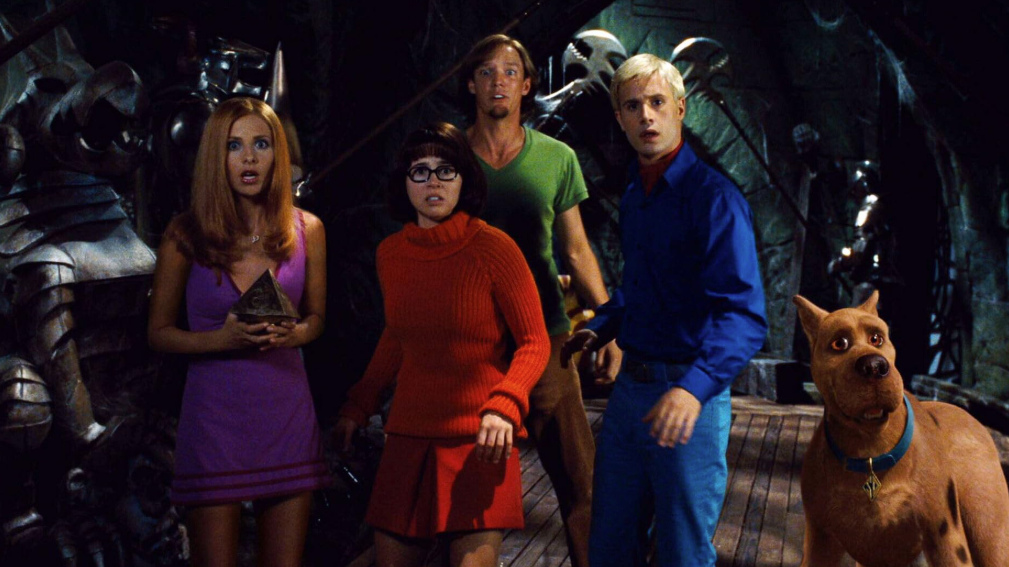
Thanks to Scooby-Doo, I am greatly looking forward to my current students’ graduations. Although their taught sessions are now behind them, their enthusiasm has led them to carry on with screenings regardless, picking their own films for us to watch together and bicker about afterwards. I have begun to tease them relentlessly for the fact that, of all the features we have watched together, the only productions that have earned their rousing applause have been those in the double-billing of live-action and Golden Raspberry-nominated Scooby-Doo (2002) and Scooby-Doo 2: Monsters Unleashed (2004). As well as being a textbook example of Gen-Z’s irony-infused love of camp culture, their spirited ovation has given me ample ammunition if, or should I say when, I desire to embarrass them in front of their loved ones at the end of their degree. When they chose Yorgos Lanthimos’ The Lobster (2015) they may have spent a good hour debating its conclusion, but little has rivalled the sight of Rowan Atkinson being revealed to be a robot piloted by a Great Dane pup.
The amount of content in the Scooby-Doo empire is frankly bewildering. There have been, to date, fourteen animated TV series and forty-four films. For my students, the live-action films were monuments to the baffling wave of hyper-stylized cartoon adaptations that preceded their births. As a millennial, mine was a generation raised on a continual stream of Scooby-Doo, Where Are You! (1969-1970) re-runs and the cavalcade of Scrappy-Doo-focused series that followed in the 80s. Those before me, Gen X, were the first kids for whom the Hanna-Barbera franchise was seared into their cultural wallpaper. Is it possible, I wonder, to track the changing attitudes of generations through the antics of a scat-singing mystery-solving dog?
I say this only half-jokingly. Folklorist Mark Norman has recently published an excellent book, Zoinks! The Spooky Folklore Behind Scooby Doo (2024), that explores how the series’ family-friendly approach to its frightful escapades can be traced through changing representations of teenage identity and monstrosity. “There can be no doubt that, from its very first episode,” Norman writes, “Scooby-Doo has placed at least one paw very firmly into the Gothic camp” (2024: 20). First developed as a direct response to the organisation Action for Children’s Television’s (ACT) complaints that Saturday-morning cartoons had seemingly become too violent, Scooby-Doo exists at a fascinating intersection between horror tropes and children’s parable (Trammell, 2019). The gang of Mystery Inc. serve to rationalise the frightening world of the occult and unknown into reassuring explanations. Just as in the real world, peep beneath the masks of its ghouls and ghosts, and you will most frequently find the exploitative skullduggery of elderly businessmen and landowners. It is usually, after all, “Old Man Jenkins all along.”
Watching the live-action adaptation with my students, possibly to keep my brain cells in some form of motion, I was taken by its depiction of the vast quantities of junk food that Shaggy and Scooby inevitably consume. I was aware that Casey Kasem, Shaggy’s first and decades-long voice actor, was a vocal vegan advocate and prominent supporter of several animal-rights and environmental causes. Kasem was a notable figure in American popular culture, but he would often argue that his campaigning for social issues was of far greater importance than his achievements in the entertainment industry. “The basic thing is to hopefully stop people from killing anything,” he stated, “and to create a non-violent diet for themselves, because a non-violent world has roots in a non-violent diet” (qtd. in Rushe 2014).

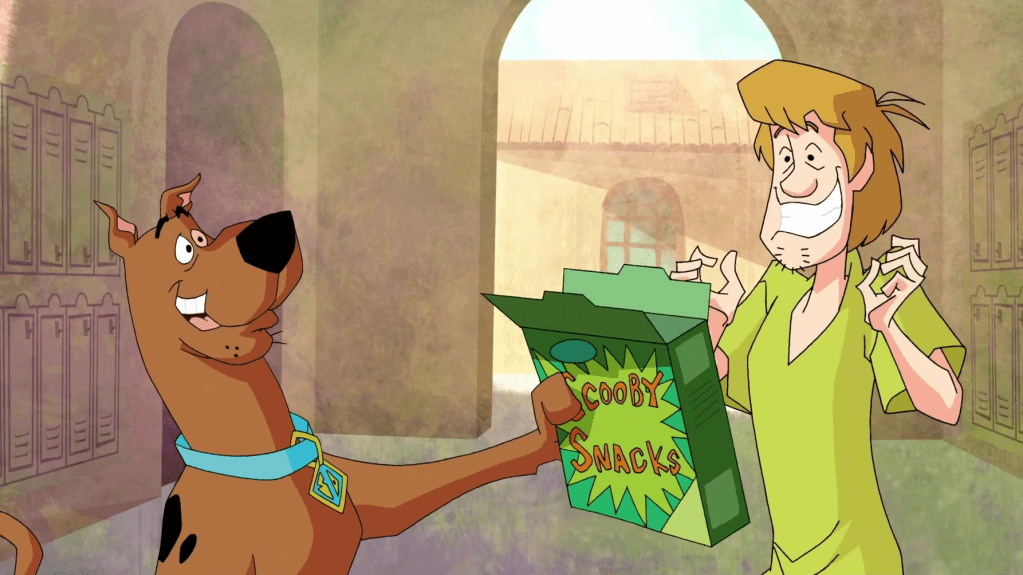
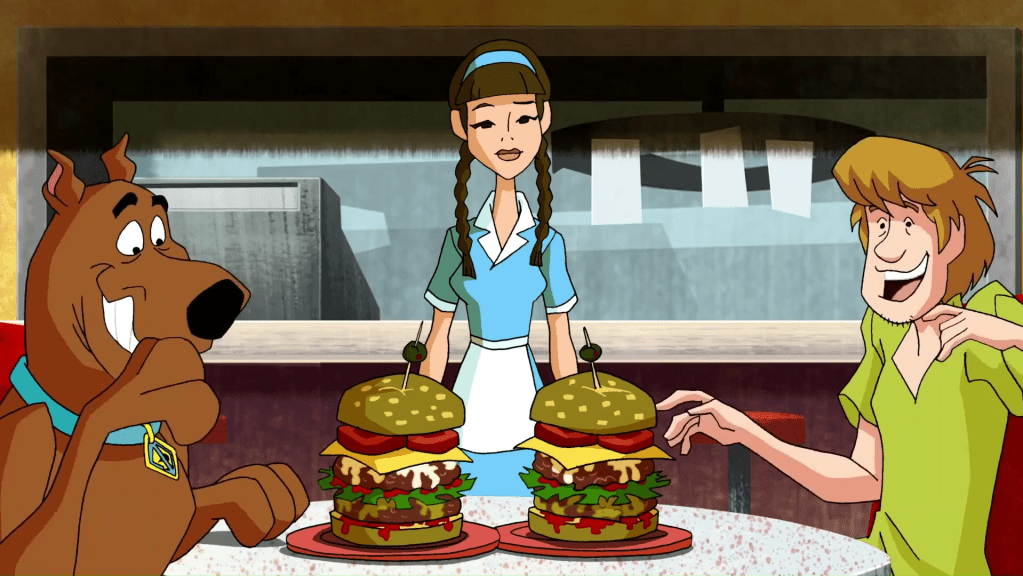
Scooby-Doo’s cast of characters have been used to promote an endless array of products over the decades, but Kasem quit his role when asked to perform as Shaggy in a Burger King commercial in 1995. In 2002, the same year that the live-action film was released, Kasem would return to the role after producers agreed that Shaggy could be represented on-screen as a vegetarian (Corliss 2014). Since then, the hippie gourmand has often been shown to trade in his trademark stack of towering ham sandwiches, enormous pepperoni pizzas, and triple-patty burgers for vegetarian and vegan equivalents. When Matthew Lillard took over the role, he would voice Shaggy commenting on his preference for tofu, and be seen, in-person, happily grilling up eggplant rather than beef for his burgers. Perhaps most prominently, in a Scooby-Doo and Guess Who? (2019-2021) episode featuring Sia, the glutton is shown hanging out with the singer-songwriter as they gorge themselves on vegan subs and dairy-free cotton-candy shakes.
Following Kasem’s death in 2014, Shaggy has often reverted to his rampant omnivorism, seen rolling sardines in pancakes in Scooby-Doo! Mystery Incorporated (2010-2013) and wolfing down “his body weight” in beef jerky in Be Cool, Scooby-Doo! (2015-2016). If anything, the cartoon character seems to possess a flexitarian diet. However, watching the 2002 film, I couldn’t help noticing that it was not only Shaggy who, for a time, refrained from eating meat, but also the canine Scooby himself. When the pooch’s beloved Scooby Snacks are introduced, we are informed matter-of-factly that they are “100% vegetarian.” As with his human companion, the Great Dane’s diet was shown in the immediate period following Kasem’s intervention as excluding any representation of animal products.
While Scooby-Doo’s brief dalliance with vegetarianism appears to have been fairly short-lived, it strikes parallels with a number of hotly debated issues that seem to be currently sweeping through our news and social media: namely, the ethics of canine dietary requirements. As Sylvia Albrizi et al. note in their paper, ‘Dogs that Ate Plants’ (2021) this is not a new affair. Humans have been feeding domesticated dogs meals based on foods such as cereals for much of our combined histories (ibid. 75). Meat-free dog foods have been commercially available in the UK since 1980, with the release of ‘Happidog,’ now known as ‘V-dog,’ made primarily from wheat and soya/pea proteins (‘History of Vegan Dog Food,’ 2024).
However, rather than acting as a marginal fad, plant-based options have become an increasingly dominant presence in the dog food industry. Globally, a report last year estimated the current market size of the sector as being worth a whopping $6.5 billion and growing (Mordor Intelligence 2025). It should go without saying that these rising numbers have proven fairly controversial. Numerous op-eds have opined that such popularity indicates that owners “are losing the plot about what animals actually are” and prioritising their own ethical concerns over their pets’ immediate welfare (Strimpel 2022). “Now even DOGS are being told to go vegan!” exclaimed The Daily Mail when a study announced that plant-based nutrients could provide adequate alternatives to meat-based diets (Leatham 2025). When, earlier this year, naturalist Chris Packham announced that he had begun feeding his poodles, Sid and Nancy, vegan pet food, he was met with a torrent of public admonishment. “That’s very cruel denying them their preferred choice of food,” replied Nigel Owens, noted rugby referee and MBE, “dogs are not vegetarians” (@Nigelrefowens 2026).

The argument that meat-based dog foods are inherently less natural and processed is, in my opinion, fairly misguided. Writing in her exposé of the industry, Zaria Gorvett argued that “Big Pet Food is a multi-billion-dollar industry which invests heavily in research into ‘palatants’ – ingredients that make our pets want to eat their products” (2021). Numerous chemicals and additives such as cadaverine, heptanal, and sodium acid pyrophosphate are frequently used to intensify flavour and stop the foods discolouring. “While in human food, their levels are sometimes closely monitored as a way of ensuring the freshness and safety of meat,” she writes, “they’re often actively added to cat and dog food, either as offal extracts or lab-made additives” (ibid.).
Like our own culinary histories, the food we have chosen to give our animal companions can be measured by the evolving roles they have played in our lives, as well as our own shifting methods of production and consumption. There are few sectors that prop up lower-welfare livestock farming as self-evidently as that of pet food manufacturing. The rendering industry’s waste-reduction practices are often rolled out as one of the primary justifications for the more egregious conditions associated with mass-scale animal slaughter. Instead of being dumped in landfills or burned, the immense waste can instead be recycled into “meat and bone meal, hydrolyzed feather meal, blood meal, and various types of animal fats and greases” for consumption by pets (Meeker & Meisinger 2015: 835).
Beyond the obvious welfare issues regarding the animals slaughtered, the FDA has frequently issued warning letters and recall notices to such plants due to the presence of unsafe chemicals and bacteria in rendered offal. Such cases have included the detection of pentobarbital, a drug used to euthanise animals (Bonnin 2019), and Highly Pathogenic Avian Influenza, otherwise known as bird flu (FDA 2025). Salmonella outbreaks, in particular, can frequently be traced back to rendering facilities, triggered by poor preventative measures and negligent sanitation standards (Carney 2024).
In Food Pets Die For (1997), journalist and animal welfare advocate Ann N. Martin published one of the most notable attempts to address the scandals surrounding the commercial pet food industry. “I quickly learned that this is a multi-billion-dollar industry that operates with virtually no government regulations and in many ways self-regulated,” she would write in an updated edition (2002: viii). While a degree of oversight was introduced following crises such as the BSE outbreak, these issues remain ever-present. “When you are dealing with a billion-dollar industry that wants to continue in the same mode, using the same dubious ingredients and condoning inhumane research on animals, change will only come in small increments,” she would argue (2002: viii-ix).

What about health and nutrition? Was Shaggy negligent in apparently supporting Scooby’s attempt to go meat free? Well, the growing wealth of academic evidence has begun to challenge assumptions about plant-based alternatives often propagated by meat industry representatives. Two years ago, the British Veterinary Association ended its opposition to canine vegan diets. As well as recognising a number of contemporary studies that observed equivalent health standards between dogs that were fed nutritionally-sound vegan diets compared to those who ate meat, they noted several instances where benefits were present, “such as improvements in skin and gastrointestinal conditions” (BVA 2024: 2). Similarly, the American Kennel Club’s advice compares the omnivorous needs of both dogs and humans, noting that both can safely subsist on vegan or vegetarian diets if the proper nutrients are present (AKC Staff 2021).
Reflecting the very same reasons that so many of our own species abstains from carnivorism, the most overwhelming evidence supporting plant-based dog food is environmental in nature. A study last year suggested that an alarming “25–30% of the environmental impacts of animal production have been attributed to companion animal diets” (Nicholles & Knight 2025). Another suggested that transitioning all pet dogs to vegan diets could “save greenhouse gas emissions equivalent to 1.5 times the UK’s annual output, while providing enough food energy to feed 450 million people, equivalent to the EU population” (Sustainable Pet Food Foundation 2025).
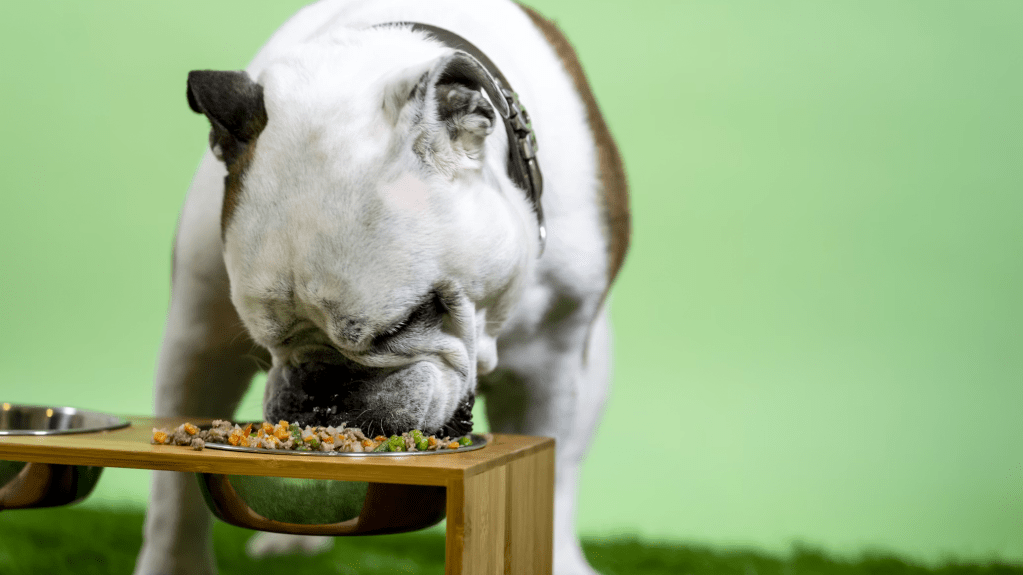
The decision to feed dogs a vegan or vegetarian diet is undoubtedly going to remain a contentious one. However, just as we choose to domesticate animals based on our own questionable sense of authority, we also have a responsibility to understand the impact of this choice upon both their well-being, as well as the well-being of our planet. As Jelena Šuran, veterinary scientist and pharmacologist, summarises, “evidence of the benefits of adding plant ingredients to canine diets is increasing as studies become larger and better designed (2024: 52-53).
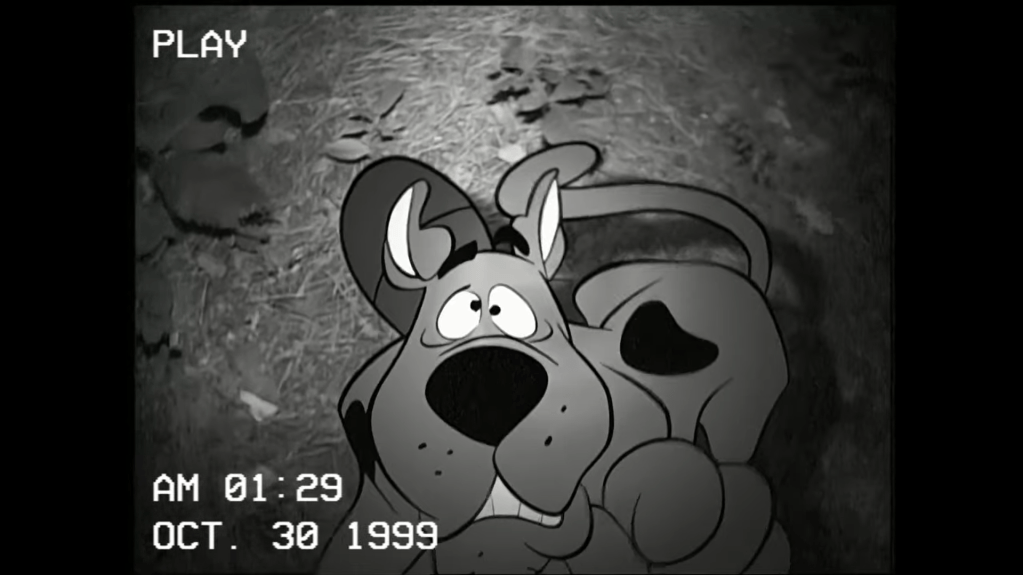
Scooby-Doo might not seem a particularly apt vehicle for the exploration of such polarising debates, but, as evidenced by Kasem’s activism, the gang’s more-than half-century of adventures suggests otherwise. From their Annie-award-winning parody of The Blair Witch Project (1999), a mountain of viral creepypastas, and endless online debates regarding their racial and sexual identities, the franchise has, as my students’ enjoyment testified, rooted itself in countless urban legends and subversive folk tales. My brief look at the dietary questions surrounding Scooby Snacks might just as easily have focused upon edibles and drug cultures. As Lillard’s Shaggy says when introducing himself to Mary Jane, a young woman munching on the biscuits, “like, that is my favourite name.”
Scooby-Doo is a franchise that gets a frankly ridiculous amount of mileage from the bottomless appetites of its two most cowardly protagonists. Thrust into paranormal dilemmas, Scooby and Shaggy’s death-defying desire to consume every foodstuff imaginable is a necessary element in their constant battle against their spooky adversaries. Their time as vegans, driven by Kasem’s activism, may have been short-lived, but it was pronounced enough to make me wonder how their dietary choices will be approached in the upcoming Netflix series, currently going by the insipid working title of Scooby-Doo: Origins. Still, if Scooby and Shaggy can, even briefly, overcome their hunger and fear, go plant-powered, and stand up to ghastly apparitions, there may yet be hope for us all.
Head Image: Scooby-Doo! Mystery Incorporated, Warner Bros. Animation, 2010-2013.
AKC Staff. 2021. ‘Can Dogs Adapt to a Vegan Diet?’ American Kennel Club, September 1: https://www.akc.org/expert-advice/nutrition/dogs-can-adapt-to-a-vegan-diet/.
Albizuri, Silvia et al. 2021. ‘Dogs that Ate Plants: Changes in the Canine Diet During the Late Bronze Age and the First Iron Age in the Northeast Iberian Peninsula,’ Journal of World Prehistory 34: 75-119.
Be Cool, Scooby-Doo! 2015 – 2018. Exec Prod. Sam Register, TV Series, US: Warner Bros. Animation.
The Blair Witch Project. 1999. D. Daniel Myrick & Eduardo Sánchez, Film, US: Artisan Entertainment.
Bonnin, Evelyn. 2019. ‘WARNING LETTER: JBS Souderton, Inc. dba MOPAC,’ U.S. Food & Drug Administration: https://www.fda.gov/inspections-compliance-enforcement-and-criminal-investigations/warning-letters/jbs-souderton-inc-dba-mopac-574386-04232019.
British Veterinary Association. 2024. ‘BVA policy position on diet choices for cats and dogs,’ British Veterinary Association: https://www.bva.co.uk/take-action/our-policies/diet-choices-for-cats-and-dogs/.
Carney, Isaac K. 2024. ‘WARNING LETTER: Mid America Pet Food LLC,’ U.S. Food & Drug Administration: https://www.fda.gov/inspections-compliance-enforcement-and-criminal-investigations/warning-letters/mid-america-pet-food-llc-681516-11222024.
Corliss, Richard. 2014. ‘Casey Kasem; The Voice of America,’ Time, June 15: https://time.com/2878606/casey-kasem-the-voice-of-america/.
Food and Drug Administration. 2025. ‘Voluntary Recall of Wild Coast Raw Boneless Free Range Chicken Formula Raw Pet Food Because of Possible Bird Flu Health Risk,’ U.S. Food & Drug Administration: https://www.fda.gov/safety/recalls-market-withdrawals-safety-alerts/voluntary-recall-wild-coast-raw-boneless-free-range-chicken-formula-raw-pet-food-because-possible.
Gorvett, Zaria. 2021. ‘The hidden reason processed pet foods are so addictive,’ BBC, May 20: https://www.bbc.co.uk/future/article/20210519-the-hidden-reason-processed-pet-foods-are-so-addictive.
‘History of Vegan Dog Food.’ 2024. Sustainable Pet Food Association, January 26: https://sustainablepetfoodassociation.co.uk/history-of-vegan-dog-food.
Leatham, Xantha. 2025. ‘Now even DOGS are being told to go vegan!’ Daily Mail, September 3: https://www.dailymail.com/sciencetech/article-15060639/DOGS-vegan-Plant-foods-nutrients-meat.html.
Martin, Ann N. 2002. Food Pets Die For: Shocking Facts About Pet Foods, Troutdale: NewSage Press.
Meeker, D L. & Meisinger, J L. 2015. ‘Rendered ingredients significantly influence sustainability, quality, and safety of pet food,’ Journal of Animal Science 93. 3: 835-847.
Mordor Intelligence. 2025. Vegan Dog Food Market Size and Share Analysis – Growth Trends and Forecasts (2025–2030). Mordor Intelligence. Available at: https://www.mordorintelligence.com/industry-reports/vegan-dog-food-market.
Nicholles, B. & Knight, A. 2025. ‘The environmental sustainability of meat-based versus vegan pet food,’ Frontiers in Sustainable Food Systems 9.
@Nigelrefowens. 2026. ‘That’s very cruel denying them their preferred choice of food,’ X, January 8: https://x.com/Nigelrefowens/status/2009395846429987210.
Norman, Mark. 2024. Zoinks! The Spooky Folklore Behind Scooby Doo. Luton: Chinbeard Books.
Rushe, Dominic. 2014. ‘Casey Kasem, voice of Shaggy in Scooby Doo, dies on Father’s Day at 82,’ The Guardian, June 15: https://www.theguardian.com/world/2014/jun/15/casey-kasem-voice-shaggy-scooby-doo-dies.
Scooby-Doo. 2002. D. Raja Gosnell, Film, US: Warner Bros. Pictures.
Scooby-Doo 2: Monsters Unleashed. 2004. D. Raja Gosnell, Film, US: Warner Bros. Pictures.
Scooby-Doo and Guess Who? 2019 – 2021. Exec Prod. Sam Register, TV Series, US: Warner Bros. Animation.
Scooby-Doo! Mystery Incorporated. 2010 – 2013. Exec Prod. Sam Register, TV Series, US: Cartoon Network.
The Scooby-Doo Project.1999. D. Chris Kelly, Larry Morris & Steve Patrick, Animated Special, US: Cartoon Network.
Scooby-Doo, Where Are You! 1969 – 1970. Exec Prod. William Hanna & Joseph Barber, TV Series, US: Hanna-Barbera Productions.
Strimpel, Zoe. 2022. ‘Vegan dog food is emblematic of our unhealthy canine obsession,’ The Telegraph, May 15: https://www.telegraph.co.uk/news/2022/05/15/vegan-dog-food-emblematic-unhealthy-canine-obsession/.
Šuran, Jelena. 2024. ‘Plant ingredients in dog food – what does recent research say?’ Pets International, February: 52-53.
Sustainable Pet Food Foundation. 2025. ‘Plant-Powered Pups: New Study Shows Dramatic Environmental Gains From Plant-Based Dog Food in the UK,’ Press Release Hub, September 25: https://pressreleasehub.pa.media/article/plant-powered-pups-new-study-shows-dramatic-environmental-gains-from-plant-based-dog-food-in-the-uk-55527.html.
Trammell, Kendall. 2019. ‘“Scooby-Doo” wasn’t just another cartoon. It was a Reaction to the political turmoil at the time,’ CNN, September 13: https://edition.cnn.com/2019/09/13/entertainment/scooby-doo-50th-anniversary-history-trnd.

